 Indietro
The Lymphatic System: Structure and Function
Guida di studio - Note intelligenti
 Appunti personalizzati basati sui tuoi materiali, ampliati con definizioni chiave, esempi e contesto.
The Lymphatic System
Overview and Components
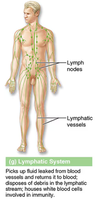
The lymphatic system is a vital part of human anatomy, supporting both fluid balance and immune defense. It consists of two major types of structures: lymphatic vessels and lymphatic organs/tissues (such as lymph nodes, tonsils, thymus, and spleen).
Lymphatic vessels: Network of tubes that transport lymph throughout the body.
Lymphatic organs and tissues: Specialized structures involved in filtering lymph and supporting immune functions.
Functions of the Lymphatic System
The lymphatic system performs several essential functions:
Fluid transport: Returns excess tissue fluid and plasma proteins from tissues to the bloodstream, preventing edema.
Body defense: Recognizes and filters pathogens circulating in the blood, supporting immune resistance.
Lymph
Definition and Formation
Lymph is the term for interstitial fluid that has entered the lymphatic system. It consists of excess fluid and plasma proteins (including white blood cells) from tissues, carried by lymphatic vessels.
Formation: Tissue fluid enters lymphatic capillaries due to pressure differences.
Transport: Lymph moves through lymphatic vessels, is filtered by lymph nodes, and returns to the blood.
Function: Prevents fluid accumulation (edema) and supports immune surveillance.
Lymphatic Vessels
Structure and Relationship to Blood Vessels
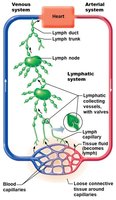
Lymphatic vessels, also called lymphatics, form a one-way system that directs lymph toward the heart. Their walls are thin, and larger vessels contain valves to prevent backflow.
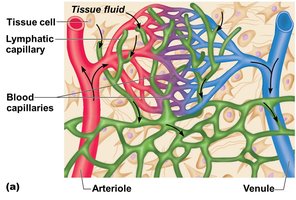
Microscopic structure: Lymphatic capillaries weave between tissue cells and blood capillaries in loose connective tissue.
Permeability: Lymph capillaries are highly permeable, allowing easy entry of fluid and proteins.
Special features: Endothelial cells overlap to form flaplike mini-valves, which open when interstitial pressure is high and close to prevent leakage.
Lymphatic Collecting Vessels
Collect lymph from capillaries and return it to veins near the heart. The right lymphatic duct drains the right arm and right side of the head and thorax, while the thoracic duct drains the rest of the body.
Lymph transport: Aided by skeletal muscle contraction, thoracic pressure changes during breathing, and smooth muscle in vessel walls.
Lymph Nodes
Structure
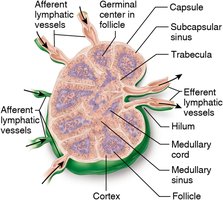
Lymph nodes are small, bean-shaped organs scattered throughout the body, surrounded by a capsule and divided into compartments by trabeculae. The cortex is the outer part, and the medulla is the inner part.
Flow of Lymph Through Nodes
Lymph enters through afferent lymphatic vessels on the convex side.
Flows through several sinuses inside the node.
Exits through efferent lymphatic vessels (fewer than afferent, slowing flow).
Function
Lymph nodes filter lymph before it returns to the blood, screening for pathogens and alerting the immune system.
Defense cells: Macrophages (engulf and destroy pathogens), lymphocytes (respond to pathogens), dendritic cells.
Filtered materials: Bacteria, viruses, cancer cells, and foreign substances.
Other Lymphoid Organs
Types and Locations
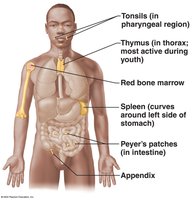
Other lymphoid organs include the spleen, tonsils, thymus, Peyer’s patches, and appendix. These organs play roles in filtering blood, trapping pathogens, and supporting immune cell development.
The Spleen
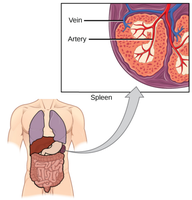
The spleen is located on the left side of the abdomen. It filters and cleans blood, destroys old red blood cells, stores platelets, and functions as a blood reservoir. It also helps make white blood cells and facilitates immune communication.
Tonsils
Tonsils are small masses of lymphoid tissue deep to the mucosa surrounding the pharynx. They trap and remove bacteria and other pathogens entering the throat. Tonsillitis occurs when tonsils become congested with bacteria.
Peyer’s Patches and Appendix
Peyer’s patches are found in the wall of the small intestine, and similar follicles are found in the appendix. Macrophages in these structures capture and destroy bacteria in the intestine.
Practice Questions
Fluids that have escaped the cardiovascular system are picked up by the lymphatic system.
The structure that removes bacteria and tumor cells from lymph is the lymph node.
Summary Table: Major Components of the Lymphatic System
Component | Main Function | Location |
|---|---|---|
Lymphatic vessels | Transport lymph | Throughout body |
Lymph nodes | Filter lymph, house immune cells | Scattered throughout body |
Spleen | Filter blood, destroy old RBCs | Left abdomen |
Tonsils | Trap pathogens entering throat | Pharyngeal region |
Peyer’s patches | Destroy bacteria in intestine | Small intestine |
Appendix | Immune surveillance | Large intestine |
Additional info: The lymphatic system is functionally related to the cardiovascular system by returning excess fluid to the bloodstream and supports immune defenses by filtering pathogens and housing immune cells.
