 Indietro
The Muscular System: Structure, Function, and Physiology
Guida di studio - Note intelligenti
 Appunti personalizzati basati sui tuoi materiali, ampliati con definizioni chiave, esempi e contesto.
The Muscular System
Overview of the Muscular System
The muscular system is responsible for body movements, posture, and heat production. Skeletal muscles contract to produce movement, often working in groups to perform coordinated actions.
Body movements are the result of skeletal muscle contractions.
Group actions: Muscles typically work together to achieve complex movements.
Terms Relative to Skeletal Muscle Movements
Understanding muscle anatomy is essential for identifying how muscles produce movement.
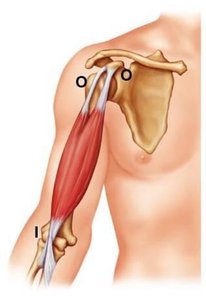
Origin: The attachment of the muscle to the bone that remains stationary during movement.
Insertion: The attachment of the muscle to the bone that moves.
Belly: The fleshy part of the muscle between the origin and insertion.
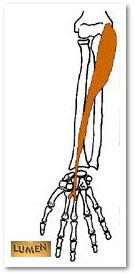
Muscle-Bone Attachment Structure
Muscles are attached to bones via connective tissue structures, which transmit the force of contraction to the skeleton.
Tendon: A cord of dense regular connective tissue that attaches muscle to bone.
Aponeurosis: A sheet of dense regular connective tissue that attaches muscles to other structures.
Nerve and Blood Supply
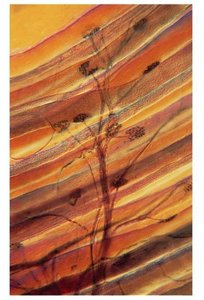
Each muscle fiber receives a branch of a motor nerve and is supplied by its own arteries and veins. Blood vessels branch extensively to provide each muscle fiber with a direct blood supply, ensuring adequate oxygen and nutrient delivery.
Motor nerve: Stimulates muscle contraction.
Arteries and veins: Supply nutrients and remove waste products.
Naming Skeletal Muscles
Criteria for Naming Muscles
Skeletal muscles are named based on several criteria, which help identify their location, shape, size, orientation, number of origins, attachment points, and actions.
Location: e.g., Epicranius (around cranium), Tibialis anterior (front of tibia)
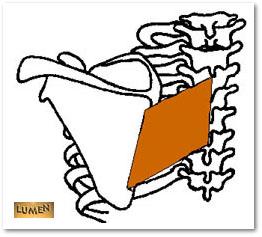
Shape: e.g., Deltoid (triangle), Trapezius (trapezoid), Serratus (saw-toothed), Rhomboideus (rhomboid), Orbicularis and Sphincters (circular)
Relative Size: e.g., Maximus (largest), Minimus (smallest), Longus (long), Brevis (short)
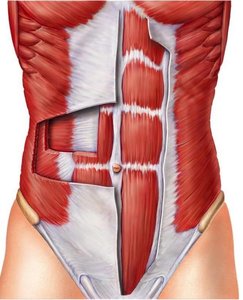
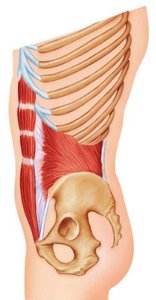
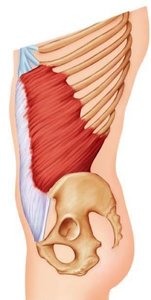
Direction/Orientation of fibers: e.g., Rectus (straight), Transverse, Oblique
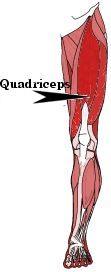
Number of Origins: e.g., Biceps (2), Triceps (3), Quadriceps (4)
Location of Attachments: e.g., Sternocleidomastoid (originates from sternum and clavicle, inserts on mastoid process)
Action: e.g., Flexor, Extensor, Abductor, Adductor
Muscles Named by Location
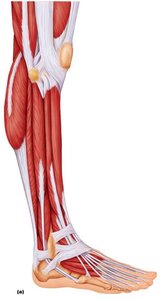
Muscles are often named for their anatomical location.
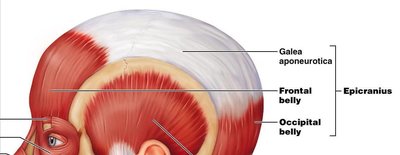
Epicranius: Located around the cranium.
Tibialis anterior: Located at the front of the tibia.
Frontalis: Located over the frontal bone.
Muscles Named by Shape
Muscle names may reflect their geometric shape.
Deltoid: Triangle-shaped.
Trapezius: Trapezoid-shaped.
Serratus: Saw-toothed appearance.
Rhomboideus: Rhomboid-shaped.
Orbicularis and Sphincters: Circular muscles.
Muscles Named by Direction of Fibers
The orientation of muscle fibers is another naming criterion.
Rectus: Fibers run parallel to the long axis (straight).
Transverse: Fibers run perpendicular to the long axis.
Oblique: Fibers run at an angle to the long axis.
Muscles Named for Number of Origins
Some muscles are named for the number of points at which they originate.
Biceps: Two origins.
Triceps: Three origins.
Quadriceps: Four origins.
Muscles Named for Origin and Insertion
Muscle names may indicate their points of origin and insertion.
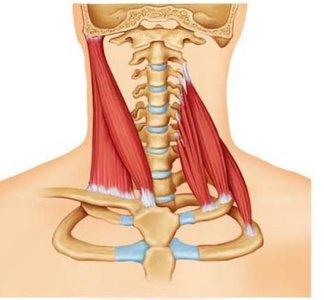
Sternocleidomastoid: Originates from the sternum and clavicle, inserts on the mastoid process of the temporal bone.
Muscles Named for Action
Muscle names may describe their primary action.
Flexor carpi radialis: Flexes the wrist.
Abductor pollicis brevis: Abducts the thumb.
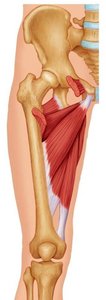
Adductor magnus: Adducts the thigh.
Extensor digitorum: Extends the fingers.
Calcium Movements Inside Muscle Fibers
Role of Calcium in Muscle Contraction
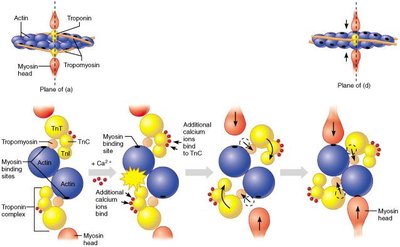
Calcium ions (Ca2+) are essential for muscle contraction. An action potential triggers the release of Ca2+ from the sarcoplasmic reticulum (SR), which binds to troponin, causing a conformational change in tropomyosin and allowing actin to bind to myosin.
Action potential: Causes release of Ca2+ from the SR.
Ca2+ binding: Ca2+ binds to troponin, shifting tropomyosin and exposing binding sites on actin.
Muscle contraction: Myosin binds to actin and pulls, resulting in muscle contraction.
Ca2+ removal: Ca2+ pumps return calcium to the SR, ending contraction.
Equation:
Skeletal Muscle Motor Units
The Motor Unit
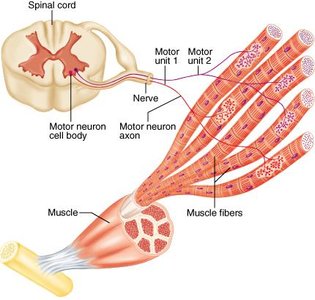
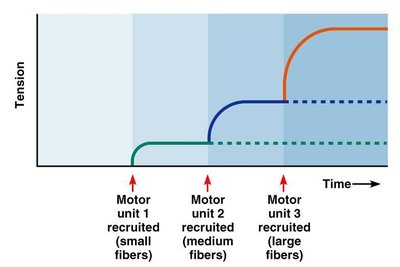
A motor unit consists of one motor neuron and all the muscle fibers it stimulates. The number of motor units recruited determines the strength of muscle contraction.
Motor neuron: Controls muscle fibers via synapses.
Motor unit: One motor neuron plus all the muscle fibers it innervates.
The Myogram
Recording Muscle Contraction
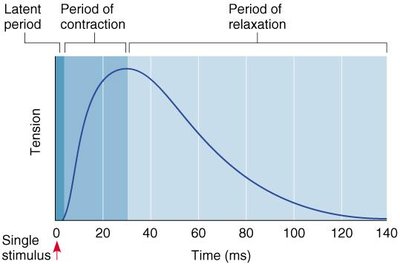
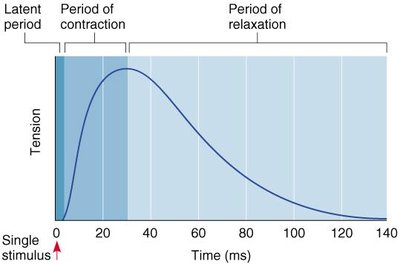
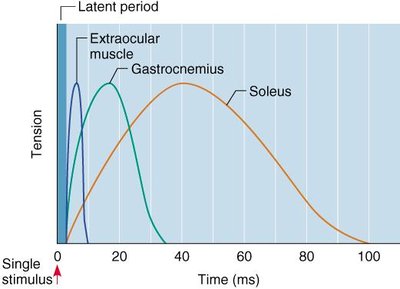
A myogram is a graphical recording of muscle contraction in response to a stimulus. It illustrates the phases of a muscle twitch.
Stimulus: Nerve impulse or electrical charge.
Twitch: Single contraction of all muscle fibers in a motor unit.
Phases:
Latent period: Delay between stimulus and response.
Contraction phase: Tension or shortening occurs.
Relaxation phase: Muscle returns to resting length.
Refractory period: Time after excitation when muscle will not respond to a new stimulus.
Muscle Twitch and Graded Responses
All-or-None Rule
All muscle fibers in a motor unit contract fully when stimulated, following the all-or-none principle.
All-or-none rule: All fibers in a motor unit contract completely when stimulated.
Graded Muscle Responses
The force of muscle contraction can vary depending on the number of fibers and motor units recruited, as well as the frequency of stimulation.
Graded response: Achieved by varying the number of contracting fibers and motor units, and the frequency of stimulation.
Multiple motor unit summation (recruitment): More motor units recruited leads to stronger contraction.
Muscle Tone
Definition and Importance
Muscle tone refers to the regular, small contractions caused by spinal reflexes that activate different motor units over time. This provides constant tension development, keeping muscles firm but not shortened, which is essential for maintaining posture.
Muscle tone: Continuous, passive partial contraction of muscles.
Posture maintenance: Neck, back, and leg muscles maintain posture through muscle tone.
Summary Table: Muscle Naming Criteria
Criterion | Example | Description |
|---|---|---|
Location | Epicranius, Tibialis anterior | Named for anatomical position |
Shape | Deltoid, Trapezius | Named for geometric shape |
Size | Maximus, Minimus | Named for relative size |
Direction of fibers | Rectus, Transverse, Oblique | Named for fiber orientation |
Number of origins | Biceps, Triceps, Quadriceps | Named for number of origin points |
Origin and insertion | Sternocleidomastoid | Named for attachment points |
Action | Flexor, Extensor, Abductor | Named for primary action |
