 Indietro
The Pectoral Girdle, Upper Limb, and Synovial Joints: Structure and Function
Guida di studio - Note intelligenti
 Appunti personalizzati basati sui tuoi materiali, ampliati con definizioni chiave, esempi e contesto.
The Appendicular Skeleton: Pectoral Girdle and Upper Limb
Overview of the Pectoral Girdle
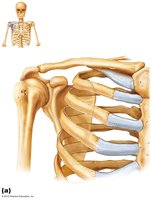
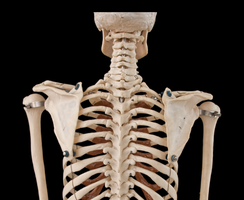
The pectoral girdle (shoulder girdle) connects the upper limb to the axial skeleton and provides attachment points for muscles that move the shoulder and arm. It consists of the clavicle and scapula on each side of the body.
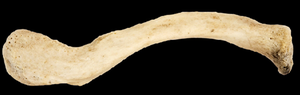
Clavicle: S-shaped bone that articulates medially with the sternum (sternoclavicular joint) and laterally with the scapula (acromioclavicular joint).
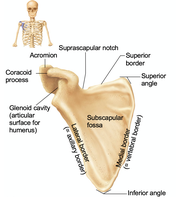
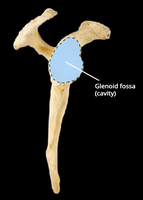
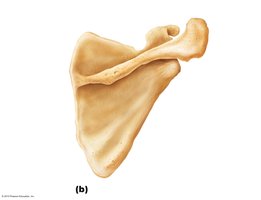
Scapula: Flat, triangular bone with several important features, including the glenoid cavity (articulates with the humerus), acromion, coracoid process, and various fossae for muscle attachment.
The only direct bony connection between the upper limb and the axial skeleton is the sternoclavicular joint.
Regions of the Upper Limb
The upper limb is divided into several regions, each with distinct bones and joints:
Arm (Brachium): Contains the humerus.
Forearm (Antebrachium): Contains the radius (lateral) and ulna (medial).
Wrist (Carpus): Contains eight carpal bones.
Hand (Manus): Contains metacarpals and phalanges.
Synovial Joints of the Upper Limb
General Structure of Synovial Joints
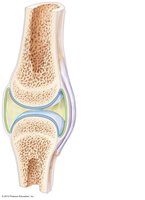
Synovial joints are highly mobile joints characterized by a joint cavity filled with synovial fluid. They are the most common type of joint in the limbs.
Articular cartilage: Hyaline cartilage covering bone surfaces to reduce friction.
Joint cavity: Space containing synovial fluid for lubrication.
Articular capsule: Double-layered structure (fibrous layer and synovial membrane) enclosing the joint.
Ligaments: Connect bone to bone, providing stability.
Types of Synovial Joints in the Upper Limb
Synovial joints are classified by the shapes of their articulating surfaces and the types of movement they allow.
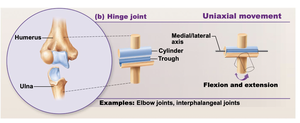
Hinge Joint: Allows uniaxial movement (flexion and extension). Example: elbow joint, interphalangeal joints.
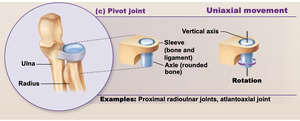
Pivot Joint: Allows uniaxial rotation. Example: proximal radioulnar joint.
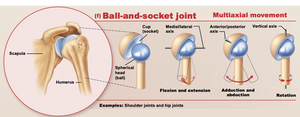
Ball-and-Socket Joint: Allows multiaxial movement (flexion/extension, abduction/adduction, rotation). Example: shoulder (glenohumeral) joint.
Detailed Anatomy of the Pectoral Girdle
The Clavicle
The clavicle is the only postcranial bone to develop via intramembranous ossification. It acts as a strut to keep the scapula in position, allowing for maximum range of motion at the shoulder.
Sternal (medial) end: Articulates with the manubrium of the sternum.
Acromial (lateral) end: Articulates with the acromion of the scapula.
The Scapula
The scapula is a flat bone with several important anatomical landmarks for muscle attachment and articulation with the humerus.
Glenoid cavity (fossa): Shallow socket that articulates with the head of the humerus to form the shoulder joint.
Acromion: Forms the highest point of the shoulder and articulates with the clavicle.
Coracoid process: Provides attachment for muscles and ligaments.
Spine: Prominent ridge on the posterior surface, attachment for the trapezius muscle.
Fossae: Supraspinous, infraspinous, and subscapular fossae serve as origins for rotator cuff muscles.
Joints of the Upper Limb
Shoulder (Glenohumeral) Joint
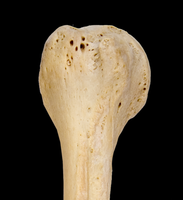
The glenohumeral joint is a synovial ball-and-socket joint formed by the articulation of the head of the humerus with the glenoid cavity of the scapula. It is the most mobile joint in the body, allowing a wide range of movements.
Movements: Flexion, extension, abduction, adduction, rotation, circumduction.
Stabilizing structures: Rotator cuff muscles, glenoid labrum, ligaments (coracohumeral, glenohumeral), and the articular capsule.
Elbow Joint
The elbow joint is a complex hinge joint involving three bones: the humerus, radius, and ulna. It allows flexion and extension of the forearm, as well as rotation (pronation and supination) at the proximal radioulnar joint.
Humeroulnar joint: Trochlea of humerus and trochlear notch of ulna (hinge joint).
Humeroradial joint: Capitulum of humerus and head of radius (hinge and pivot joint).
Proximal radioulnar joint: Head of radius and radial notch of ulna (pivot joint).
Wrist and Hand Joints
The wrist (carpus) consists of eight carpal bones arranged in two rows. The metacarpophalangeal (knuckle) joints and interphalangeal joints allow for flexion, extension, abduction, and adduction of the fingers.
Carpal bones: Scaphoid, lunate, triquetrum, pisiform (proximal row); trapezium, trapezoid, capitate, hamate (distal row).
Phalanges: Each finger has three phalanges (proximal, middle, distal), except the thumb, which has two.
Summary Table: Major Synovial Joints of the Upper Limb
Joint | Type | Articulating Bones | Movements Allowed | Example |
|---|---|---|---|---|
Glenohumeral (Shoulder) | Ball-and-socket | Scapula (glenoid cavity) & Humerus (head) | Multiaxial: flexion, extension, abduction, adduction, rotation, circumduction | Shoulder joint |
Elbow (Humeroulnar) | Hinge | Humerus (trochlea) & Ulna (trochlear notch) | Uniaxial: flexion, extension | Elbow joint |
Proximal Radioulnar | Pivot | Radius (head) & Ulna (radial notch) | Uniaxial: rotation (pronation/supination) | Forearm rotation |
Metacarpophalangeal | Metacarpal & Proximal phalanx | Biaxial: flexion, extension, abduction, adduction | Knuckle joints | |
Interphalangeal | Hinge | Phalanges | Uniaxial: flexion, extension | Finger joints |
Key Terms and Definitions
Articulation: A joint; the point where two bones meet.
Ligament: Dense connective tissue connecting bone to bone, stabilizing joints.
Synovial fluid: Viscous fluid within synovial joints, reducing friction and nourishing cartilage.
Flexion/Extension: Movements that decrease/increase the angle between bones.
Abduction/Adduction: Movements away from/toward the midline of the body.
Rotation: Movement of a bone around its longitudinal axis.
