 Indietro
The Respiratory System: Structure and Function
Guida di studio - Note intelligenti
 Appunti personalizzati basati sui tuoi materiali, ampliati con definizioni chiave, esempi e contesto.
The Respiratory System
Overview and Major Functions
The respiratory system is essential for gas exchange, supplying oxygen (O2) to body tissues and removing carbon dioxide (CO2) produced by cellular metabolism. It also plays roles in olfaction (smell) and speech production. The respiratory and cardiovascular systems work together to ensure efficient gas transport and exchange.
Gas Exchange: Supplies O2 to cells and removes CO2.
Olfaction: Houses receptors for the sense of smell.
Speech: Provides airflow necessary for vocalization.
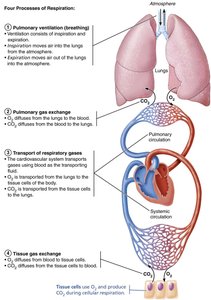
Four Processes of Respiration
Pulmonary Ventilation: Movement of air into and out of the lungs (breathing).
Pulmonary Gas Exchange: Exchange of O2 and CO2 between alveoli and blood.
Transport of Respiratory Gases: Movement of gases in the blood between lungs and tissues.
Tissue Gas Exchange: Exchange of O2 and CO2 between blood and body tissues.
Functional Anatomy of the Respiratory System
Major Organs and Divisions
The respiratory system is divided into upper and lower regions, each with specific structures and functions.
Upper Respiratory System: Nose, paranasal sinuses, pharynx
Lower Respiratory System: Larynx, trachea, bronchi (and branches), lungs, alveoli
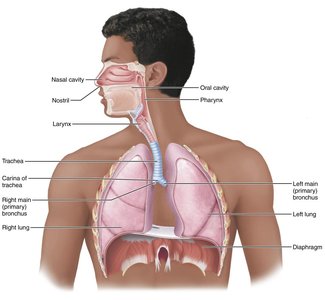
Upper Respiratory System
Nose: Provides airway, moistens/warms/filters air, resonance for speech, houses olfactory receptors.
Paranasal Sinuses: Lighten skull, warm/moisten/filter air, secrete mucus.
Pharynx: Passageway for air and food; houses tonsils for immune defense.
External Nose and Nasal Cavity
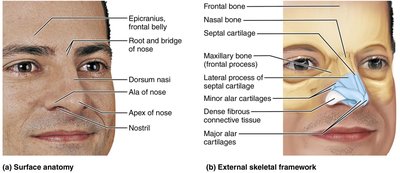
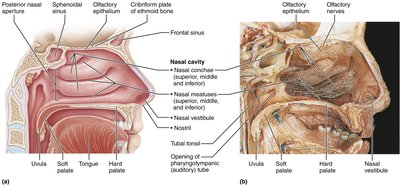
The external nose is supported by bone and cartilage, with surface features such as the root, bridge, dorsum nasi, apex, and nostrils (nares). The nasal cavity is divided by the nasal septum and lined with mucosa, containing olfactory epithelium for smell.
Pharynx
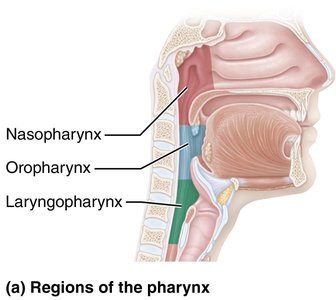
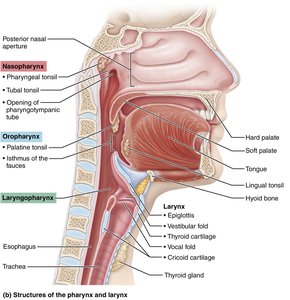
The pharynx (throat) connects the nasal cavity to the larynx and the oral cavity to the esophagus. It is divided into three regions:
Nasopharynx: Airway only; contains pharyngeal tonsils and auditory tubes.
Oropharynx: Passageway for food and air; contains palatine and lingual tonsils.
Laryngopharynx: Passageway for food and air; continuous with esophagus.
Lower Respiratory System
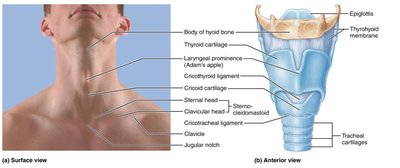
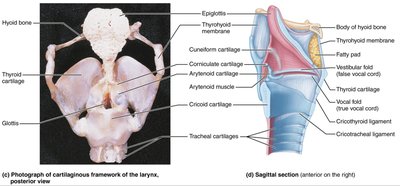
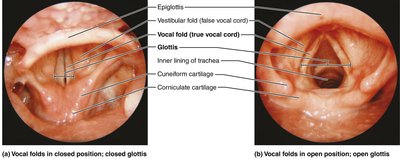
Larynx (Voice Box): Provides open airway, routes air/food, voice production. Framework includes thyroid, cricoid, and epiglottis cartilages.
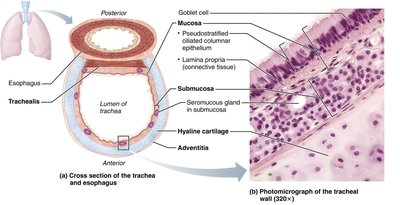
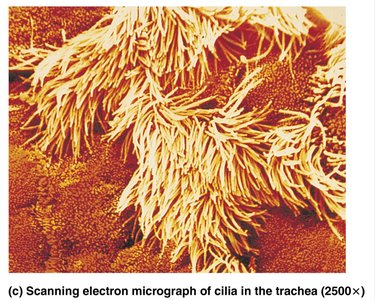
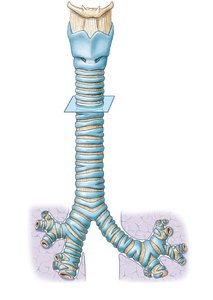
Trachea (Windpipe): Flexible tube with C-shaped cartilage rings; conducts, cleans, warms, and moistens air.
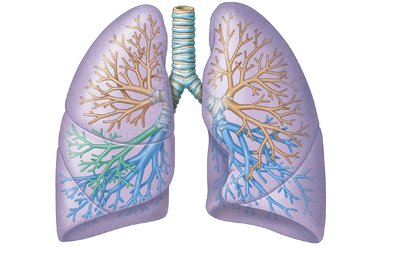
Bronchial Tree: Branching system of bronchi and bronchioles leading to alveoli.
Lungs and Alveoli: Main sites of gas exchange; alveoli are microscopic air sacs surrounded by capillaries.
Trachea and Bronchial Tree
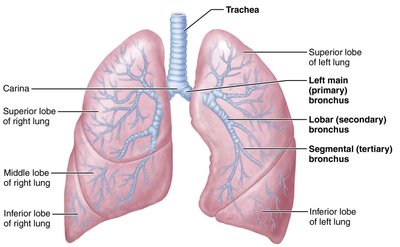
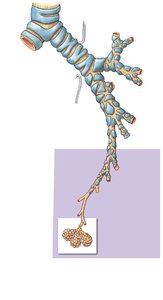
The trachea descends from the larynx and divides into right and left main bronchi. The bronchial tree undergoes multiple branchings, ending in bronchioles and alveoli.
Alveoli
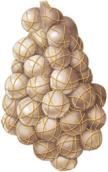
Alveoli are the primary sites of gas exchange. They are composed of simple squamous epithelium (type I cells) and contain type II cells that secrete surfactant to reduce surface tension and prevent collapse.
Lungs
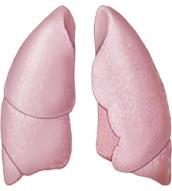
The lungs are paired organs divided into lobes (three on the right, two on the left). Each lung is surrounded by pleurae, which are serous membranes that reduce friction and compartmentalize the lungs.
Tables: Upper and Lower Respiratory System Structures
Structure | Description/Features | Function |
|---|---|---|
Nose | External portion supported by bone/cartilage; internal cavity divided by septum; lined with mucosa | Produces mucus; filters, warms, moistens air; resonance for speech; olfaction |
Paranasal Sinuses | Mucosa-lined, air-filled cavities in cranial bones | Lighten skull; warm/moisten/filter air |
Pharynx | Muscular tube; three regions (nasopharynx, oropharynx, laryngopharynx) | Passageway for air/food; houses tonsils |
Larynx | Cartilaginous structure; contains vocal folds | Air passageway; prevents food entry; voice production |
Trachea | Flexible tube with C-shaped cartilage rings | Air passageway; cleans, warms, moistens air |
Bronchial Tree | Branching airways from trachea to alveoli | Air passageways; clean, warm, moisten air |
Alveoli | Microscopic air sacs; simple squamous epithelium | Main sites of gas exchange; surfactant production |
Lungs | Paired organs; elastic connective tissue | House respiratory passages; recoil during expiration |
Pleurae | Serous membranes (parietal and visceral layers) | Produce lubricating fluid; compartmentalize lungs |
Summary Table: Key Respiratory Structures and Functions
Region | Main Structures | Primary Functions |
|---|---|---|
Upper Respiratory | Nose, Paranasal Sinuses, Pharynx | Air conduction, filtration, humidification, olfaction, immune defense |
Lower Respiratory | Larynx, Trachea, Bronchi, Lungs, Alveoli | Air conduction, voice production, gas exchange |
Additional info:
The respiratory system's efficiency is closely linked to the cardiovascular system, as blood flow is necessary for transporting gases to and from tissues.
Surfactant is critical for reducing alveolar surface tension, preventing collapse, especially in premature infants.
Clinical conditions such as rhinitis, laryngitis, and tracheal obstruction can significantly impair respiratory function.
