 Indietro
The Respiratory System: Structure, Function, and Regulation
Guida di studio - Note intelligenti
 Appunti personalizzati basati sui tuoi materiali, ampliati con definizioni chiave, esempi e contesto.
The Respiratory System
Overview and Primary Functions
The respiratory system is essential for gas exchange, supplying oxygen (O2) to the body and removing carbon dioxide (CO2). This process involves several coordinated steps:
Ventilation: Movement of air into (inspiration) and out of (expiration) the lungs.
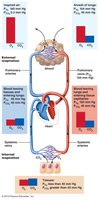
External respiration: Diffusion of gases between alveolar air and pulmonary blood.
Blood gas transport: Mechanisms for transporting O2 and CO2 in the bloodstream.
Internal respiration: Diffusion of gases between tissue capillaries and interstitial fluid.
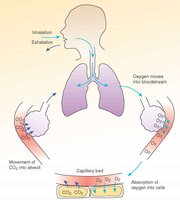
Functional Divisions of the Respiratory System
Conducting vs. Respiratory Passages
The respiratory system is divided into conducting passages and respiratory passages:
Conducting passages: Carry air but do not participate in gas exchange. Includes the nose, pharynx, trachea, larynx, bronchi, bronchioles, and terminal bronchioles.
Respiratory passages: Sites of gas exchange. Includes respiratory bronchioles, alveolar ducts, and alveoli.
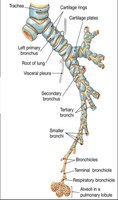
Structure of the Respiratory Membrane
Components and Diffusion
The respiratory membrane is the site of gas exchange between alveolar air and blood. It consists of:
Alveolar endothelium: Simple squamous epithelium lining the alveolus.
Basal lamina: Fused basement membranes of alveolar and capillary endothelium.
Capillary endothelium: Simple squamous cells lining the capillary.
The rate of diffusion across this membrane depends on its surface area, thickness, and the solubility of the gas.
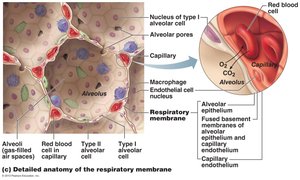
Factors Affecting Gas Diffusion
Physical and Anatomical Influences
Distance of diffusion: Shorter distances increase diffusion rate.
Surface area: Greater surface area enhances diffusion.
Thickness of membrane: Thicker membranes slow diffusion.
Size and solubility of gas molecules: Smaller and more soluble gases diffuse more rapidly.
Mechanics of Ventilation
Inspiration and Expiration
Ventilation is the mechanical process of moving air in and out of the lungs:
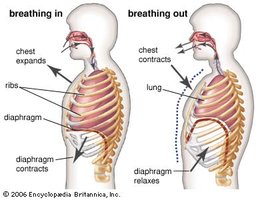
Inspiration: Air flows into the lungs when intrapulmonary pressure drops below atmospheric pressure.
Expiration: Air flows out when intrapulmonary pressure exceeds atmospheric pressure.
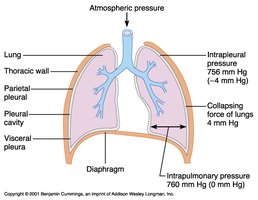
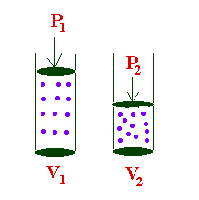
Boyle’s Law and Pulmonary Ventilation
Boyle’s Law states that the pressure of a gas is inversely related to the volume it occupies:
Muscles of Breathing
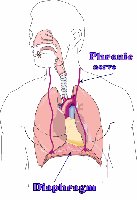
Diaphragm: Main muscle for inspiration (accounts for ~75% of air movement).
External intercostals: Elevate ribs during inspiration.
Internal intercostals: Depress ribs during expiration.
Accessory muscles: Used during forced expiration (e.g., abdominal muscles).
Air Flow and Resistance
Determinants of Air Flow
Air flows from high to low pressure and encounters resistance, primarily in the medium-sized bronchi. The equation for air flow is:
Resistance is influenced by airway diameter, length, and viscosity:
Factors Affecting Resistance
Factors Increasing Resistance | Factors Decreasing Resistance |
|---|---|
Bronchoconstriction (parasympathetic NS, acetylcholine, histamine, decreased pCO2, tumors, mucus, inflammation) | Bronchodilation (sympathetic NS, epinephrine, increased pCO2) |
Gas Laws in Respiration
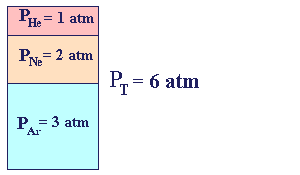
Dalton’s Law of Partial Pressures
The total pressure of a gas mixture equals the sum of the partial pressures of each component gas:
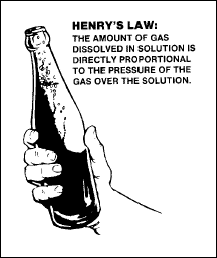
Henry’s Law
The amount of gas dissolved in a liquid is proportional to its partial pressure and solubility:
External and Internal Respiration
Gas Exchange at Lungs and Tissues
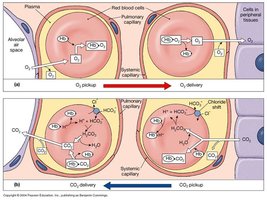
O2 enters blood at the lungs and exits at tissues.
CO2 enters blood at tissues and exits at the lungs.
Blood Gas Transport
Oxygen Transport
~1.5% of O2 is dissolved in plasma (exerts partial pressure).
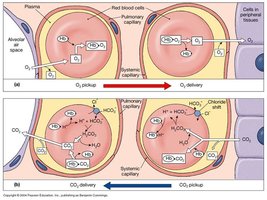
~98.5% is carried by hemoglobin (Hb) in red blood cells:
Hemoglobin Saturation and the Hb-O2 Dissociation Curve
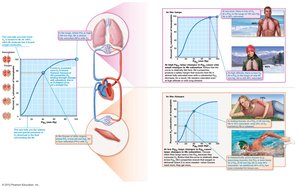
Each Hb molecule can bind up to 4 O2 molecules.
O2 saturation refers to the percentage of Hb binding sites occupied by O2.
Arterial blood is ~99% saturated; venous blood is ~75% saturated (about 25% O2 released at tissues).
Bohr Effect
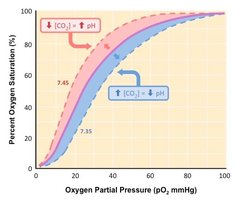
The Bohr Effect describes how decreased pH (increased acidity) reduces Hb's affinity for O2, promoting O2 release to tissues.
Factors Affecting Oxygen Binding
Favor Hb-O2 Association | Favor Hb-O2 Dissociation |
|---|---|
Low temperature, high pO2, low pCO2, high pH, low BPG | High temperature, low pO2, high pCO2, low pH, high BPG |
Carbon Dioxide Transport
7-10% dissolved in plasma (pCO2).
20-30% binds to Hb (carbaminohemoglobin):
60-70% converted to bicarbonate (HCO3-) in RBCs:
Haldane Effect
The Haldane Effect states that deoxygenated Hb can carry more CO2, facilitating CO2 uptake at tissues and release at the lungs.
Neural Control of Ventilation
Autonomic and Somatic Regulation
Autonomic nervous system: Controls smooth muscle in bronchi/bronchioles (sympathetic = dilation, parasympathetic = constriction).
Somatic nervous system: Controls skeletal muscles of breathing (diaphragm, intercostals).
Respiratory Centers in the Brainstem
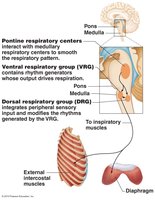
Dorsal Respiratory Group (DRG): Integrates input from stretch and chemoreceptors; relays to VRG.
Ventral Respiratory Group (VRG): Sets basic rhythm; contains inspiratory and expiratory neurons.
Pontine Respiratory Center: Modifies rhythm for activities like speech, sleep, and exercise.
Chemoreceptor Regulation
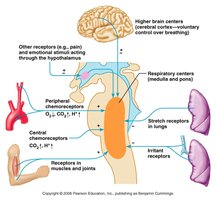
Increased pCO2 → hyperventilation
Decreased pCO2 → hypoventilation
Decreased pO2 (< 60 mmHg) → hyperventilation
Decreased pH (acidosis) → hyperventilation
Clinical Correlations: Respiratory Disorders
Emphysema and COPD
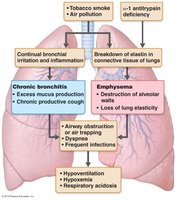
Emphysema: Destruction of alveolar walls, loss of elasticity, often due to smoking or pollution.
COPD: Chronic bronchitis plus emphysema; characterized by airway obstruction and frequent infections.
Infant Respiratory Distress Syndrome (IRDS)
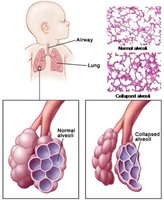
Caused by insufficient surfactant in premature infants.
Results in high surface tension, alveolar collapse, and difficulty expanding lungs.
Asthma
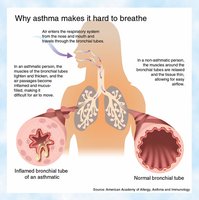
Chronic airway inflammation and hyper-responsiveness.
Causes include allergies (extrinsic), infections, irritants, or exercise (intrinsic).
Symptoms: Dyspnea, wheezing, coughing, mucus production.
Tuberculosis
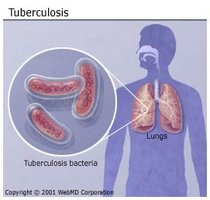
Caused by Mycobacterium tuberculosis infection.
Symptoms: Chest pain, coughing blood, granulomas, lung cavitation; can spread to other organs.
Cystic Fibrosis
Genetic disorder affecting Cl- transport in respiratory epithelium.
Leads to thick mucus, chronic infections, and obstructive pulmonary disease; also affects digestive and reproductive systems.
Summary Table: Key Laws and Effects in Respiration
Law/Effect | Description |
|---|---|
Boyle’s Law | Gas pressure is inversely related to volume () |
Dalton’s Law | Total pressure is the sum of partial pressures of all gases |
Henry’s Law | Gas dissolves in liquid in proportion to its partial pressure |
Bohr Effect | Decreased pH lowers Hb affinity for O2 |
Haldane Effect | Deoxygenated Hb carries more CO2 |
