 Indietro
Tissues & Histology: Structure, Function, and Classification
Guida di studio - Note intelligenti
 Appunti personalizzati basati sui tuoi materiali, ampliati con definizioni chiave, esempi e contesto.
Introduction to Tissues & Histology
Overview of Tissue Types
The human body is composed of four primary tissue types, each with distinct structure and function. Understanding these tissues is fundamental to anatomy and physiology.
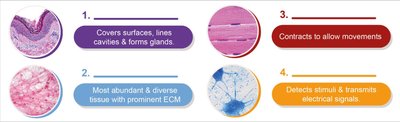
Epithelial Tissue: Covers surfaces, lines cavities, and forms glands.
Connective Tissue: Most abundant and diverse, with a prominent extracellular matrix (ECM).
Muscle Tissue: Contracts to allow movements.
Nervous Tissue: Detects stimuli and transmits electrical signals.
Histology: The Study of Tissues
Histology is the scientific study of tissue structure and function, including cell shape, size, arrangement, and the ECM. Tissues appear transparent under a microscope before being stained with dyes, which enhance visibility of cellular structures.

Extracellular Matrix (ECM): The material surrounding cells, composed of ground substance and protein fibers, is essential for tissue function.
Classification and Map of Tissues
Tissue Development and Classification
Tissues are classified based on their structure and function. The four main types are further subdivided into specialized categories.
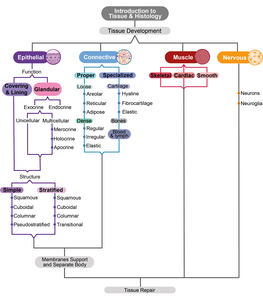
Epithelial: Covering, lining, and glandular types.
Connective: Proper (loose, dense), specialized (cartilage, bone, blood, lymph).
Muscle: Skeletal, cardiac, smooth.
Nervous: Neurons and neuroglia.
Epithelial Tissue
Functions and Locations
Epithelial tissue forms sheets of tightly packed cells on surfaces adjacent to open spaces. It covers body surfaces, lines internal cavities and ducts, and forms glands.
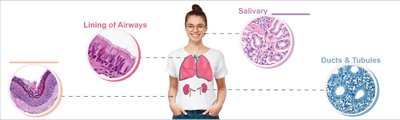
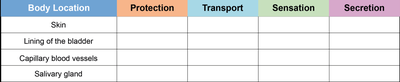
Protection: Skin, lining of bladder.
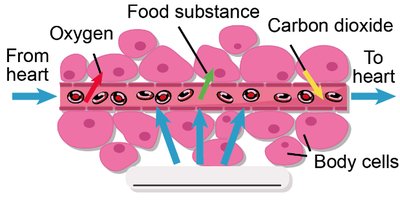
Transport: Capillary blood vessels.
Sensation: Specialized sensory regions.
Secretion: Salivary glands.
Functional Classification
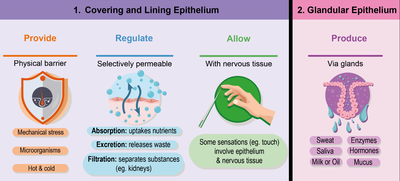
Epithelial tissue is categorized into two major functional groups:
Covering and Lining Epithelium: Provides a physical barrier, regulates permeability, and allows sensation.
Glandular Epithelium: Produces secretions via glands (e.g., sweat, enzymes, hormones).
Characteristics of Epithelial Tissue
Epithelial tissue exhibits several commonly recognized characteristics:
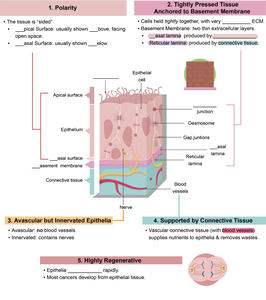
Polarity: Distinct apical (top) and basal (bottom) surfaces.
Anchored to Basement Membrane: Basal lamina (produced by epithelium) and reticular lamina (produced by connective tissue).
Avascular but Innervated: No blood vessels, but rich in nerves.
Supported by Connective Tissue: Connective tissue provides nutrients and structural support.
Highly Regenerative: Rapid cell division, making epithelium prone to cancer.
Structural Naming of Epithelial Tissue
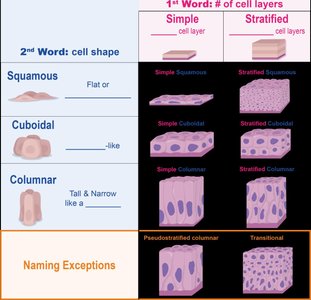
Most epithelial tissues are named using a two-word system:
First Word: Number of cell layers (simple = one layer, stratified = multiple layers).
Second Word: Cell shape (squamous = flat, cuboidal = cube-like, columnar = tall and narrow).
Examples of Epithelial Tissue Types
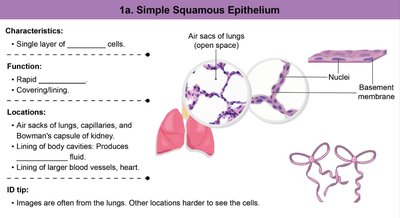
Simple Squamous Epithelium: Single layer of flat cells; ideal for rapid diffusion and lining blood vessels and air sacs of lungs.
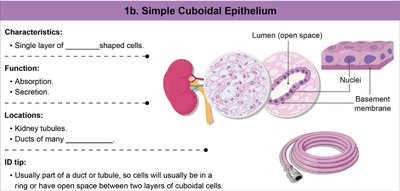
Simple Cuboidal Epithelium: Single layer of cube-shaped cells; found in kidney tubules and ducts, functions in absorption and secretion.
Pseudostratified Columnar Epithelium: Appears layered but all cells touch the basement membrane; found in upper respiratory passages, often with cilia and goblet cells.
Functional Table: Epithelial Tissue in Body Locations
The following table summarizes the primary functions of epithelial tissue in various body locations:
Body Location | Protection | Transport | Sensation | Secretion |
|---|---|---|---|---|
Skin | X | |||
Lining of the bladder | X | |||
Capillary blood vessels | X | |||
Salivary gland | X |
Summary
Tissues are fundamental units of structure and function in the human body. Epithelial tissue covers and protects surfaces, connective tissue supports and connects, muscle tissue enables movement, and nervous tissue transmits signals. Understanding their classification, structure, and function is essential for further study in anatomy and physiology.
