 Indietro
Urinary System: Structure, Function, and Regulation
Guida di studio - Note intelligenti
 Appunti personalizzati basati sui tuoi materiali, ampliati con definizioni chiave, esempi e contesto.
The Urinary System: Overview I
Main Functions of the Urinary System
The urinary system is essential for maintaining homeostasis by regulating the composition and volume of blood, removing waste products, and controlling blood pressure. It consists of several organs that work together to produce, transport, store, and eliminate urine.
Excretion: Removal of metabolic wastes from the body.
Elimination: Discharge of waste products from the body.
Homeostatic Regulation: Regulation of blood volume, blood pressure, plasma ion concentrations, blood pH, conservation of nutrients, and assistance to the liver.
Organs of the Urinary System
Kidneys: Produce urine.
Ureters: Transport urine toward the urinary bladder.
Urinary Bladder: Temporarily stores urine prior to urination.
Urethra: Conducts urine to the exterior; in males, also transports semen.
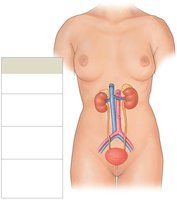
Anatomy of the Kidneys
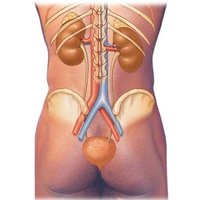
Kidney Location and Structure
The kidneys are located on either side of the vertebral column, capped by the adrenal glands. Their position is maintained by the peritoneum, contact with adjacent organs, and supporting connective tissues.
Renal Cortex: The outer region containing the majority of nephrons.
Renal Medulla: The inner region, organized into renal pyramids.
Renal Pelvis: The central collecting region for urine before it enters the ureter.
Nephron Structure and Types
Cortical and Juxtamedullary Nephrons
Nephrons are the functional units of the kidney, responsible for filtering blood and forming urine. There are two main types:
Cortical Nephrons: Located primarily in the renal cortex; responsible for most urine formation.
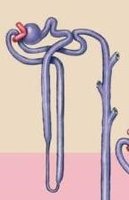
Juxtamedullary Nephrons: Located near the medulla; have long loops that extend deep into the medulla, important for concentrating urine.
O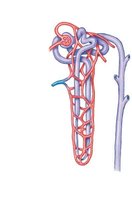
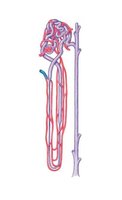
Nephron Blood Supply
Each nephron receives blood via an afferent arteriole, which forms the glomerulus, a capillary knot where filtration occurs. Blood leaves via the efferent arteriole, supplying peritubular capillaries or vasa recta.
I O
Renal Corpuscle and Filtration
Structure of the Renal Corpuscle
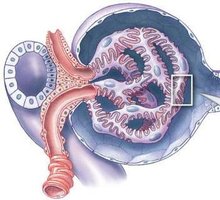
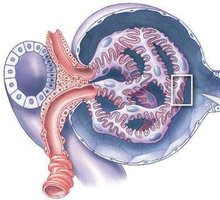
The renal corpuscle consists of the glomerulus and the glomerular (Bowman's) capsule. Filtration occurs across a specialized membrane composed of capillary endothelium, dense layer, and filtration slits formed by podocytes.
Filtration Slits: Narrow gaps between podocyte pedicels, allowing passage of water and small solutes.
Mesangial Cells: Support glomerular capillaries and regulate filtration.
Glomerular Filtration Rate (GFR) and Regulation I
Filtration Pressures
Filtration at the glomerulus is driven by hydrostatic pressure and opposed by capsular hydrostatic pressure and blood colloid osmotic pressure. The net filtration pressure (NFP) determines the glomerular filtration rate (GFR).
Glomerular Hydrostatic Pressure (GHP): Favors filtration.
Capsular Hydrostatic Pressure (CsHP): Opposes filtration.
Blood Colloid Osmotic Pressure (BCOP): Opposes filtration.
Autoregulation of GFR
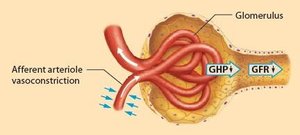
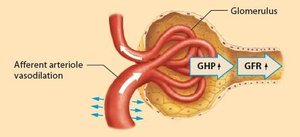
Local mechanisms adjust the diameter of afferent arterioles to maintain GFR despite changes in systemic blood pressure.
Vasoconstriction: Decreases GHP and GFR.
Vasodilation: Increases GHP and GFR.
Nephron Tubule Processes
Filtration, Reabsorption, and Secretion
Nephron tubules perform three main processes:
Filtration: Occurs at the renal corpuscle; water and solutes pass into the nephron.
Reabsorption: Movement of substances from the tubule back into the blood.
Secretion: Addition of substances from blood into the tubule for excretion.
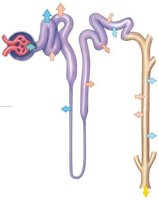
Countercurrent Multiplication in the Nephron Loop
Mechanism and Importance
The nephron loop (loop of Henle) uses countercurrent multiplication to create a concentration gradient in the medulla, allowing for efficient water and solute reabsorption and urine concentration.
Descending Limb: Permeable to water, impermeable to solutes.
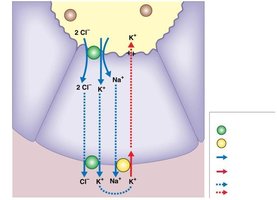
Ascending Limb: Impermeable to water, actively transports Na+ and Cl- out.
Hormonal Regulation of the Urinary System
Renin-Angiotensin-Aldosterone System (RAAS)
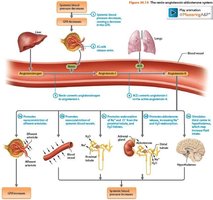
RAAS is activated by decreased blood pressure or volume, leading to increased sodium and water reabsorption, vasoconstriction, and increased blood pressure.
Renin: Released by juxtaglomerular cells.
Angiotensin II: Stimulates aldosterone release and vasoconstriction.
Aldosterone: Increases sodium reabsorption in DCT and collecting duct.
Summary Table: Key Structures and Functions
Structure | Main Function |
|---|---|
Kidney | Filtration, urine production |
Nephron | Filtration, reabsorption, secretion |
Renal Corpuscle | Filtration |
Nephron Loop | Concentration gradient, water/solute reabsorption |
DCT/Collecting Duct | Final adjustments, hormone regulation |
