 Indietro
Basic Concepts of Enzyme Action: Structure, Function, and Catalysis
Guida di studio - Note intelligenti
 Appunti personalizzati basati sui tuoi materiali, ampliati con definizioni chiave, esempi e contesto.
Basic Concepts of Enzyme Action
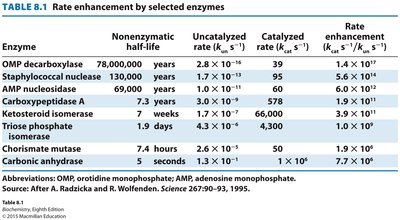
Remarkable Rate Enhancements
Enzymes are biological catalysts that dramatically increase the rate of biochemical reactions, often by factors of millions or more compared to uncatalyzed reactions. This rate enhancement is crucial for sustaining life under physiological conditions.
Rate Enhancement: Enzymes can accelerate reactions that would otherwise take years or longer to occur spontaneously.
Example: OMP decarboxylase increases reaction rate by 1.4 x 10¹⁷ times compared to the nonenzymatic process.
Enzyme | Nonenzymatic half-life | Uncatalyzed rate (kuncat) | Catalyzed rate (kcat) | Rate enhancement (kcat/kuncat) |
|---|---|---|---|---|
OMP decarboxylase | 78,000,000 years | 2.8 x 10⁻¹⁶ | 39 | 1.4 x 10¹⁷ |
Staphylococcal nuclease | 130,000 years | 1.7 x 10⁻¹⁰ | 95 | 5.6 x 10¹¹ |
AMP nucleosidase | 69,000 years | 1.7 x 10⁻¹⁰ | 130 | 7.6 x 10¹¹ |
Carboxypeptidase A | 7.3 years | 3.0 x 10⁻⁷ | 600 | 2.0 x 10⁹ |
Ketosteroid isomerase | 7 weeks | 1.7 x 10⁻⁶ | 430,000 | 2.5 x 10¹¹ |
Triose phosphate isomerase | 1.9 days | 4.3 x 10⁻⁵ | 5,000 | 1.2 x 10⁸ |
Chorismate mutase | 7.4 hours | 2.6 x 10⁻⁵ | 50 | 1.9 x 10⁶ |
Carbonic anhydrase | 5 seconds | 1.3 x 10⁻¹ | 1.0 x 10⁶ | 7.7 x 10⁶ |
Mild Reaction Conditions
Enzymes operate under physiological conditions (neutral pH, moderate temperature), unlike harsh laboratory conditions required for similar chemical reactions. This allows for safe and efficient catalysis in living organisms.
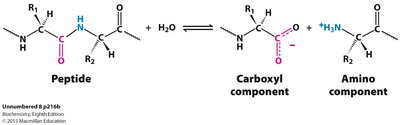
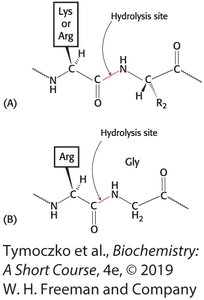
Example: Trypsin and thrombin catalyze peptide bond hydrolysis at body temperature and neutral pH.
High Degree of Specificity
Enzymes exhibit remarkable specificity for their substrates, often distinguishing between molecules with subtle structural differences. This specificity is essential for metabolic regulation and prevents unwanted side reactions.
Substrate Specificity: Enzymes recognize and bind specific substrates via their active sites.
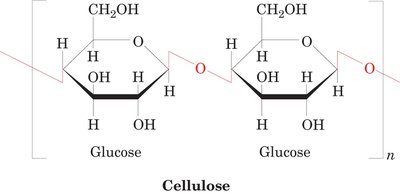
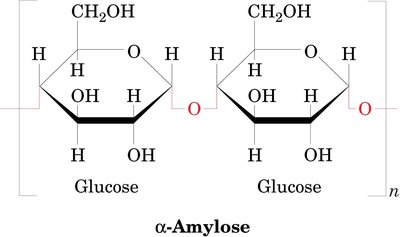
Example: α-amylase acts on α-1,4 linkages in starch but not β-1,4 linkages in cellulose.
Thermodynamics and Free Energy
The free energy change (ΔG) of a reaction determines its thermodynamic favorability, but not its rate. Enzymes do not alter ΔG or the equilibrium constant (Keq), but they lower the activation energy (ΔG‡), increasing the reaction rate.
Gibbs Free Energy:
Standard State:
Biochemical Standard State: [H+] = 10-7 M (pH 7)
Equilibrium: At equilibrium,
Free Energy Diagrams
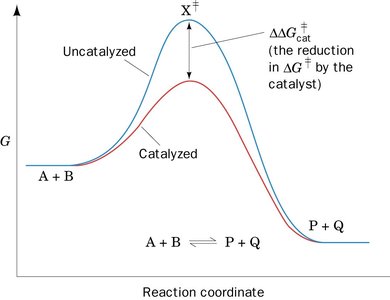
Free energy diagrams illustrate the energy changes during a reaction. Enzymes lower the activation energy barrier, allowing reactions to proceed faster, but do not change the overall free energy difference between reactants and products.
Activation Energy: The energy required to reach the transition state.
Effect of Catalysts: Catalysts lower ΔG‡ but do not affect ΔG or Keq.
Enzymes as Biological Catalysts
Enzymes are primarily proteins (some are RNAs) that catalyze nearly all biological processes. The reactants in enzyme-catalyzed reactions are called substrates. Enzymes are not consumed or altered during the reaction.
Key Features: Specificity, efficiency, and regulation.
Substrate: The molecule upon which an enzyme acts.
Features of the Active Site and Catalysis
Active Site Features
The active site of an enzyme is the region where substrate binding and catalysis occur. It is highly specific and complementary to the substrate's structure, facilitating the correct positioning for the reaction.
Substrate Specificity: Active sites are shaped to fit specific substrates.
Proximity and Orientation: Enzymes bring substrates close together and orient them for optimal reactivity.
Transition State Stabilization: Enzymes stabilize the transition state, lowering the activation energy.
Models of Enzyme-Substrate Interaction
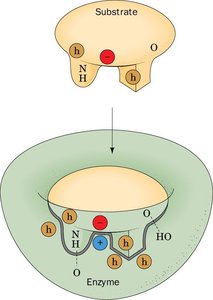
Two main models describe how enzymes interact with substrates: the lock-and-key model and the induced fit model.
Lock-and-Key Model: The substrate fits precisely into the enzyme's active site.
Induced Fit Model: The enzyme changes shape upon substrate binding to better accommodate the substrate.
Multiple Substrate Reactions
Some enzyme-catalyzed reactions involve more than one substrate. The enzyme must bind both substrates simultaneously and orient them correctly for the reaction to proceed.
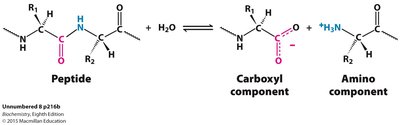
Example: Proteases often require binding of both the peptide and water for hydrolysis.
Entropy Reduction and Effective Molarity
Enzymes reduce the entropy of substrates by binding them in close proximity and correct orientation, increasing the effective molarity and facilitating the reaction.
Entropy Reduction: Decreases randomness, making the reaction more likely to occur.
Effective Molarity: The local concentration of reactants is increased within the active site.
Protease Catalysis and Substrate Specificity
Proteases are enzymes that catalyze the hydrolysis of peptide bonds. They often recognize specific amino acid sequences and cleave at defined sites.
Carboxypeptidase A: Cleaves peptide bonds preceding large hydrophobic residues at the C-terminus.
Trypsin: Cleaves after lysine or arginine residues.
Thrombin: Cleaves after arginine, but only when glycine is present at the next position.

Practice Questions
What features of the active site promote substrate specificity?
How does the enzyme take advantage of proximity & orientation effects (entropy reduction)?
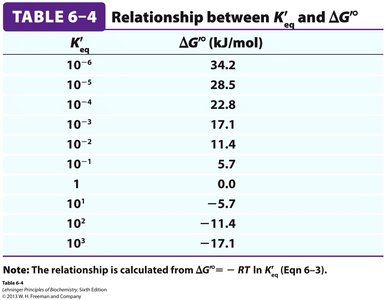
Summary Table: Relationship between Equilibrium Constant and Free Energy
The equilibrium constant (Keq) and standard free energy change (ΔGo) are related by the equation .
Keq | ΔGo (kJ/mol) |
|---|---|
10-6 | 34.2 |
10-5 | 28.5 |
10-4 | 22.8 |
10-3 | 17.1 |
10-2 | 11.4 |
10-1 | 5.7 |
1 | 0.0 |
10 | -5.7 |
102 | -11.4 |
103 | -17.1 |
Take-Away
Enzymes are highly efficient biological catalysts, operating under mild conditions and with high specificity.
They lower the activation energy, increasing reaction rates without altering the equilibrium or free energy change.
Active site features, substrate specificity, and entropy reduction are key to enzyme function.
