 Indietro
Biochemistry Foundations: Molecular Structure, Interactions, and Protein Function
Guida di studio - Note intelligenti
 Appunti personalizzati basati sui tuoi materiali, ampliati con definizioni chiave, esempi e contesto.
Introduction to Biochemistry
Definition and Scope
Biochemistry is the scientific discipline that explores the molecular basis of life. It focuses on the structure, function, and interactions of biological molecules within living organisms. The field encompasses the study of macromolecules such as proteins, nucleic acids, carbohydrates, and lipids, as well as their roles in cellular processes.
Biochemistry investigates how simple building blocks assemble into complex macromolecules and cellular structures.
Major research areas include structural biology, enzymology, proteomics, and metabolism.
Biochemistry provides the language to understand all living systems at the molecular level.
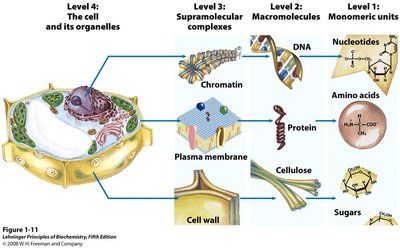
Structural Hierarchy in Cells
Levels of Molecular Organization
Cells are organized in a hierarchical manner, from simple monomeric units to complex organelles. This organization is fundamental to understanding cellular function and biochemistry.
Monomeric units: Nucleotides, amino acids, sugars, and fatty acids.
Macromolecules: DNA, RNA, proteins, polysaccharides.
Supramolecular complexes: Chromatin, plasma membrane, cell wall.
Organelles: Nucleus, mitochondria, etc.
Protein Function and Examples
Storage Proteins: Ferritin
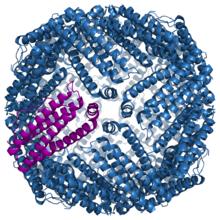
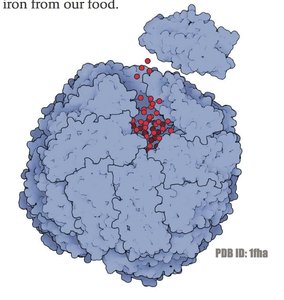
Proteins serve diverse functions in cells, including storage, defense, and structural support. Ferritin is a protein that stores iron ions, making them available when needed for processes such as hemoglobin function.
Ferritin stores iron from dietary sources and releases it as required.
Iron is essential for oxygen transport and enzyme activity.
Defense Proteins: Antibodies
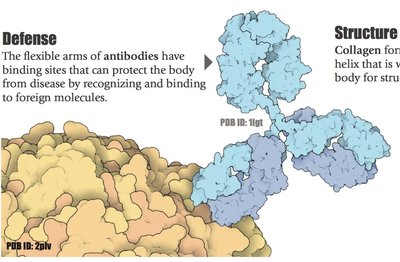
Antibodies are proteins that protect the body by binding to foreign molecules (antigens) and neutralizing them. Their flexible arms allow for specific recognition and binding.
Antibodies are crucial for immune defense.
They recognize and bind to pathogens, marking them for destruction.
Structural and Motor Proteins: Muscle Proteins
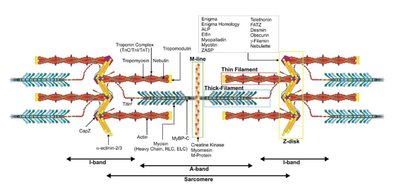
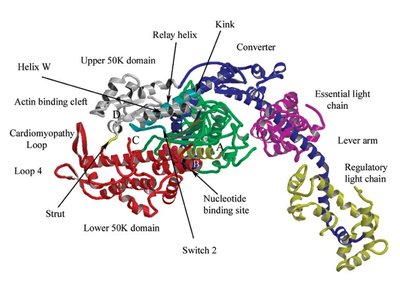
Muscle contraction and movement are facilitated by structural and motor proteins, such as actin and myosin. These proteins convert chemical energy into mechanical energy.
Actin and myosin are key components of muscle fibers.
They interact to produce contraction and movement.
Biopolymers and Monomers
Types of Biopolymers
Biopolymers are large molecules formed by the polymerization of monomeric units. Their properties and functions depend on the nature of their monomers and the type of bonding.
Polysaccharides: Polymers of sugars (e.g., starch, cellulose).
Proteins: Polymers of amino acids.
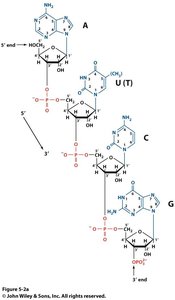
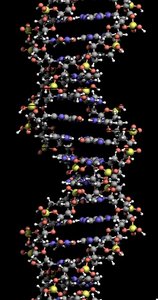
Nucleic acids: Polymers of nucleotides (DNA, RNA).
Lipids: Assemblies of fatty acids (not true polymers).
Large and complex biomolecules are constructed from simple monomers via covalent bonding.
Chemical Bonds in Biochemistry
Covalent and Non-Covalent Interactions
Biological macromolecules are stabilized by both covalent and non-covalent interactions. Covalent bonds form the backbone, while non-covalent interactions determine three-dimensional structure and function.
Covalent bonds: Strong bonds formed by electron sharing.
Non-covalent interactions: Include hydrogen bonds, ionic bonds, van der Waals forces, and hydrophobic effects.
Non-covalent interactions are weaker but numerous, providing stability and flexibility.
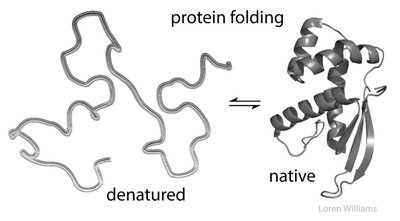
Protein Folding
Protein folding is driven primarily by non-covalent interactions, except for disulfide bonds in extracellular proteins. Understanding these interactions is essential for predicting protein structure.
Intramolecular non-covalent interactions are critical for protein folding.
Hydrophobic effect, hydrogen bonds, and ionic interactions play major roles.
Covalent Bonding Principles
Formation and Properties
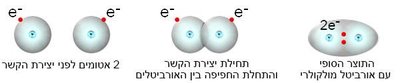
Covalent bonds are formed by the sharing of electrons between atoms, typically non-metals. The overlap of atomic orbitals leads to bond formation, and the strength of the bond depends on the nature of the atoms involved.
Valence electrons are shared to achieve stable electron configurations.
Bond strength is determined by the balance of attractive and repulsive forces.
Electronegativity and Bond Polarity
Electronegativity
Electronegativity is the tendency of an atom to attract electrons in a bond. The difference in electronegativity between atoms determines bond polarity and the type of interaction.
Higher electronegativity leads to stronger attraction for electrons.
Bond polarity affects molecular interactions and stability.
Bond Energies in Biochemistry
Relative Strengths
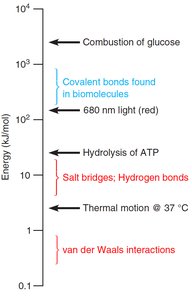
Covalent bonds are significantly stronger than non-covalent interactions. The energies of these bonds influence the stability and dynamics of biological molecules.
Covalent bonds: 150–600 kJ/mol
Non-covalent bonds: 0.5–20 kJ/mol
Thermal energy and ATP hydrolysis are reference points for biological processes.
Types of Non-Covalent Interactions
Electrostatic (Ionic) Interactions
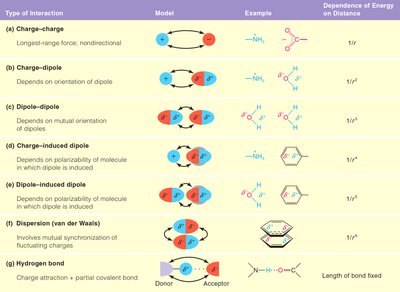
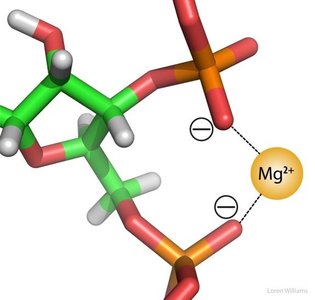
Electrostatic interactions occur between charged species (cations and anions). These interactions can be attractive or repulsive and are described by Coulomb's law.
Strength depends on charge magnitude and distance.
Salt bridges are important in protein stability.
Dipole Interactions
Dipole interactions arise from the separation of charges within a molecule. Permanent and induced dipoles contribute to molecular stability and packing.
Dipole-dipole, dipole-induced dipole, and charge-dipole interactions are common.
Van der Waals forces result from fluctuating dipoles.
Hydrogen Bonding
Hydrogen bonds are formed when a hydrogen atom covalently bound to an electronegative donor interacts with an electronegative acceptor. These bonds are crucial for the structure and function of proteins and nucleic acids.
Hydrogen bonds are directional and strongest when linear.
They stabilize secondary and tertiary structures in proteins and DNA.
Summary Table: Types of Non-Covalent Interactions
Type of Interaction | Model | Example | Dependence of Energy on Distance |
|---|---|---|---|
Charge–charge | Between ions | Na+ and Cl- | 1/r |
Charge–dipole | Ion and polar molecule | NH4+ and H2O | 1/r2 |
Dipole–dipole | Two polar molecules | H2O and H2O | 1/r3 |
Charge–induced dipole | Ion and polarizable molecule | Na+ and benzene | 1/r4 |
Dispersion (van der Waals) | Fluctuating dipoles | Two benzene rings | 1/r6 |
Hydrogen bond | Donor and acceptor | Alcohol and keto group | Fixed length |
Functional Groups in Biology
Common Functional Groups
Functional groups are specific groups of atoms within molecules that determine their chemical properties and reactivity. They are essential for the structure and function of biomolecules.
Examples include hydroxyl, carboxyl, amino, phosphate, and methyl groups.
Functional groups influence molecular dipoles and interactions.
Key Equations
Coulomb's Law
Coulomb's law describes the force between two charges:
Where F is the force, k is a constant, q1 and q2 are the charges, and r is the distance between them.
Summary
Biochemistry is the study of life at the molecular level, focusing on the structure, function, and interactions of biological macromolecules. Understanding the principles of molecular organization, chemical bonding, and non-covalent interactions is essential for grasping the complexity and dynamics of living systems.
