 Indietro
Biochemistry I: Chapter 1 – The Facts of Life
Guida di studio - Note intelligenti
 Appunti personalizzati basati sui tuoi materiali, ampliati con definizioni chiave, esempi e contesto.
Chapter 1: The Facts of Life – Chemistry is the Logic of Biological Phenomena
Introduction to Biochemistry
Biochemistry is the study of chemical reactions in living systems, focusing on life at the molecular level. It interprets the elaborate structure of biological molecules and the complexity of vital mechanisms in chemical terms. Understanding biochemistry is essential for grasping the basics of biological systems, biomolecules, and their chemistry.
Definition: Biochemistry explores the chemical logic behind biological phenomena.
Importance: It provides insight into how lifeless molecules compose living things and how their interactions drive life processes.
Applications: Post-genomic era advancements, such as genome editing and synthetic biology, rely on biochemistry.
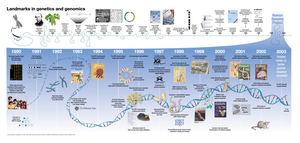
The Human Genome Project and the Post-Genomic Era
The Human Genome Project (HGP) was a landmark initiative that mapped the nearly complete sequence of the human genome, providing a blueprint for understanding what it means to be human. This achievement has enabled scientists to identify and characterize gene sequences and has given rise to synthetic biology.
Human Genome: Contains approximately 3 × 10⁹ base pairs.
Impact: Facilitates gene identification, genome editing, and advances in personalized medicine.
Ongoing Challenges: Complete understanding of genome function and regulation remains a major scientific goal.
Distinctive Properties of Living Systems
Characteristics of Living Systems
Living systems are distinguished by their complexity, organization, functional biological structures, energy transformations, and self-replication abilities.
Organization: Organisms are highly organized and complicated.
Functionality: Biological structures serve specific purposes.
Energy Transformation: Living systems actively engage in energy transformations (e.g., ATP, NADPH).
Self-Replication: DNA enables remarkable capacity for self-replication.
Biomolecules: The Building Blocks of Life
Biomolecules are carbon compounds essential for life, including amino acids/proteins, nucleic acids, carbohydrates, and lipids. Their properties—such as directionality, three-dimensional architecture, asymmetry, and bonding—determine their fitness for biological functions.
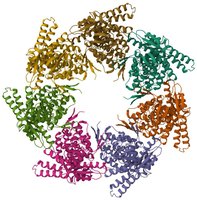
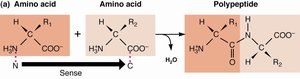
Amino Acids & Proteins: Proteins are polymers of amino acids, responsible for structural and functional roles.
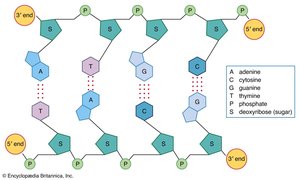
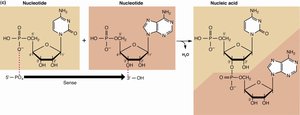
Nucleic Acids: DNA and RNA are polymers of nucleotides, storing and transmitting genetic information.
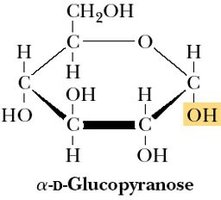
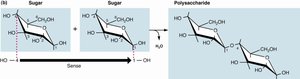
Carbohydrates: Polysaccharides are built by joining sugars, serving as energy sources and structural components.
Lipids: Essential for membrane structure and energy storage.
Covalent Bond Formation by H, C, N, and O
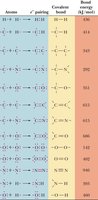
Hydrogen, carbon, nitrogen, and oxygen form covalent bonds by electron pair sharing, making them suitable for the chemistry of life. These elements constitute over 99% of atoms in the human body.
Covalent Bonds: Strong bonds that hold atoms together to form molecules.
Bond Energies: Vary depending on the atoms involved; essential for molecular stability.
Properties of Biomolecules and Their Fitness to Living Conditions
Macromolecular Structure and Information
Macromolecules and their building blocks possess directionality, are informational, and have characteristic three-dimensional architecture. These features maintain biological structure and determine biomolecular interactions.
Directionality: Polymers have a defined sense (e.g., N- to C-terminus in proteins, 5' to 3' in nucleic acids).
Informational: Sequence of monomers encodes biological information.
3D Architecture: Determines function and interaction specificity.
Three-Dimensional Architecture of Biomolecules
Biomolecules exhibit unique three-dimensional structures, which are critical for their biological activity and interactions.
Protein Folding: Proteins fold into specific shapes to perform their functions.
Structural Complementarity: Enables precise molecular recognition and interaction.

Covalent and Weak Forces in Biomolecular Structure
Covalent bonds provide stability, while weak forces (Van der Waals, hydrogen bonds, ionic interactions, hydrophobic interactions) profoundly influence biomolecular structure and behavior. Weak forces are constantly forming and breaking under physiological conditions, with energies ranging from 0.4 to 30 kJ/mol.
Covalent Bonds: Hold atoms together in molecules.
Weak Forces: Mediate interactions, flexibility, and recognition.
Van der Waals Forces
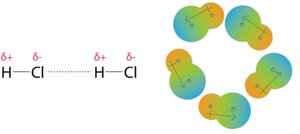
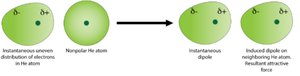
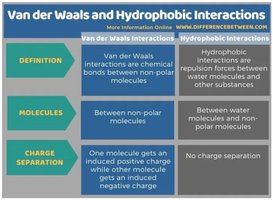
Van der Waals forces are the weakest intermolecular forces, consisting of dipole-dipole and dispersion forces. They are important for biomolecular interactions, especially between nonpolar molecules.
Dipole-Dipole Forces: Attractive forces between polar molecules.
Dispersion Forces: Result from motion of electrons in atoms and nonpolar molecules.
Energy Range: 0.4–4.0 kJ/mol.
Hydrogen Bonds
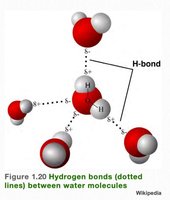
Hydrogen bonds are biologically important, formed between a polar Xδ--Hδ+ bond and a species with a lone pair (Yδ-). Common X atoms are oxygen and nitrogen. Hydrogen bonds stabilize structures such as DNA and proteins.
Formation: Requires a polar bond and a lone pair.
Energy Range: 12–30 kJ/mol.
Biological Importance: Stabilizes double helix, protein secondary structure.
Ionic Bonds
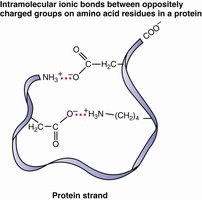
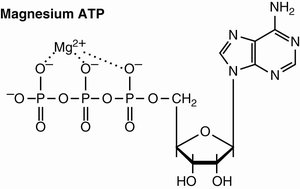
Ionic bonds contribute to structural specificity and stability of proteins. They are electrostatic forces between oppositely charged particles, holding ions together in ionic compounds.
Structural Specificity: Important for protein folding and function.
Stability: Enhances protein stability.
Structural Complementarity and Biomolecular Recognition
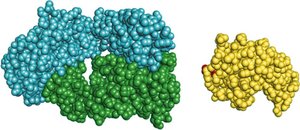
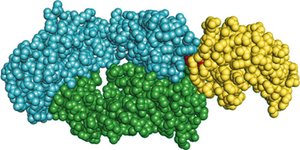
Structural complementarity is essential for biomolecular recognition, such as antibody-antigen interactions. Weak chemical forces mediate these recognitions, ensuring specificity and proper biological function.
Antibody-Antigen: Antibodies have pockets complementary to antigens.
Recognition: Driven by weak forces (hydrogen bonds, Van der Waals, ionic).
Weak Forces and Environmental Conditions
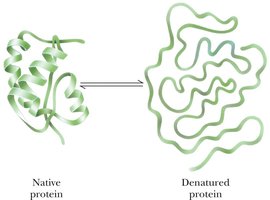
Weak forces restrict organisms to a narrow range of environmental conditions. Protein denaturation and renaturation illustrate the sensitivity of biomolecular structure to environmental changes.
Denaturation: Loss of native structure due to environmental stress.
Renaturation: Recovery of structure under favorable conditions.
Hydrophobic Interactions
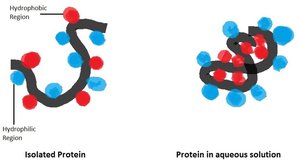
Hydrophobic interactions are crucial in biological systems. Nonpolar molecules tend to aggregate in water, minimizing contact and stabilizing protein structures by reducing hydrophobic surface exposure.
Protein Stability: Hydrophobic interactions keep proteins biologically active.
Minimizing Water Contact: Nonpolar molecules clump to reduce undesirable interactions.
Summary and Take-Home Messages
Chemistry is the logic of biological phenomena.
Biomolecules include amino acids/proteins, nucleic acids, carbohydrates, and lipids.
Properties of biomolecules—directionality, 3D architecture, asymmetry, covalent bonds, and weak forces—are essential for life.
Weak forces (Van der Waals, hydrogen bonds, ionic, hydrophobic) are fundamental to biomolecular interactions and stability.
