 Indietro
Carbohydrate Metabolism: Glycolysis, Gluconeogenesis, Glycogen Metabolism, and the Pentose Phosphate Pathway
Guida di studio - Note intelligenti
 Appunti personalizzati basati sui tuoi materiali, ampliati con definizioni chiave, esempi e contesto.
Carbohydrate Metabolism Overview
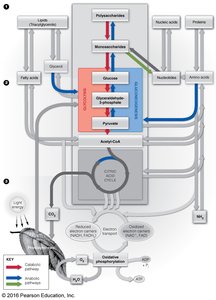
Catabolic and Anabolic Pathways
Carbohydrate metabolism encompasses both the breakdown (catabolism) and synthesis (anabolism) of sugars. These processes are central to cellular energy production and biosynthesis.
Catabolism: The breakdown of carbohydrates to generate ATP, primarily via glycolysis.
Anabolism: The synthesis of carbohydrates, including gluconeogenesis and glycogen biosynthesis.
Pentose Phosphate Pathway: Provides NADPH for reductive biosynthesis and ribose-5-phosphate for nucleotide synthesis.
Glycolysis
Phases of Glycolysis
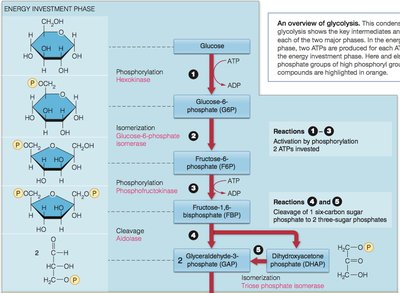
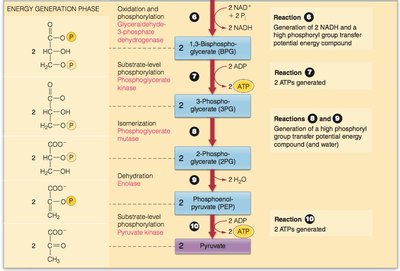
Glycolysis is the metabolic pathway that converts glucose into pyruvate, generating ATP and NADH. It consists of two main phases: the energy investment phase and the energy generation phase.
Energy Investment Phase: Glucose is phosphorylated and split into two three-carbon molecules, requiring ATP input.
Energy Generation Phase: The three-carbon molecules are further processed, resulting in ATP and NADH production.
Stepwise Reactions and Enzymes
Each step of glycolysis is catalyzed by a specific enzyme, with distinct products and energy changes.
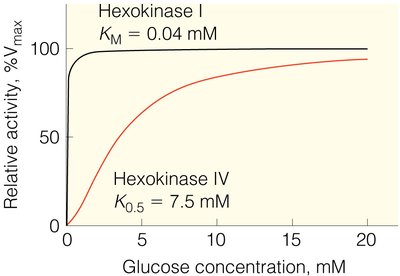
Hexokinase: Catalyzes the phosphorylation of glucose to glucose-6-phosphate (G6P), using ATP. This step prevents glucose from leaving the cell and is the first ATP investment.
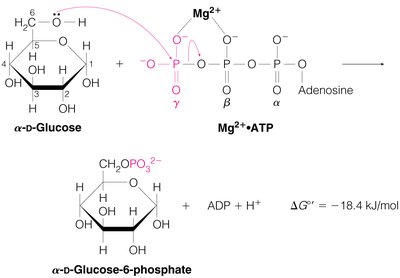
Hexokinase Isoforms: Isoforms I, II, III have low KM (high affinity); Hexokinase IV (glucokinase) in the liver has high KM, allowing the liver to regulate glucose utilization.
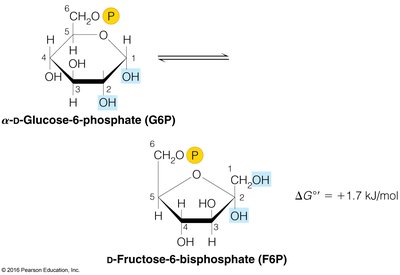
Glucose-6-phosphate Isomerase: Converts G6P to fructose-6-phosphate (F6P), setting up for aldol cleavage.
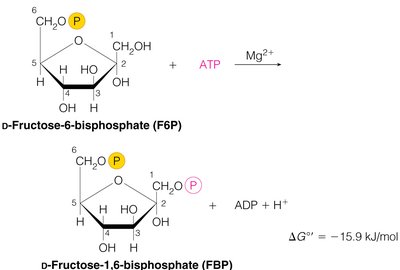
Phosphofructokinase (PFK): Phosphorylates F6P to fructose-1,6-bisphosphate (FBP), using ATP. This is a major regulatory step.
Aldolase: Cleaves FBP into two triose phosphates: dihydroxyacetone phosphate (DHAP) and glyceraldehyde-3-phosphate (GAP).
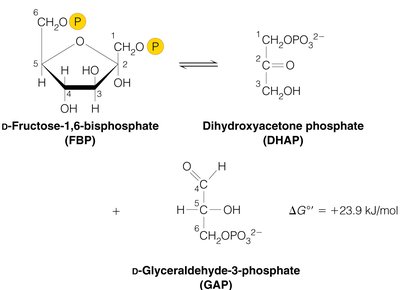
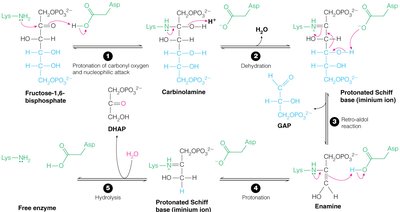
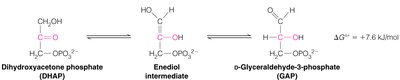
Triose Phosphate Isomerase: Interconverts DHAP and GAP, ensuring both molecules can proceed through glycolysis.
Glyceraldehyde-3-phosphate Dehydrogenase (GAPDH): Oxidizes GAP, producing NADH and 1,3-bisphosphoglycerate (BPG), a high-energy compound.

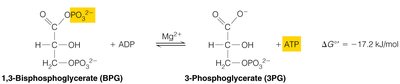
Phosphoglycerate Kinase: Transfers a phosphate from BPG to ADP, generating ATP and 3-phosphoglycerate (3PG).
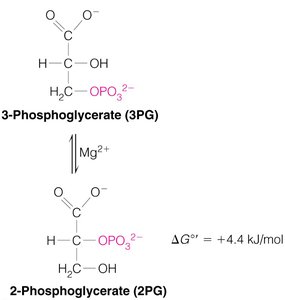
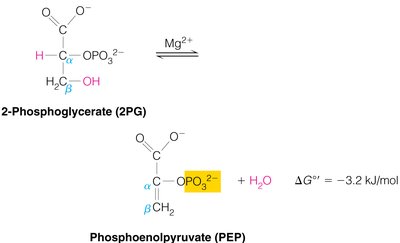
Phosphoglycerate Mutase: Converts 3PG to 2-phosphoglycerate (2PG).
Enolase: Dehydrates 2PG to phosphoenolpyruvate (PEP), another high-energy compound.
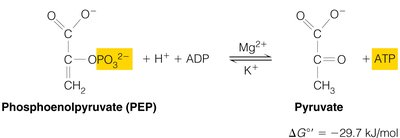
Pyruvate Kinase: Transfers a phosphate from PEP to ADP, generating ATP and pyruvate.
Energy Yield of Glycolysis
Glycolysis yields a net gain of 2 ATP and 2 NADH per glucose molecule.
ATP: 2 molecules are invested, 4 are produced, net gain is 2 ATP.
NADH: 2 molecules are produced, which can be used in further metabolic processes.
Nicotinamide Dinucleotides in Metabolism
NAD+ and NADP+ Roles
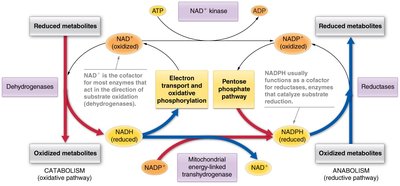
Nicotinamide dinucleotides are essential cofactors in redox reactions. NAD+ is primarily used in catabolic pathways, while NADP+ is used in anabolic pathways.
NAD+: Accepts electrons during glycolysis and the citric acid cycle, forming NADH.
NADP+: Accepts electrons during biosynthetic reactions, forming NADPH.
Aerobic and Anaerobic Fates of Glycolysis Products
Pyruvate Metabolism
Pyruvate, the end product of glycolysis, can be metabolized aerobically or anaerobically depending on oxygen availability.
Aerobic: Pyruvate enters the citric acid cycle, NADH is oxidized in mitochondria.
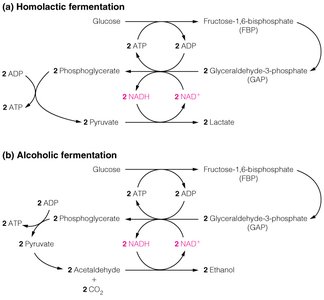
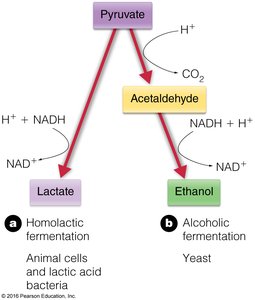
Anaerobic: Pyruvate is converted to lactate (homolactic fermentation) or ethanol (alcoholic fermentation), regenerating NAD+ for glycolysis.
Regulation of Glycolysis and Gluconeogenesis
Regulatory Factors
Glycolysis and gluconeogenesis are reciprocally regulated to prevent futile cycles and maintain metabolic balance.
AMP/ADP: Signal low energy state, activate glycolysis.
ATP: Signals high energy state, activates gluconeogenesis.
Acetyl-CoA: Inhibits glycolysis, promotes gluconeogenesis.
Citrate: Inhibits glycolysis, signals sufficient intermediates for the citric acid cycle.
Fructose-2,6-bisphosphate: Promotes glycolysis.
Glucose-6-phosphate: Inhibits glycolysis, promotes glycogen synthesis.
Other Sources and Fate of Glucose
Dietary Carbohydrates, Glycogen, and Pentose Pathway
Glucose can be derived from dietary carbohydrates, glycogen breakdown, or synthesized via gluconeogenesis. The pentose phosphate pathway is essential for nucleotide synthesis and provides NADPH for biosynthetic reactions.
Dietary Carbohydrates: Hydrolyzed to monosaccharides in the intestine.
Glycogen: Mobilized as phosphorylated monosaccharides inside cells.
Pentose Phosphate Pathway: Generates NADPH and ribose-5-phosphate.
Summary Table: Glycolysis Steps and Key Features
Step | Enzyme | Substrate | Product | ATP/NADH |
|---|---|---|---|---|
1 | Hexokinase | Glucose | Glucose-6-phosphate | -1 ATP |
2 | Glucose-6-phosphate isomerase | G6P | F6P | |
3 | Phosphofructokinase | F6P | FBP | -1 ATP |
4 | Aldolase | FBP | DHAP + GAP | |
5 | Triose phosphate isomerase | DHAP | GAP | |
6 | GAPDH | GAP | BPG | +2 NADH |
7 | Phosphoglycerate kinase | BPG | 3PG | +2 ATP |
8 | Phosphoglycerate mutase | 3PG | 2PG | |
9 | Enolase | 2PG | PEP | |
10 | Pyruvate kinase | PEP | Pyruvate | +2 ATP |
Key Terms and Definitions
Catabolism: Breakdown of molecules to release energy.
Anabolism: Synthesis of molecules, requiring energy input.
Glycolysis: Metabolic pathway converting glucose to pyruvate.
Gluconeogenesis: Synthesis of glucose from non-carbohydrate precursors.
Glycogen: Storage form of glucose in animals.
Pentose Phosphate Pathway: Pathway generating NADPH and ribose-5-phosphate.
NAD+: Nicotinamide adenine dinucleotide, redox cofactor.
NADH: Reduced form of NAD+, carries electrons.
ATP: Adenosine triphosphate, cellular energy currency.
Example: Alcoholic Fermentation
Alcoholic fermentation is an anaerobic process in yeast, converting pyruvate to ethanol and CO2, regenerating NAD+ for glycolysis.
Balanced Equation:
Efficiency: Only about 28% of the free energy is captured as ATP; the rest is lost as heat.
Additional info:
Some images and diagrams were omitted for clarity and direct relevance.
Regulation of glycolysis and gluconeogenesis is tightly linked to cellular energy status and metabolic needs.
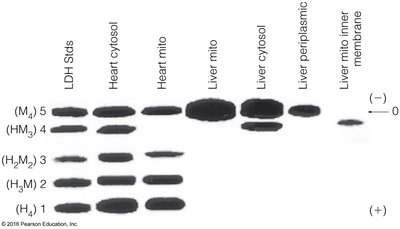
Isozymes of key enzymes (e.g., hexokinase, lactate dehydrogenase) allow tissue-specific regulation and diagnostic applications.
