 Indietro
Carbohydrates: Structure, Stereochemistry, and Biological Functions
Guida di studio - Note intelligenti
 Appunti personalizzati basati sui tuoi materiali, ampliati con definizioni chiave, esempi e contesto.
Carbohydrates: Terminology and Classification
Definitions and Basic Concepts
Carbohydrates are essential biomolecules with diverse roles in metabolism, structure, and cellular recognition. Their general formula is , where n typically ranges from 3 to 9 for sugars.
Carbohydrate: Organic compound with the formula .
Saccharides: Carbohydrates with n > 3, including derivatives with amino, sulfate, or phosphate groups.
Sugar: Non-derivatized monosaccharides and small oligosaccharides.
Monosaccharide: Simple sugars with 3–9 carbon atoms.
Oligosaccharide: Compound formed by linking several monosaccharides (e.g., disaccharide).
Polysaccharide: Polymer formed from multiple saccharide units; can be homopolysaccharide or heteropolysaccharide.
Glycan: Generic term for oligosaccharides and polysaccharides.
Examples and Applications
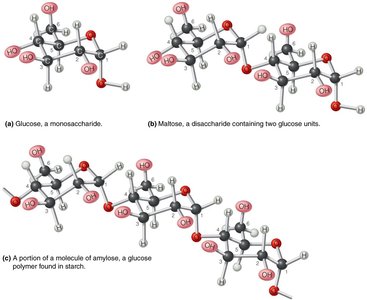
Monosaccharides: Glucose, galactose, fructose.
Disaccharides: Sucrose, lactose, maltose.
Polysaccharides: Starch, glycogen, cellulose.
Stereochemistry of Carbohydrates
Aldoses and Ketoses
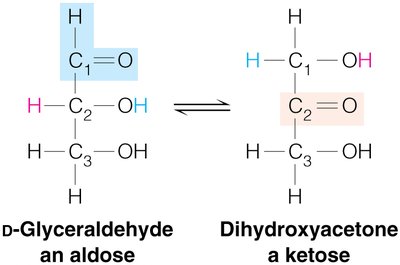
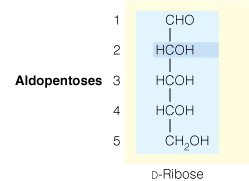
Carbohydrates are classified as aldoses (with an aldehyde group) or ketoses (with a ketone group).
Aldose: Monosaccharide with an aldehyde functional group.
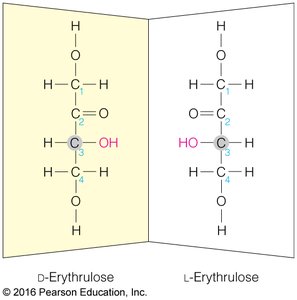
Ketose: Monosaccharide with a ketone functional group.
Chirality and Stereoisomers
Many monosaccharides are chiral, possessing asymmetric carbon atoms.
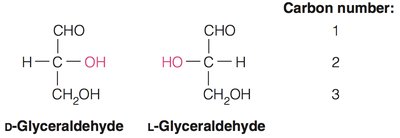
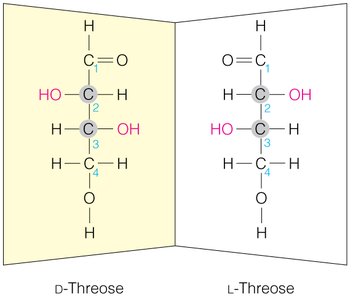
Enantiomers: Optical isomers that are mirror images.
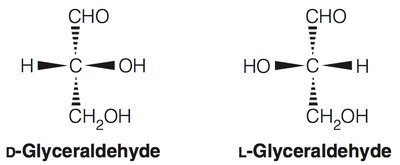
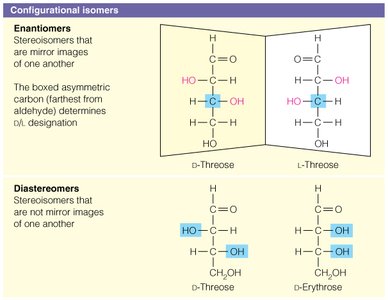
D- and L- Isomers: Determined by the configuration of the chiral carbon furthest from the carbonyl group. In Fischer projections, D isomer has the –OH group on the right, L isomer on the left.
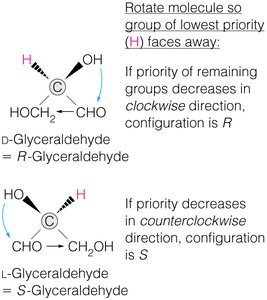
R/S Convention: Used to assign absolute configuration to chiral centers.
Enantiomers and Diastereomers
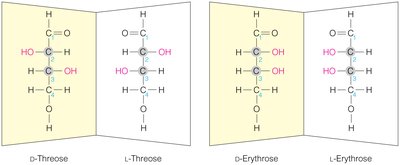
Enantiomers: Mirror images (e.g., D-threose and L-threose).
Diastereomers: Stereoisomers that are not mirror images (e.g., D-threose and D-erythrose).
Cyclization and Anomer Formation
Hemiacetal and Hemiketal Formation
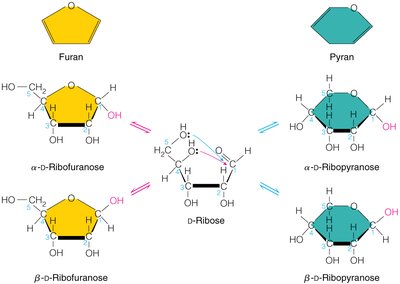
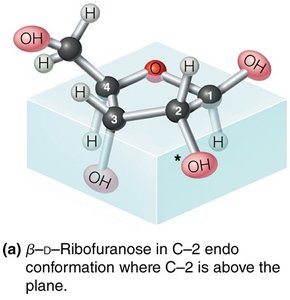
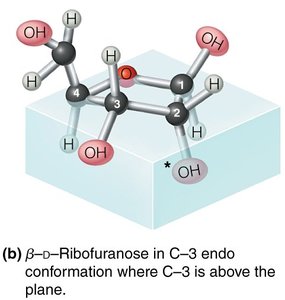
Five- and six-carbon sugars tend to cyclize, forming hemiacetals (from aldoses) or hemiketals (from ketoses). Cyclization creates a new asymmetric center called the anomeric carbon.
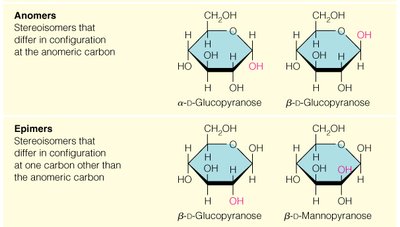
Anomers: Stereoisomers differing at the anomeric carbon (α or β).
Mutarotation: Interconversion between α and β anomers.
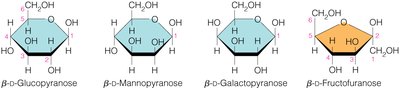
Furanose: Five-membered ring.
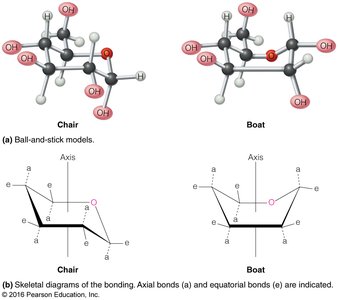
Pyranose: Six-membered ring.
Summary of Carbohydrate Stereochemistry
Terminology Table
Term | Definition |
|---|---|
Enantiomers | Stereoisomers that are mirror images |
Diastereomers | Stereoisomers that are not mirror images |
Anomers | Stereoisomers that differ at the anomeric carbon |
Epimers | Stereoisomers that differ at one carbon other than the anomeric carbon |
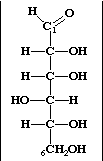
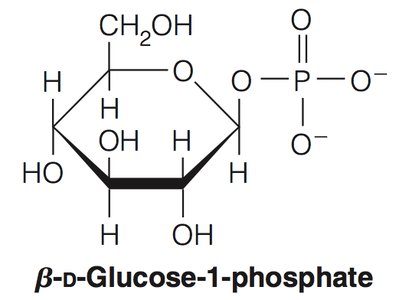
Reduction and Oxidation of Monosaccharides
Reduction
Reduction of the carbonyl group in monosaccharides yields sugar alcohols (alditols), such as D-glucitol (sorbitol).
Used as thickeners and sweeteners in the food industry.
Do not contribute to tooth decay; poorly absorbed in the intestine.
Overconsumption can cause bloating, diarrhea, and flatulence.
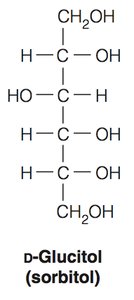
Oxidation
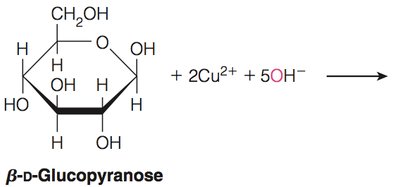
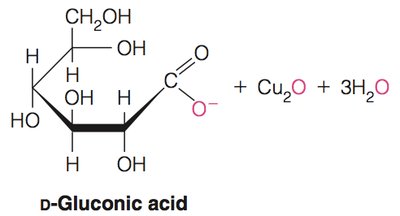
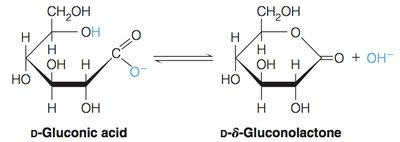
Oxidation at C1 forms aldonic acids (e.g., D-gluconic acid).
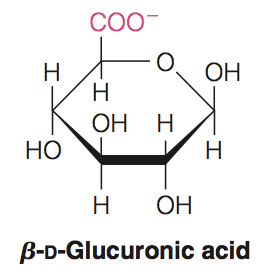
Oxidation at C6 forms uronic acids (e.g., β-D-glucuronic acid).
Fehling’s, Benedict’s, and Tollen’s tests are used to detect reducing sugars.
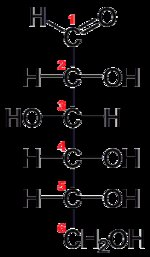
Glycosidic Bond Formation
Glycosides and Polysaccharides
Glycosidic bonds are formed by the elimination of water between the hydroxyl group of the anomeric carbon and another compound.
O-glycoside: Bond formed between the anomeric carbon and a hydroxyl group.
Polysaccharides: Formed by repeated glycosidic bonds between monosaccharides.
Biological Functions of Carbohydrates
Diverse Roles
Carbohydrates serve multiple functions in living organisms:
Metabolism: Energy storage and generation (glucose, glycogen, starch).
Molecular recognition: Immune system interactions.
Cellular protection: Structural components in cell walls.
Cell adhesion: Glycoproteins facilitate cell-cell interactions.
Biological lubrication: Glycosaminoglycans in joints and eyes.
Maintenance of structure: Cellulose and chitin provide rigidity.
Energy Storage Polysaccharides
Starch, Glycogen, and Cellulose
Starch: Plant storage polysaccharide; contains amylose (unbranched) and amylopectin (branched).
Glycogen: Animal storage polysaccharide; highly branched, similar to amylopectin but with more frequent branches.
Cellulose: Structural polysaccharide in plants; linear polymer with β(1→4) linkages.
Structural Polysaccharides and Glycoproteins
Cell Walls and Glycoproteins
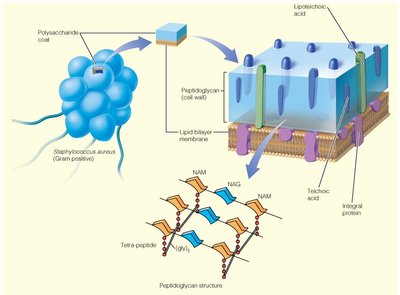
Peptidoglycan: Major component of bacterial cell walls; cross-linked polysaccharide-peptide complex.
Glycoproteins: Proteins with carbohydrate chains; N-linked and O-linked types.
Glycosaminoglycans: Structural and nonstructural roles in vertebrates; e.g., heparin, hyaluronic acid.
Summary Table: Carbohydrate Types and Functions
Type | Structure | Function |
|---|---|---|
Monosaccharide | Single sugar unit | Energy source, metabolic intermediate |
Disaccharide | Two sugar units | Transport, energy |
Polysaccharide | Many sugar units | Storage (starch, glycogen), structure (cellulose, chitin) |
Glycoprotein | Protein + carbohydrate | Cell adhesion, immune response |
Glycosaminoglycan | Polysaccharide with amino sugars | Lubrication, structural support |
Key Equations and Concepts
General Formula for Carbohydrates
Fehling's Reaction for Reducing Sugars
Glycosidic Bond Formation
Mutarotation
Conclusion
Carbohydrates are fundamental to biochemistry, serving as energy sources, structural materials, and mediators of cellular communication. Understanding their structure, stereochemistry, and biological functions is essential for further study in biochemistry.
