 Indietro
Chapter 17: Metabolism – An Overview (Advanced Biochemistry I Study Notes)
Guida di studio - Note intelligenti
 Appunti personalizzati basati sui tuoi materiali, ampliati con definizioni chiave, esempi e contesto.
Metabolism: An Overview
Introduction to Metabolism
Metabolism encompasses the sum of all chemical changes that convert nutrients into energy and the complex molecules necessary for life. These changes occur through enzymatic reactions organized into discrete pathways, transforming substrates into end products via specific intermediates. Metabolism is sometimes called intermediary metabolism to emphasize the stepwise transformation of molecules.
Catabolism: Degradative, energy-yielding pathways that break down complex molecules into simpler ones.
Anabolism: Biosynthetic, energy-requiring pathways that build complex molecules from simpler precursors.
The main purposes of metabolism are:
Conversion of food to energy for cellular processes
Conversion of food/fuel to building blocks for macromolecules
Elimination of metabolic wastes
Core Biochemical Pathways and Organismal Diversity
Universality and Diversity of Metabolic Pathways
Core metabolic pathways, such as glycolysis, are conserved across virtually all life forms. However, organisms can be classified based on the pathways they use to obtain energy, and different cells may express alternative metabolic routes, providing metabolic diversity.
Aerobes: Use O2 as the terminal electron acceptor (e.g., humans).
Obligate aerobes: Must use O2.
Anaerobes: Survive without O2; may use other electron acceptors.
Facultative anaerobes: Can adapt to anaerobic conditions (e.g., E. coli).
Obligate anaerobes: Are poisoned by O2 (e.g., Clostridium botulinum).
Energy Flow in the Biosphere
The sun is the primary energy source in the biosphere. Photoautotrophs use light energy to synthesize organic molecules from CO2 and water. Heterotrophs use these organic molecules as fuel and building blocks, ultimately returning CO2 to the atmosphere for reuse by photoautotrophs. This cycle couples energy flow with the carbon and oxygen cycles.
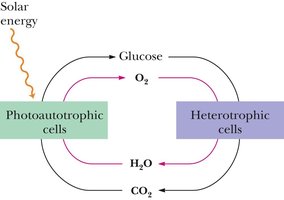
Metabolic Maps and Pathway Organization
Metabolic Maps
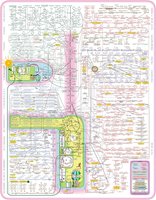
Metabolic maps visually represent the principal reactions of intermediary metabolism, including the enzymes and intermediates involved. Despite their complexity, understanding the major routes and functions makes these maps navigable.
Alternative Models of Pathways
Traditionally, metabolic pathways are viewed as metabolite-centric. However, a protein-centric view, where proteins form multifunctional complexes, can provide new insights into pathway organization and regulation.
Multienzyme Systems
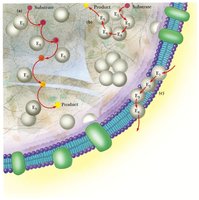
Enzymes in metabolic pathways may be:
Physically separate and soluble, with diffusing intermediates
Part of a multienzyme complex, where intermediates are channeled directly between enzymes
Membrane-bound systems
Anabolism and Catabolism: The Core of Metabolic Pathways
Catabolic and Anabolic Pathways
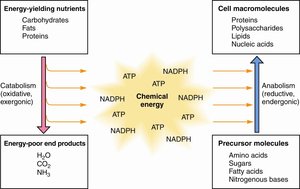
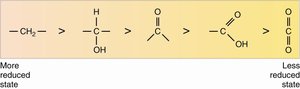
Catabolism involves the oxidative degradation of complex molecules (carbohydrates, lipids, proteins) into simpler products (e.g., lactic acid, CO2, urea), releasing energy (exergonic). Anabolism is the reductive synthesis of complex molecules, requiring energy (endergonic).
Convergence and Divergence in Metabolic Pathways
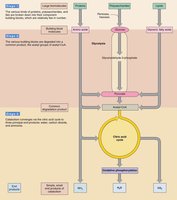
Catabolic pathways converge to a few end products (CO2, H2O, NH3).
Anabolic pathways diverge to synthesize a wide variety of biomolecules from a small set of precursors.
Some pathways are amphibolic, serving both catabolic and anabolic roles.
Regulation of Opposing Pathways
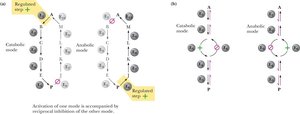
Catabolic and anabolic pathways for a given substance generally do not use the exact same enzymes, allowing independent regulation. For example, glycolysis and gluconeogenesis share some enzymes but have unique steps catalyzed by different enzymes, enabling separate control.
The ATP Cycle
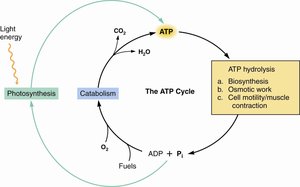
ATP is the universal energy currency of the cell. In phototrophs, light energy is converted to ATP; in heterotrophs, catabolism produces ATP, which is then used to drive cellular activities. The ATP cycle links energy production and consumption.
Redox Carriers: NAD+ and NADPH
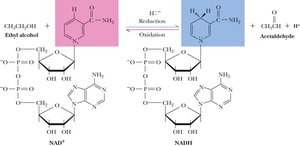
NAD+: Collects electrons released in catabolism, becoming NADH. NADH is reoxidized in the mitochondria, coupling electron transfer to ATP synthesis (oxidative phosphorylation).
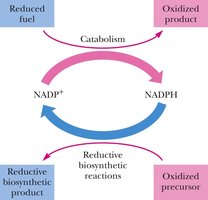
NADPH: Provides reducing power for anabolic (biosynthetic) processes. It acts as an electron carrier from catabolic to anabolic reactions.
Experimental Elucidation of Metabolic Pathways
Use of Inhibitors and Mutations
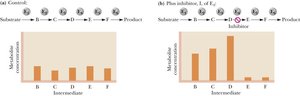
Metabolic inhibitors and genetic mutations are used to block specific steps in pathways, causing accumulation of intermediates upstream of the block. This helps identify the sequence of reactions.
Isotopic Tracers
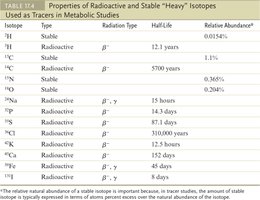
Radioactive and stable isotopes are used to label metabolic substrates and trace their fate through pathways. This technique has been fundamental in mapping metabolic routes.
Isotope | Type | Radiation Type | Half-Life | Relative Abundance |
|---|---|---|---|---|
1H | Stable | - | - | 0.01524% |
3H | Radioactive | β- | 12.3 years | - |
14C | Radioactive | β- | 5700 years | 1.1% |
15N | Stable | - | - | 0.364% |
18O | Stable | - | - | 0.204% |
32P | Radioactive | β-, γ | 15 hours | - |
35S | Radioactive | β- | 87.4 days | - |
45Ca | Radioactive | β- | 163 days | - |
59Fe | Radioactive | β-, γ | 45 days | - |
NMR Spectroscopy as a Metabolic Probe
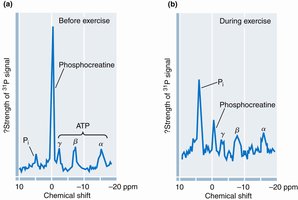
Nuclear magnetic resonance (NMR) spectroscopy allows noninvasive, real-time observation of metabolism in living subjects by detecting the magnetic properties of certain atomic nuclei.
Compartmentalization of Metabolic Pathways
Cellular Compartmentalization
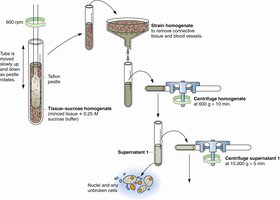
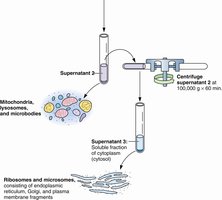
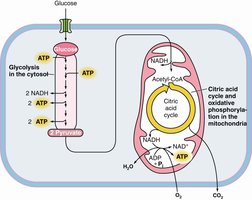
Metabolic pathways are compartmentalized within cells, with specific organelles dedicated to specialized functions. For example, glycolysis occurs in the cytosol, while the citric acid cycle and oxidative phosphorylation take place in mitochondria. This spatial separation allows for efficient regulation and flow of intermediates.
The Metabolome and Systems Biology
Metabolomics and Analytical Techniques
Metabolomics is the systematic identification and quantitation of all metabolites in a biological sample. It provides insights into the metabolic state of an organism. Key analytical techniques include:
Mass spectrometry (MS): Offers high sensitivity for detecting low-abundance metabolites.
NMR spectroscopy: Provides high resolution and discrimination of metabolites in complex mixtures.
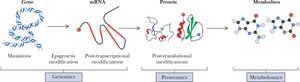
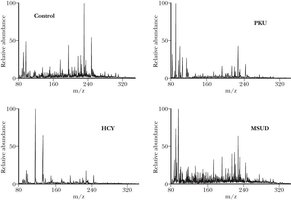
Example: MS analysis of urine samples can reveal inborn errors of metabolism by comparing metabolite profiles between healthy and diseased individuals.
Additional info: The METLIN database is a major resource for metabolite identification, listing over 250,000 metabolites and 70,000 structures.
