 Indietro
Chemical Logic of Metabolism: Mechanisms, Regulation, and Bioenergetics
Guida di studio - Note intelligenti
 Appunti personalizzati basati sui tuoi materiali, ampliati con definizioni chiave, esempi e contesto.
Chemical Logic of Metabolism
Overview of Metabolism
Metabolism encompasses the synthesis and degradation of small molecules within cells, facilitating energy generation and storage. It is divided into anabolic (building up) and catabolic (breaking down) reactions. Central metabolic pathways are highly conserved and account for the majority of mass and energy transfer in cells. Organisms are classified as autotrophs (self-feeding, synthesizing all organic metabolites from CO2 and inorganic molecules) or heterotrophs (requiring reduced carbon compounds).
Intermediary metabolism: Synthesis and degradation of metabolic intermediates.
Energy metabolism: Pathways that generate or store energy.
Central pathways: Glycolysis, citric acid cycle, electron transport/oxidative phosphorylation, fatty acid oxidation, gluconeogenesis, fatty acid synthesis, and photosynthesis.
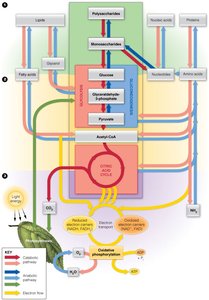
Glycolysis and Carbohydrate Metabolism
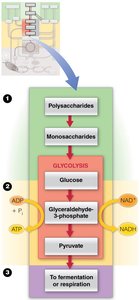
Glycolysis is the initial phase of carbohydrate catabolism, converting glucose to pyruvate, a key intermediate in several metabolic pathways. Pyruvate can be further metabolized via fermentation or respiration.
Glycolysis: Converts glucose to pyruvate, generating ATP and NADH.
Gluconeogenesis: Synthesis of glucose from non-carbohydrate precursors; not a simple reversal of glycolysis.
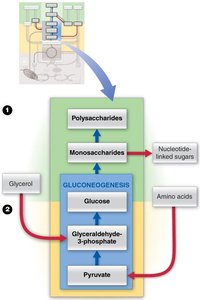
Separate Pathways for Biosynthesis and Degradation
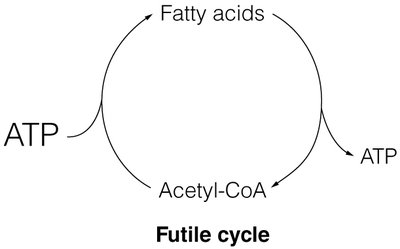
Metabolic pathways must be exergonic in the direction they proceed and regulated to meet physiological requirements. Reciprocal regulation prevents futile cycles, ensuring that biosynthetic and degradative pathways do not operate simultaneously in the same compartment.
Futile cycle: Occurs when opposing pathways run simultaneously, wasting energy.
Reciprocal regulation: Control at enzymes catalyzing exergonic reactions in opposite directions.
Chemical Mechanisms in Metabolism
Electrophiles and Nucleophiles
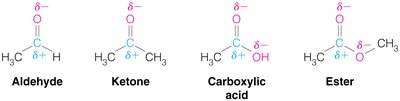
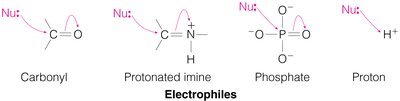
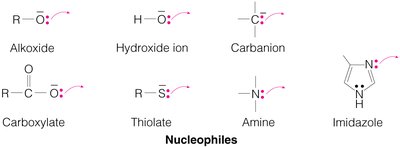
Metabolic reactions often involve electron-rich nucleophiles attacking electron-poor electrophiles. Carbonyl carbons are common electrophiles, while nucleophiles include alkoxides, hydroxide ions, carbanions, carboxylates, thiolates, amines, and imidazole.
Electrophile: Electron-poor atom accepting electrons (e.g., carbonyl carbon).
Nucleophile: Electron-rich atom donating electrons.
Nucleophilic Substitution Reactions
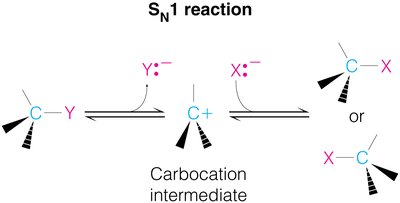
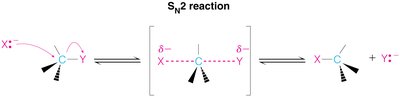
Nucleophilic substitution is a fundamental mechanism in biochemistry, with two main types: SN1 (unimolecular) and SN2 (bimolecular). Both require a stable leaving group.
SN1 mechanism: Formation of a carbocation intermediate, leading to a mixture of enantiomers.
SN2 mechanism: Direct displacement with inversion of configuration.
Example: R-Br + OH- → R-OH + Br-
Acyl Substitution and Carbonyl Condensation
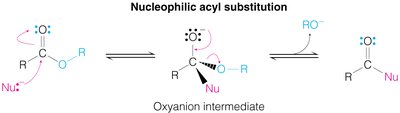
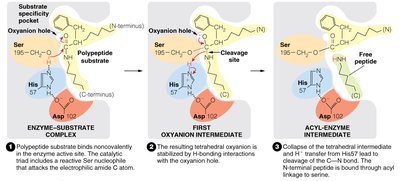
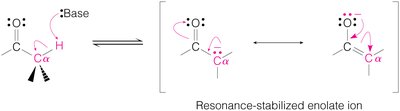
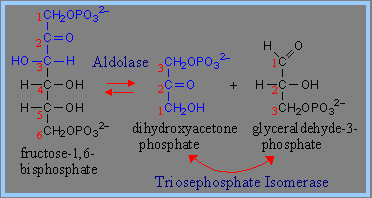
Acyl substitution involves a tetrahedral intermediate, commonly seen in enzyme catalysis (e.g., chymotrypsin). Carbonyl condensation forms C–C bonds, such as in aldol and Claisen condensations, and involves nucleophilic addition and alpha-substitution.
Acyl substitution: Nucleophile attacks acyl group, forming oxyanion intermediate.
Carbonyl condensation: Enolate ion attacks carbonyl carbon, forming new C–C bond.
Elimination Reactions
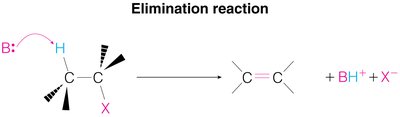
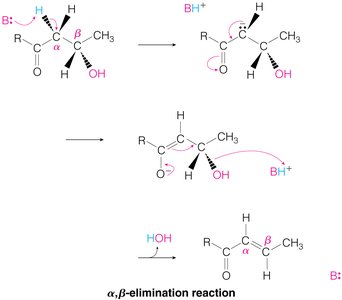
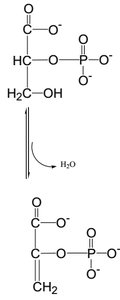
Elimination reactions remove groups from molecules, often forming double bonds. β-hydroxycarbonyls are readily dehydrated, with the α-hydrogen being slightly acidic due to proximity to carbonyl oxygen.
Elimination: Removal of H and X, forming C=C bond.
α,β-elimination: Dehydration of β-hydroxycarbonyls.
Oxidation-Reduction Reactions
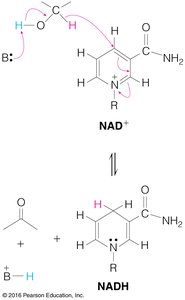
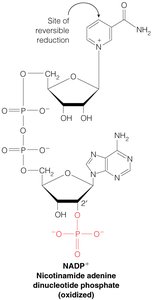
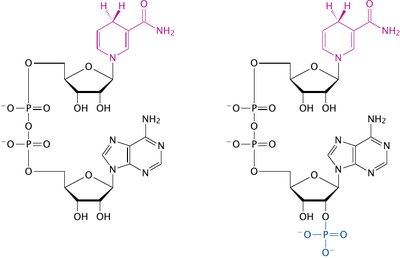
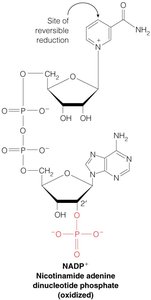
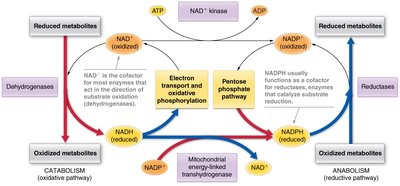
Redox reactions are central to energy metabolism. NAD+ is a widely used redox cofactor, acting via reversible hydride transfer. Enzymes involved include dehydrogenases, oxidases, and reductases.
NAD+: Major oxidant in catabolism.
NADPH: Major reductant in biosynthesis.
Redox reactions: Hydride transfer (two-electron) or metal ion (one-electron).
Bioenergetics and ATP Coupling
ATP as Free Energy Currency
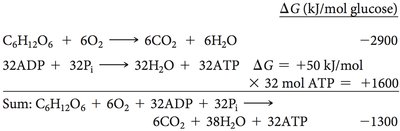
ATP is the primary energy currency in cells, with its hydrolysis driving endergonic processes. Although other nucleoside triphosphates (NTPs) have similar free energy of hydrolysis, ATP predominates due to its abundance.
ATP hydrolysis: ΔG˚’ = –32.2 kJ/mol.
Energy coupling: ATP hydrolysis is used to drive unfavorable reactions.
Coupling stoichiometry: 32 ATP produced from glucose oxidation, net ΔG = –1300 kJ/mol.

ATP-Coupling in Metabolic Reactions
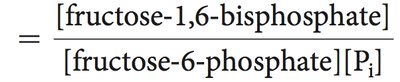
Coupling reactions to ATP hydrolysis converts thermodynamically unfavorable processes to favorable ones. For example, the conversion of fructose-6-phosphate to fructose-1,6-bisphosphate is driven by ATP hydrolysis.
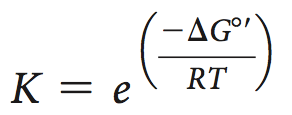
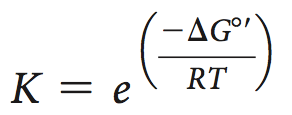
Equilibrium constant:
Coupled reaction: Fructose-6-phosphate + ATP → fructose-1,6-bisphosphate + ADP





ATP-Coupling Avoids High Metabolite Concentrations
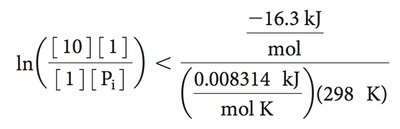
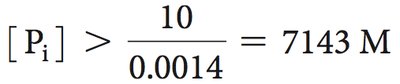
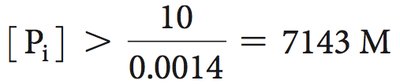
Cells maintain low metabolite concentrations to avoid exceeding solvent capacity. ATP-coupling allows reactions to proceed at physiological concentrations, avoiding the need for high concentrations of inorganic phosphate (Pi).
Solvent capacity: Finite capacity for dissolved substances in a cell.
Metabolite concentrations: Maintained at ~10-3 to ~10-6 M.

Regulation of Metabolic Pathways
Regulation is imposed on reactions far from equilibrium, preventing simultaneous operation of opposing pathways. Allosteric effectors act as signals to open specific metabolic "floodgates." Major sources of energy for ATP synthesis include substrate-level phosphorylation, oxidative phosphorylation, and photophosphorylation.
Allosteric regulation: Effectors activate or inhibit enzymes.
Energy charge:
Major Metabolic Control Mechanisms
Metabolic control is achieved through regulation of enzyme levels, enzyme activity, compartmentation, and signal transduction. Functional compartmentation allows high local concentration of intermediates while maintaining low average concentration.
Genetic regulation: Control of enzyme levels.
Allosteric/covalent modification: Control of enzyme activity.
Compartmentation: Physical and functional separation of pathways.
Signal transduction: Hormones and second messengers.
Cellular Locations of Major Metabolic Pathways
Metabolic pathways are compartmentalized within cells, with specific locations for glycolysis, citric acid cycle, electron transport, and biosynthetic pathways.
Experimental Analysis of Metabolism
Metabolism is studied at multiple levels: whole organism, isolated organ, whole cell, organelles, purified components, and metabolomics. Techniques include glucose tolerance tests and nuclear magnetic resonance for noninvasive monitoring.
Mutant analysis: Identifies steps in metabolic pathways.
Metabolomics: Measures intracellular concentrations of metabolites.
Summary Table: Types of Metabolic Reactions
Reaction Type | Key Features | Example |
|---|---|---|
Nucleophilic Substitution | SN1/SN2 mechanisms, leaving group required | R-Br + OH- → R-OH + Br- |
Acyl Substitution | Tetrahedral intermediate, enzyme catalysis | Chymotrypsin catalysis |
Carbonyl Condensation | Enolate ion formation, C–C bond formation | Aldol/Claisen condensation |
Elimination | Formation of double bonds, dehydration | β-hydroxycarbonyl dehydration |
Oxidation-Reduction | Hydride transfer, NAD+/NADPH cofactors | Glucose oxidation, NAD+ reduction |
Key Equations
Additional info:
Metabolite concentrations are inferred to be maintained at low levels to avoid exceeding cellular solvent capacity.
Regulation of metabolism is achieved through multiple mechanisms, including genetic, allosteric, and compartmentalization.
