 Indietro
Complexity and Variability of Eukaryotic Genomes: Repetitive DNA, Multigene Families, and DNA Typing
Guida di studio - Note intelligenti
 Appunti personalizzati basati sui tuoi materiali, ampliati con definizioni chiave, esempi e contesto.
Gene and Genome Variability in Eukaryotes
Introduction
Eukaryotic genomes are characterized by a high degree of complexity and variability, largely due to the presence of repetitive DNA sequences, multigene families, and mechanisms such as recombination and instability. Understanding these features is essential for grasping the structure, function, and evolution of genes and genomes, as well as their applications in biotechnology and forensic science.
Repetitive DNA in Eukaryotic Genomes
Types and Properties of Repetitive DNA
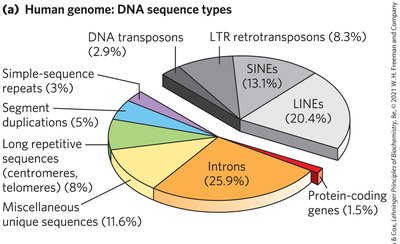
Repetitive DNA refers to sequences that are repeated multiple times within the genome. These repeats can be clustered (tandem) or dispersed throughout the genome, and each family of repeats has a characteristic unit length and copy number. While only a small percentage of repetitive DNA is known to be functional, it may encode various RNAs or serve other important roles.
Clustered (Tandem) Repeats: Repeats are adjacent to each other.
Dispersed Repeats: Repeats are scattered among other DNA sequences.
Functional Repeats: Some encode RNAs or have regulatory roles; others are non-coding.
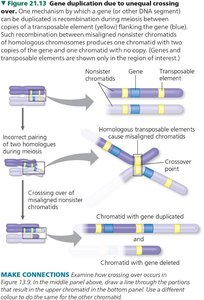
Evolutionary Mechanisms: Repeats may arise from unequal crossing-over during meiosis or replication slippage.
Origin of Repeated Sequences
Repeated sequences can originate through several mechanisms:
Unequal Crossing-Over: Misalignment of homologous chromatids during meiosis can result in duplication or deletion of repeat units.
Replication Slippage: DNA polymerase may slip on palindromic or hairpin structures, leading to changes in repeat copy number.
Major Types of Repetitive DNA Sequences
Classification
A. Repeats with Coding Functions: Multigene families encoding mRNAs, rRNAs, tRNAs.
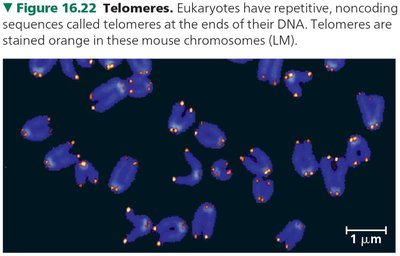
B. Noncoding Repeats with Functions: Origins of replication, telomere repeats.
C. Trinucleotide Repeats: Variable in number, associated with genetic diseases (TREs).
D. STRs and VNTRs: Short tandem repeats and variable number tandem repeats, used in DNA typing.
E. Mobile Repeats: Transposons, retrotransposons, LINES, SINES.
Multigene Families: Repeats with Coding Functions
Properties and Examples
Multigene families consist of multiple gene copies encoding proteins required in large amounts or rapidly. Each gene has its own promoter and terminator, and copies may be identical or similar, with possible functional specialization.
Examples: Globins (hemoglobin, myoglobin), histones, antibodies, actins, keratin, seed storage proteins.
Gene Expression: All copies may be expressed together, or some may be specialized for certain developmental stages.
Evolution: Gene duplications, translocations, mutations, and transpositions contribute to diversity.


Human Globin Multigene Family
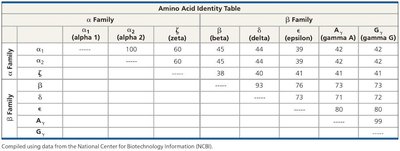
The human globin gene family includes α and β chain types, with different variants expressed during embryonic, fetal, and adult stages. This specialization allows for minor variations in oxygen-carrying capacity.
α Chain Types: Alpha, Zeta
β Chain Types: Epsilon, G-gamma, A-gamma, Delta, Beta
Developmental Expression: Embryo (zeta2, epsilon2), Fetus (alpha, gamma), Adult (alpha, delta/beta)

Noncoding Repeats with Functions
Examples and Roles
Noncoding repeats play essential roles in genome maintenance and regulation:
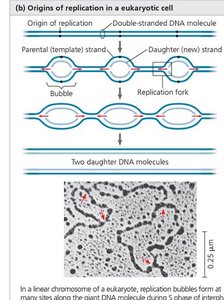
ARS (Autonomously Replicating Sequences): AT-rich repeats at origins of DNA replication.
Telomere Repeats: Protect chromosome ends from degradation.
Centromere Repeats: Unique sequences important for chromosome segregation.
Trinucleotide Repeat Expansions (TREs) and Genetic Diseases
Dynamic Mutations
Trinucleotide repeat expansions (TREs) are unstable repeats of 3 bp units that can increase in number across generations, causing genetic diseases. The location of the repeat (coding region, 5' UTR, or 3' UTR) determines the disease mechanism.
Coding Region: Alters protein sequence, may cause misfolding (e.g., Huntington's disease).
5' UTR: Can lead to loss of gene expression (e.g., Fragile X syndrome).
3' UTR: May affect mRNA stability or translation.
Huntington's Disease: CAG Repeat Expansion
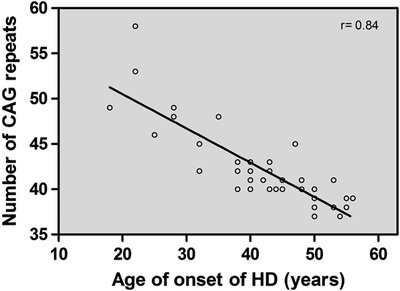
Huntington's disease is a neurodegenerative disorder caused by expansion of CAG repeats in the coding region of the Huntingtin gene. The severity and age of onset correlate with the number of repeats.
Normal: Up to 37 CAG repeats.
Disease: More than 37 repeats; earlier onset and more severe symptoms with higher repeat numbers.
Inheritance: Often paternal transmission, expansion occurs during male gamete development.
Fragile X Syndrome: CGG Repeat Expansion
Fragile X syndrome is caused by CGG repeat expansion in the 5' UTR of the FMR-1 gene on the X chromosome. It is the most common inherited intellectual disability, with variable penetrance and severity.
Normal Allele: 4-45 CGG repeats.
Intermediate: 45-55 repeats; may expand in future generations.
Premutation: 55-200 repeats; clinically normal, but can expand maternally.
Full Mutation: >200 repeats; affected individuals, variable severity.
Epigenetic Regulation: Expanded repeats become hypermethylated, silencing FMR-1 expression and affecting brain function.

STRs and VNTRs: DNA Typing and Profiling
Short Tandem Repeats (STRs) and Variable Number Tandem Repeats (VNTRs)
STRs and VNTRs are noncoding repeats that vary in copy number between individuals, making them useful for DNA typing and forensic analysis.
STRs: 2-4 bp units, 4-40 copies per block.
VNTRs: 10-40 bp units, 10-30 copies per block.
Applications: Used in DNA fingerprinting, paternity testing, and population studies.

PCR Primer Design for DNA Profiling
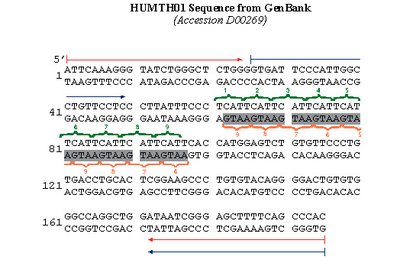
Primers are designed to flank STR/VNTR regions, allowing amplification of variable-sized products for comparison between individuals.
Conserved Flanking Regions: Enable specific primer binding.
Repeat Unit Example: TCAT, with 9 copies in the example.
Genetic Principles of DNA Typing
DNA typing relies on Mendelian inheritance of STR/VNTR alleles, with extensive variability between individuals.
Autosomal STRs: Two copies per person, inherited from each parent.
Unique DNA Fingerprint: Combination of STR/VNTR alleles is unique to each individual.

Applications of DNA Profiling
Forensic and Biological Uses
DNA profiling is widely used in forensic science, paternity testing, evolutionary studies, and species identification.
Forensic Cases: Identification in criminal investigations, disaster victim identification.
Paternity and Migration: Determining biological relationships and human migratory patterns.
Animal and Plant Typing: Pedigree analysis, trait association, conservation studies.
Bacterial/Viral Typing: Pathogen identification (based on genes, not STRs/VNTRs).
Ethical, Legal, and Societal Implications
DNA profiling raises important questions about privacy, ownership, and access to genetic information. While it offers many societal benefits, concerns about misuse and ethical considerations must be addressed.
Benefits: Solving criminal cases, identifying missing persons, resolving paternity disputes.
Concerns: Privacy, misuse for insurance/employment, non-clinical genetic testing.
Recommended Readings
Key concepts are covered in Lehninger Biochemistry (Nelson and Cox, Ed. VIII, Ch. 8) and Campbell Biology. Refer to figures and sections for detailed explanations.
