 Indietro
Comprehensive Study Notes on Lipids: Structure, Function, Digestion, Absorption, and Metabolism
Guida di studio - Note intelligenti
 Appunti personalizzati basati sui tuoi materiali, ampliati con definizioni chiave, esempi e contesto.
Lipids: Structure, Classification, and Function
Overview of Lipids Relevant to Human Nutrition
Lipids are a diverse group of biomolecules essential for energy storage, cellular structure, and signaling. The main classes relevant to human nutrition include fatty acids, triacylglycerols, phospholipids, sterols, sphingolipids, and lipoproteins.
Fatty acids: Basic building blocks of most lipid classes.
Triacylglycerols (TAG): Major storage form of fat in the body.
Phospholipids: Key structural components of cell membranes.
Sterols: Cholesterol and related compounds, important for membrane structure and hormone synthesis.
Sphingolipids: Abundant in nervous tissue, involved in cell recognition and signaling.
Lipoproteins: Complexes for lipid transport in blood.
Fatty Acids
Structure and Classification
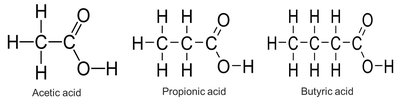
Fatty acids are carboxylic acids with long hydrocarbon chains. Their properties depend on chain length, saturation, and branching.
General structure: Hydrocarbon chain with a methyl group (non-polar) at one end and a carboxylic acid group (polar) at the other.
Chain length:
Short-chain (SCFA): 2–5 carbons
Medium-chain (MCFA): 6–12 carbons
Long-chain (LCFA): 13–21 carbons
Very long-chain (VLCFA): ≥22 carbons
Saturation:
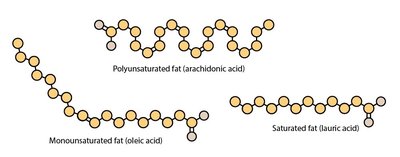
Saturated fatty acids (SFA): No double bonds
Monounsaturated fatty acids (MUFA): One double bond
Polyunsaturated fatty acids (PUFA): Two or more double bonds
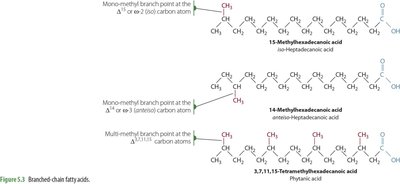
Branching: Branched-chain fatty acids (BCFA) have methyl groups attached along the chain.
Saturation and Fluidity
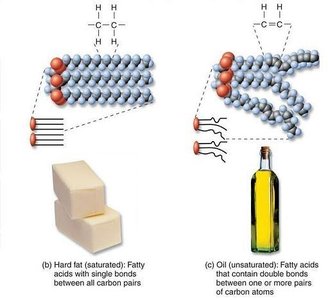
The degree of saturation affects the physical properties and biological functions of fatty acids.
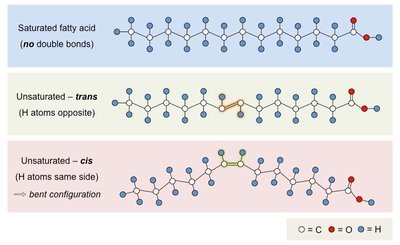
Saturated fats: Linear structure, pack tightly, solid at room temperature.
Unsaturated fats: Double bonds introduce kinks, increasing fluidity and making them liquid at room temperature.
Cis vs. trans isomerism:
Cis double bonds cause a bent configuration, increasing fluidity.
Trans double bonds result in a more linear structure, similar to saturated fats.
Fatty Acid Nomenclature
Fatty acids are named based on the number of carbons, double bonds, and the position of double bonds.
Delta (Δ) system: Positions of double bonds counted from the carboxyl end.
Omega (ω or n) system: Position of the first double bond counted from the methyl end.
Example: Linoleic acid: 18:2 Δ9,12 or 18:2 n-6
Branched-Chain Fatty Acids
Branched-chain fatty acids (BCFA) are saturated fatty acids with methyl groups attached.
Common in meat, dairy, and fatty fish.
Dietary intake averages ~500 mg/day.
Essential Fatty Acids
Some fatty acids are essential because humans cannot synthesize them.
Linoleic acid (18:2 n-6): Omega-6 fatty acid
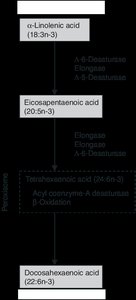
α-Linolenic acid (18:3 n-3): Omega-3 fatty acid
Humans lack Δ12 and Δ15 desaturases, so cannot form double bonds beyond Δ9.
Omega-6 and Omega-3 Fatty Acids
Omega-6: Linoleic acid and arachidonic acid (precursor to pro-inflammatory eicosanoids)
Omega-3: α-Linolenic acid, EPA, DHA (anti-inflammatory, important for heart and brain health)
Sources: Oily fish, flaxseed oil, chia seeds, walnuts
Comparison of Dietary Fats
Different dietary fats contain varying proportions of saturated, monounsaturated, and polyunsaturated fatty acids. 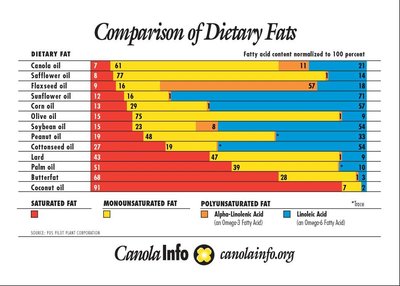
Triacylglycerols, Diacylglycerols, and Monoacylglycerols
Structure and Function
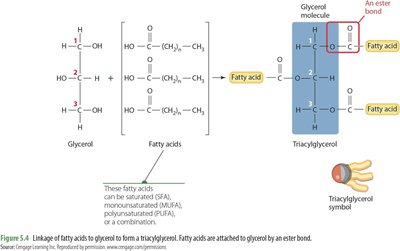
Triacylglycerols (TAG) are the main storage form of fat in the body and diet.
Structure: Glycerol backbone with three fatty acids attached by ester bonds.
Types:
Simple TAG: All three fatty acids are the same.
Mixed TAG: Different fatty acids.
Physical state: Fats (solid) or oils (liquid) at room temperature, depending on fatty acid composition.
Phospholipids
Structure and Biological Roles
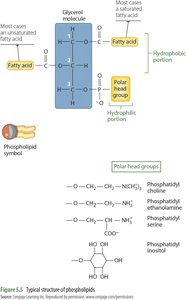
Phospholipids are major components of cell membranes and are amphipathic molecules.
Structure: Glycerol backbone, two fatty acids, and a phosphate group with a polar head.
Common types: Phosphatidylcholine (lecithin), phosphatidylethanolamine, phosphatidylinositol.
Functions: Membrane structure, fluidity, cell signaling, anchoring proteins, blood clotting, inflammation.
Sphingolipids
Structure and Function
Sphingolipids are found in all cell membranes, especially in the central nervous system.
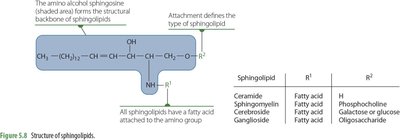
Structure: Sphingosine backbone (an amino alcohol), fatty acid attached to the amino group, and a residue attached to the hydroxyl group.
Types:
Ceramide: No attachment on R2
Sphingomyelin: Phosphocholine on R2
Cerebrosides: Galactose or glucose on R2
Gangliosides: Oligosaccharide on R2
Functions: Insulation in nerve impulse conduction, cellular recognition, and receptor activity.
Sterols
Cholesterol and Related Compounds
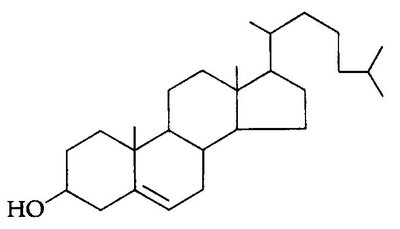
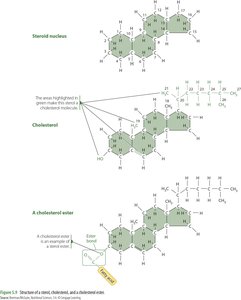
Sterols are characterized by a four-ring steroid nucleus and at least one hydroxyl group.
Cholesterol: Most common sterol in humans, amphipathic, component of cell membranes, precursor for steroid hormones and vitamin D.
Cholesterol ester: Storage and transport form of cholesterol.
Steroid Hormones and Bile Acids
Cholesterol is a precursor for bile acids, sex hormones, adrenocortical hormones, and vitamin D. 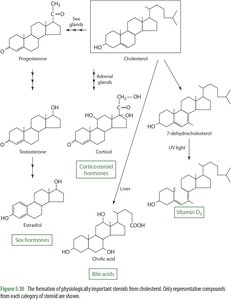
Bile Acids and Bile Salts
Role in Digestion
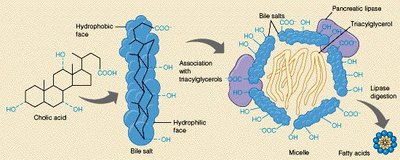
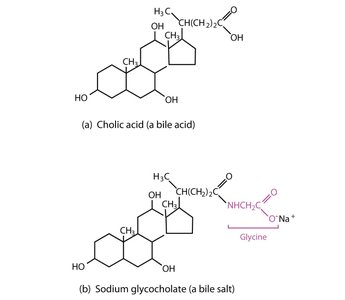
Bile acids are potent detergents that emulsify dietary lipids for digestion and absorption.
Bile composition: Water, bile acids, cholesterol, phospholipids, bile pigments, mucus, inorganic salts.
Enterohepatic circulation: Bile acids are recycled between the liver and intestine.
Phytosterols and Stanols
Structure and Function
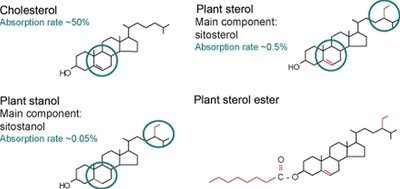
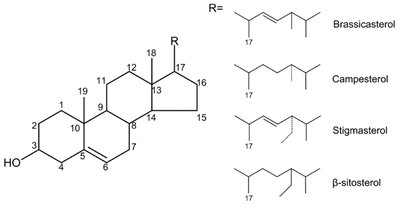
Phytosterols are plant-derived sterols that can reduce cholesterol absorption.
Common types: Sitosterol, campesterol, stigmasterol.
Function: Displace cholesterol in the intestine, reducing blood cholesterol levels.
Lipid Digestion, Absorption, and Transport
Digestion in the GI Tract
Lipids are hydrophobic and require emulsification for digestion.
Enzymes: Lipases (triacylglycerols), phospholipases (phospholipids), cholesterol esterase (cholesterol and phytosterol esters).
Emulsification: Bile salts and mechanical action break fat globules into droplets.
TAG Digestion and Absorption
Mouth: Lingual lipase
Stomach: Gastric lipase
Small intestine: Pancreatic lipase, colipase, bile salts, calcium
Micelles: Facilitate absorption of lipids at the brush border of enterocytes.
Phospholipid and Cholesterol Ester Digestion
Phospholipase A2: Cleaves fatty acid at sn-2 position.
Cholesterol esterase: Hydrolyzes cholesterol esters.
Lipid Absorption and Reassembly
Fatty acids, monoacylglycerols, and lysophospholipids are absorbed and re-esterified in the endoplasmic reticulum.
Cholesterol is absorbed via NPC1L1 and esterified by ACAT2.
Phytosterols are redirected back to the intestine by ABCG5/ABCG8.
Lipid Packaging and Transport
Lipids are packaged into chylomicrons for transport in the bloodstream.
Medium-chain fatty acids are transported directly to the liver via portal blood.
Lipoproteins and Lipid Transport
Lipoprotein Structure and Classes
Lipoproteins are complexes of lipids and proteins that transport lipids in the blood.
Structure: Hydrophobic core (TAG, cholesterol esters), amphipathic surface (phospholipids, free cholesterol, apolipoproteins).
Classes: Chylomicrons, VLDL, IDL, LDL, HDL
Lipid Transport Pathways
Exogenous pathway: Dietary lipids transported by chylomicrons.
Endogenous pathway: Liver-derived lipids transported by VLDL, IDL, LDL.
Reverse cholesterol transport: HDL removes excess cholesterol from tissues.
Lipid Metabolism: Fed and Postabsorptive States
Fed State (Lipogenesis)
Insulin stimulates storage of TAG in adipocytes.
Glucose and amino acids are converted to fatty acids and stored as TAG.
Postabsorptive State (Lipolysis)
Glucagon and epinephrine stimulate lipolysis.
TAG is hydrolyzed to fatty acids and glycerol, which are used for energy.
Synthesis and Catabolism of Lipids
Fatty Acid Synthesis
Occurs in the cytosol, mainly in liver, adipose tissue, and mammary glands.
Requires acetyl-CoA and malonyl-CoA, NADPH for reduction reactions.
Fatty acid synthase system assembles the chain, usually up to palmitate (C16).
Elongases and desaturases modify fatty acids further.
Triacylglycerol and Phospholipid Synthesis
TAG and PL are synthesized from CoA-activated fatty acids and glycerol-3-phosphate.
TAG is stored or transported by VLDL.
Cholesterol Synthesis
Occurs mainly in the liver.
Key steps: Formation of HMG-CoA, reduction to mevalonic acid (rate-limiting step), conversion to squalene, then cholesterol.
Lipid Catabolism
TAG is hydrolyzed by lipases (ATGL, HSL, MGL).
Fatty acids are activated, transported into mitochondria via carnitine, and undergo β-oxidation.
β-oxidation produces acetyl-CoA, NADH, FADH2, and ATP.
Odd-chain fatty acids produce propionyl-CoA, which is glucogenic.
Ketone Body Synthesis
Excess fatty acid oxidation leads to ketone body formation in the liver.
Ketones are used by the brain and muscle during prolonged fasting or low carbohydrate intake.
Regulation of Lipid Metabolism
Hormonal Regulation
Insulin: Stimulates lipogenesis and TAG storage, inhibits lipolysis.
Glucagon/Epinephrine: Stimulate lipolysis and fatty acid oxidation, inhibit lipogenesis.
Enzyme Regulation
Acetyl-CoA carboxylase (ACC): Activated by insulin, inhibited by phosphorylation.
Hormone-sensitive lipase (HSL): Activated by glucagon/epinephrine.
Carnitine transport (CPT-1): Inhibited by malonyl-CoA.
Cardiovascular Disease, Lipids, and Diet
Atherosclerosis and Lipid Hypothesis
Atherosclerosis is caused by plaque buildup in arteries, involving lipids and immune response.
LDL infiltration and oxidation trigger inflammation and plaque formation.
Small, dense LDL particles are more atherogenic.
Dietary Lipids and CVD Risk
Unsaturated fatty acids reduce CVD risk; saturated and trans fats increase risk.
Trans fats raise LDL-C and lower HDL-C, increase inflammation.
Phytosterols reduce cholesterol absorption and blood cholesterol levels.
Lipoprotein(a) [Lp(a)]
Unique lipoprotein associated with increased CVD risk.
Serum concentration is genetically determined and not affected by diet.
Summary Table: Some Naturally Occurring Unsaturated Fatty Acids
Notation | Common Name | Formula | Source |
|---|---|---|---|
16:1 Δ9 (n-7) | Palmitoleic acid | CH3—(CH2)5—CH=CH—(CH2)7—COOH | Fish oils, poultry fat |
18:1 Δ9 (n-9) | Oleic acid | CH3—(CH2)7—CH=CH—(CH2)7—COOH | All animal and plant fats |
18:2 Δ9,12 (n-6) | Linoleic acid | CH3—(CH2)4—CH=CH—CH2—CH=CH—(CH2)7—COOH | Most plant oils, poultry fat |
18:3 Δ9,12,15 (n-3) | α-Linolenic acid | CH3—(CH2—CH=CH)3—(CH2)7—COOH | Linseed (flax), soybean, canola oils |
20:4 Δ5,8,11,14 (n-6) | Arachidonic acid | CH3—(CH2—CH=CH)5—(CH2)3—COOH | Fish oils |
20:5 Δ5,8,11,14,17 (n-3) | Eicosapentaenoic acid | CH3—(CH2—CH=CH)5—(CH2)3—COOH | Marine algae, fish |
22:6 Δ4,7,10,13,16,19 (n-3) | Docosahexaenoic acid | CH3—(CH2—CH=CH)6—(CH2)2—COOH | Marine algae, fish |
Key Equations
Fatty Acid Synthesis
β-Oxidation of Fatty Acids
Energy Yield from Palmitic Acid
Cholesterol Synthesis (Rate-Limiting Step)
TAG Hydrolysis
Ketone Body Formation
Conclusion
Lipids are fundamental to biochemistry, serving as energy sources, structural components, and signaling molecules. Understanding their structure, digestion, absorption, metabolism, and role in health and disease is essential for biochemistry students. Additional info: Academic context and expanded explanations were added to ensure completeness and clarity for exam preparation.
