 Indietro
Enzyme Mechanisms and Catalysis: Biochemistry Study Notes
Guida di studio - Note intelligenti
 Appunti personalizzati basati sui tuoi materiali, ampliati con definizioni chiave, esempi e contesto.
Enzyme Mechanisms and Catalysis
Introduction to Enzyme Catalysis
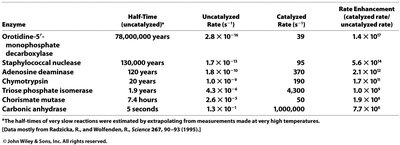
Enzymes are biological catalysts that accelerate chemical reactions by lowering the activation energy required for the reaction to proceed. They achieve remarkable rate enhancements, often increasing reaction rates by factors of 107 to 1017 compared to uncatalyzed reactions.
Key Point: Enzymes do not alter the equilibrium of a reaction, but they significantly increase the rate at which equilibrium is reached.
Key Point: The transition state is the highest energy state during a reaction, and enzymes stabilize this state to lower the activation energy.
Example: Chymotrypsin catalyzes peptide bond cleavage with a rate enhancement of 1.7 x 10¹¹ fold.
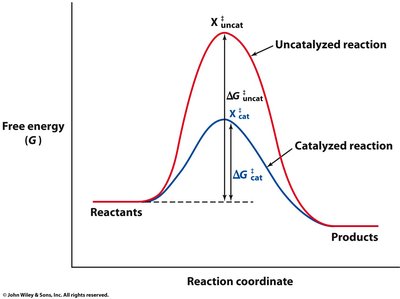
Effect of a Catalyst on a Chemical Reaction
The free energy vs. reaction coordinate plot illustrates how enzymes lower the activation energy barrier, facilitating faster conversion of reactants to products.
Key Point: The catalyzed reaction has a lower activation energy (ΔG‡cat) than the uncatalyzed reaction (ΔG‡uncat).
Key Point: Enzymes bind most tightly to the transition state, not the substrate or product.
Factors That Contribute to Enzyme Catalysis
Proximity and Orientation
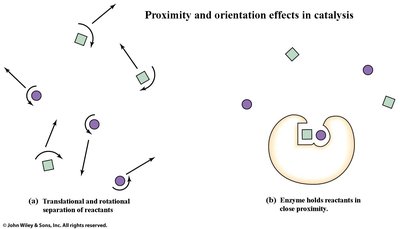
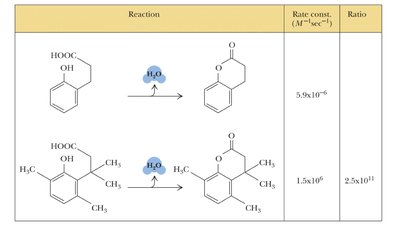
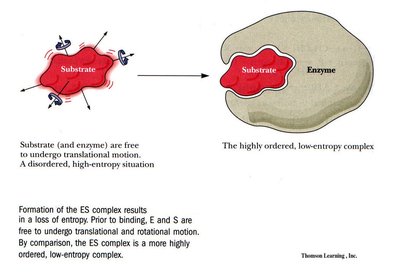
Enzymes increase reaction rates by bringing substrates into close proximity and orienting them optimally for reaction. This reduces the entropy of the system and increases the likelihood of productive collisions.
Key Point: The enzyme holds reactive groups together, reducing translational and rotational freedom.
Key Point: This effect is largely entropic, as the freedom of motion is reduced.
Entropy Loss in Formation of the ES Complex
Formation of the enzyme-substrate (ES) complex results in a loss of entropy, as both enzyme and substrate become more ordered. However, this can be offset by increased disorder elsewhere in the enzyme.
Key Point: The ES complex is a highly ordered, low-entropy state compared to the free substrate and enzyme.
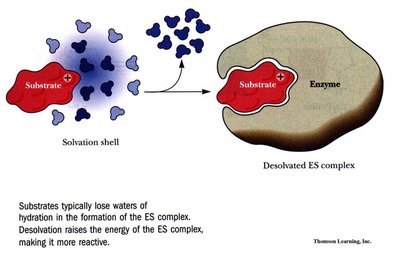
Destabilization of ES by Strain and Desolvation
Strain: The substrate fits the active site less well than the transition state, causing strain that is relieved during the reaction.
Desolvation: Substrates lose waters of hydration upon binding, raising the energy of the ES complex and making it more reactive.
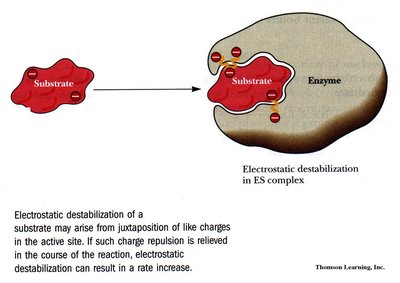
Destabilization of ES by Electrostatic Effects
Electrostatic effects occur when like charges on the substrate and enzyme are forced into close proximity, destabilizing the ES complex until repulsive forces are relieved during the reaction.
Key Point: Electrostatic destabilization can result in a rate increase if charge repulsion is relieved during the reaction.
Enzyme Binding to Transition State
Transition State Analogs
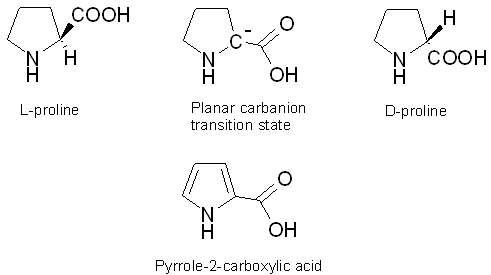
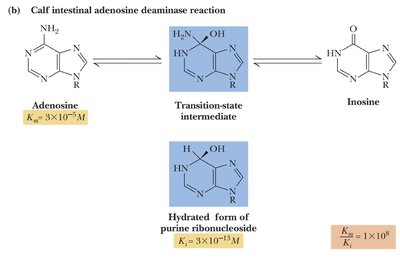
Enzymes bind most tightly to the transition state, and stable compounds that mimic the transition state (transition state analogs) can act as potent inhibitors.
Example: Proline racemase converts L-proline to D-proline via a planar transition state. Transition state analogs bind much more tightly than substrates.
General Mechanisms of Enzyme Catalysis
Metal Ion Catalysis
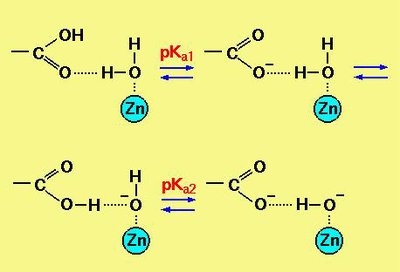
Metal ions at the active site can stabilize negative charges, allow electronic transitions, and increase the acidity of nucleophiles.
Key Point: Metal ions such as Zn2+ are common in proteases and other enzymes.
Example: Dioxygenases utilize metal ions to facilitate reactions with O2.
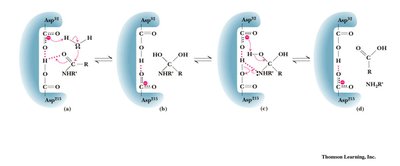
Acid-Base Catalysis
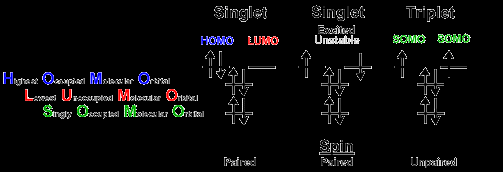
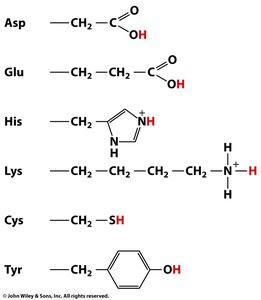
Enzymes can act as acids (proton donors) or bases (proton acceptors) to facilitate reaction steps.
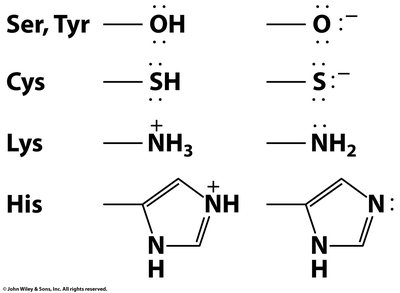
Key Point: Amino acids commonly involved include Asp, Glu, His, Lys, Cys, and Tyr.
Example: Aspartate proteases use a catalytic dyad of two Asp residues for acid-base catalysis.
Covalent Catalysis
Some enzymes form a covalent bond with the substrate, creating a covalent enzyme-transition state complex.
Key Point: Serine proteases are classic examples, with a serine residue forming a covalent bond to the substrate.
Key Point: The catalytic triad (Asp, His, Ser) is essential for activity.
Chymotrypsin: Mechanism and Structure
Chymotrypsin Structure and Activation
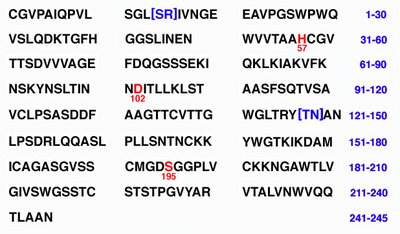
Chymotrypsin is a serine protease synthesized as an inactive precursor (zymogen) and activated by covalent modification. It cleaves peptide bonds after aromatic amino acids.
Key Point: The active site contains a catalytic triad: Asp102, His57, and Ser195.
Key Point: The oxyanion hole stabilizes the tetrahedral transition state.
Key Point: The specificity pocket determines substrate specificity.
Chymotrypsin Reaction Mechanism
The mechanism involves two main steps: formation of an acyl-enzyme intermediate and subsequent hydrolysis to release the product.
His57 withdraws a proton from Ser195, enabling Ser195 to attack the peptide bond.
Formation of the first tetrahedral transition state; peptide bond is cleaved.
His57 withdraws a proton from water, which attacks the acyl-enzyme intermediate.
Formation of the second tetrahedral transition state; carboxyl product is released, and the enzyme is regenerated.
Oxyanion Hole and Specificity Pocket
The oxyanion hole stabilizes the negative charge on the transition state, while the specificity pocket ensures substrate selectivity.
Key Point: Hydrophobic amino acids form the specificity pocket, and polar amino acids can hydrogen bond to substrate groups.
Applications: Enzyme Engineering and Plastic Degradation
Enzyme mechanisms are applied in biotechnology, such as engineering enzymes to degrade plastics. The catalytic triad mechanism is used by enzymes that break down synthetic polymers like PET.
Example: Ideonella sakaiensis uses a serine protease catalytic triad (Ser, His, Asp) to deconstruct PET plastic.
Summary Table: Enzyme Catalysis Mechanisms
Mechanism | Key Amino Acids | Example Enzyme | Function |
|---|---|---|---|
Metal Ion Catalysis | Zn2+, Fe2+ | Carbonic anhydrase | Stabilizes charges, increases nucleophile acidity |
Acid-Base Catalysis | Asp, Glu, His, Lys, Cys, Tyr | Aspartate protease | Proton transfer, increases reaction rate |
Covalent Catalysis | Ser, Cys, Lys, His | Chymotrypsin | Forms covalent intermediate |
Key Questions for Review
What do enzymes do to the free energy vs. reaction coordinate plot?
To what does an enzyme most tightly bind?
Does overall entropy always decrease when a substrate binds?
What are 4 general techniques used by enzymes to increase reaction rates?
What is metal-ion catalysis? acid-base catalysis? covalent catalysis?
What is the oxyanion hole?
Key Skills
Understand the mechanism of chymotrypsin, including the key steps and ability to order and label steps in the reaction.
Case Study Example
A patient with defective collagen structure and reduced osteoid formation is best treated with oral vitamin C, which is essential for collagen synthesis.
Additional info: These notes expand on brief points with academic context, definitions, and examples to ensure completeness and clarity for biochemistry students.
