 Indietro
Glycolysis and Gluconeogenesis: Pathways, Regulation, and Clinical Relevance
Guida di studio - Note intelligenti
 Appunti personalizzati basati sui tuoi materiali, ampliati con definizioni chiave, esempi e contesto.
Glycolysis and Gluconeogenesis
Overview of Glycolysis
Glycolysis is a central metabolic pathway that converts glucose into pyruvate, generating ATP and NADH in the process. It occurs in the cytoplasm of cells and does not require oxygen (anaerobic). The pathway is divided into three stages: energy investment, cleavage, and energy generation.
Location: Cytoplasm of all cells
Oxygen Requirement: Anaerobic (does not require O2)
Net Products: 2 pyruvate, 2 ATP, 2 NADH per glucose molecule
Regulation: Tightly regulated at key irreversible steps
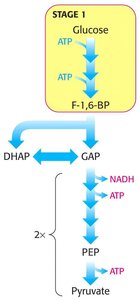
Stage 1: Energy Investment and Trapping Glucose
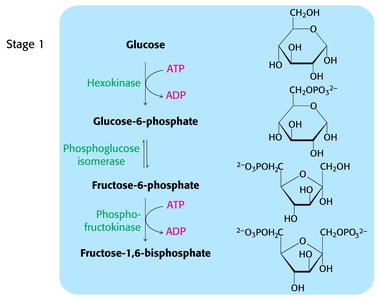
The first stage of glycolysis traps glucose inside the cell and prepares it for further metabolism by phosphorylation. This stage consumes ATP to activate glucose and convert it into fructose-1,6-bisphosphate (F-1,6-BP).
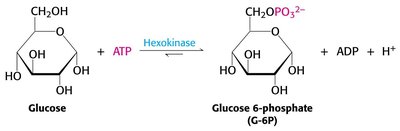
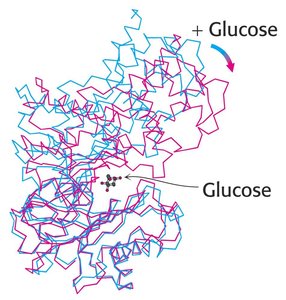
Step 1: Hexokinase phosphorylates glucose to glucose-6-phosphate (G-6P), trapping it inside the cell.
Step 2: Phosphoglucose isomerase converts G-6P to fructose-6-phosphate (F-6P).
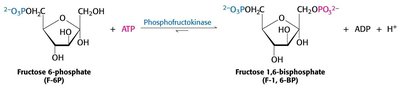
Step 3: Phosphofructokinase (PFK) phosphorylates F-6P to F-1,6-BP (irreversible, key regulatory step).
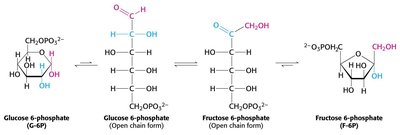
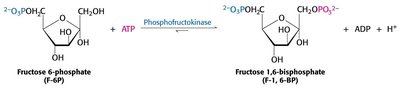
Stage 2: Cleavage of Fructose-1,6-Bisphosphate
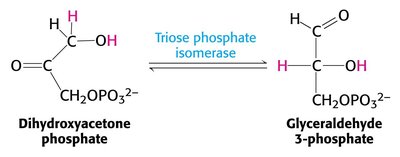
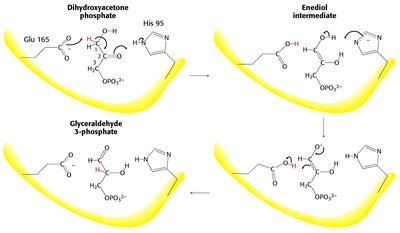
In the second stage, the six-carbon sugar F-1,6-BP is split into two three-carbon molecules: dihydroxyacetone phosphate (DHAP) and glyceraldehyde-3-phosphate (GAP). Only GAP continues directly in glycolysis, but DHAP is rapidly converted to GAP by triose phosphate isomerase (TIM).
Aldolase: Cleaves F-1,6-BP into DHAP and GAP.
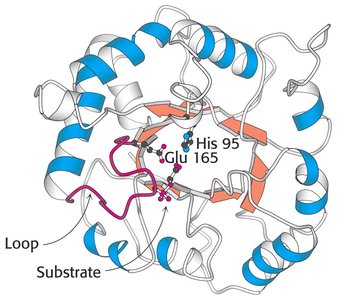
Triose phosphate isomerase (TIM): Interconverts DHAP and GAP, ensuring both products can continue through glycolysis.
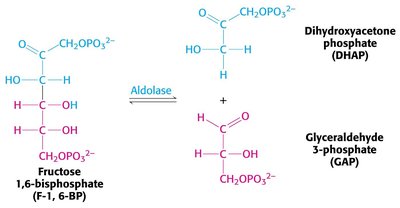
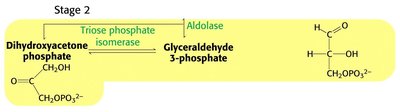
Stage 3: Energy Generation
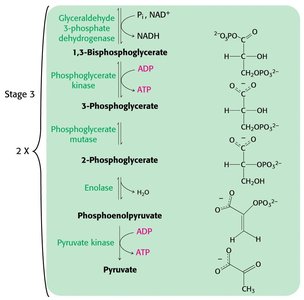
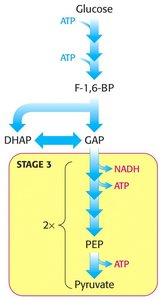
The third stage of glycolysis involves the oxidation of GAP to pyruvate, coupled with the generation of ATP and NADH. This stage includes substrate-level phosphorylation steps that directly produce ATP.
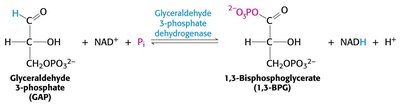
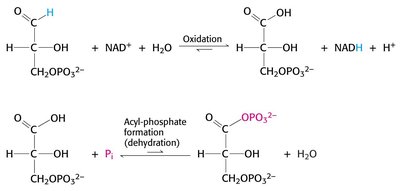
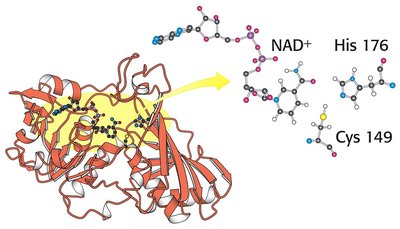
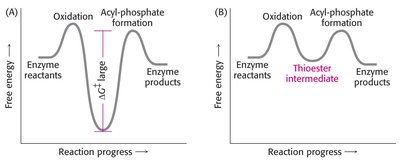
Glyceraldehyde-3-phosphate dehydrogenase: Oxidizes GAP to 1,3-bisphosphoglycerate (1,3-BPG), generating NADH.
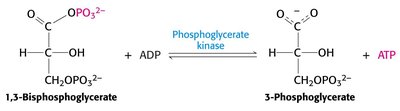
Phosphoglycerate kinase: Transfers a phosphate from 1,3-BPG to ADP, forming ATP (substrate-level phosphorylation).
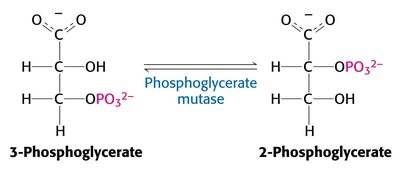
Phosphoglycerate mutase: Converts 3-phosphoglycerate to 2-phosphoglycerate.
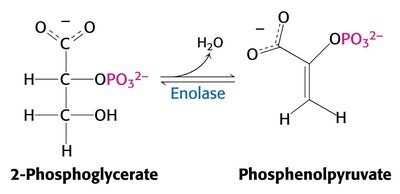
Enolase: Dehydrates 2-phosphoglycerate to phosphoenolpyruvate (PEP).
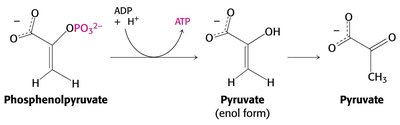
Pyruvate kinase: Transfers a phosphate from PEP to ADP, forming ATP and pyruvate (irreversible step).
Net Reaction and Energetics
The overall glycolytic pathway is exergonic, with a large negative free energy change. The net reaction is:
Glucose + 2 Pi + 2 ADP + 2 NAD+ → 2 pyruvate + 2 ATP + 2 NADH + 2 H+ + 2 H2O
ΔG°’ = -47 kcal mol-1 (-197 kJ mol-1)
Fates of Pyruvate
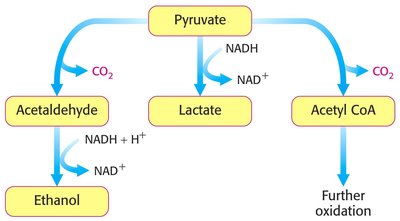
Pyruvate, the end product of glycolysis, can be metabolized in several ways depending on the organism and oxygen availability:
Aerobic conditions: Pyruvate is converted to acetyl-CoA and enters the citric acid cycle for complete oxidation to CO2 and H2O.
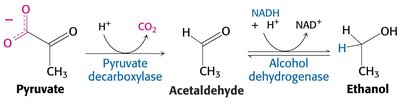
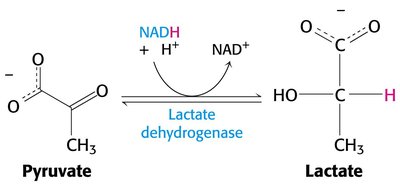
Anaerobic conditions: Pyruvate is reduced to lactate (lactic acid fermentation) or ethanol (alcoholic fermentation) to regenerate NAD+.
Entry of Other Sugars into Glycolysis
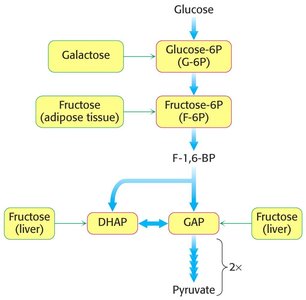
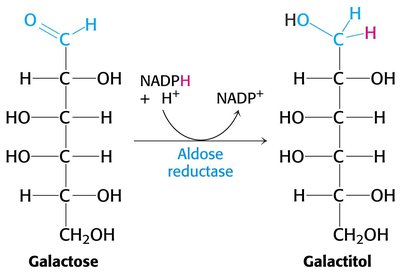
Other sugars such as fructose and galactose can be converted into glycolytic intermediates and enter the pathway. Defects in these conversion pathways can lead to metabolic disorders, such as cataract formation due to galactitol accumulation.
Fructose: Converted to F-6P or DHAP/GAP depending on tissue type.
Galactose: Converted to G-6P; if not, galactitol accumulates, causing osmotic damage.
Regulation of Glycolysis
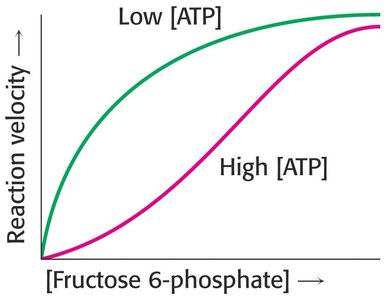
Glycolysis is tightly regulated to meet cellular energy demands and to provide intermediates for biosynthetic pathways. The main regulatory steps are catalyzed by hexokinase, phosphofructokinase (PFK), and pyruvate kinase. PFK is the primary control point, regulated allosterically by ATP (inhibitor), AMP (activator), and fructose-2,6-bisphosphate (activator).
Hexokinase: Inhibited by its product, G-6P.
Phosphofructokinase (PFK): Inhibited by ATP, activated by AMP and F-2,6-BP.
Pyruvate kinase: Regulated by phosphorylation (liver) and allosteric effectors.
Energetics of Glycolytic Enzymes
The table below summarizes the standard free energy changes (ΔG°’) and actual free energy changes (ΔG) for each glycolytic enzyme under physiological conditions. Only a few steps are highly exergonic and serve as key regulatory points.
Enzyme | Reaction Type | ΔG°’ (kcal mol-1) | ΔG (kcal mol-1) |
|---|---|---|---|
Hexokinase | Phosphoryl transfer | -4.0 (-16.7) | -8.0 (-33.5) |
Phosphoglucose isomerase | Isomerization | +0.4 (+1.7) | -0.6 (-2.5) |
Phosphofructokinase | Phosphoryl transfer | -3.4 (-14.2) | -5.3 (-22.2) |
Aldolase | Aldol cleavage | +5.7 (+23.8) | -0.2 (-0.9) |
Triose phosphate isomerase | Isomerization | +1.8 (+7.5) | +0.1 (+0.6) |
Glyceraldehyde 3-phosphate dehydrogenase | Phosphorylation coupled to oxidation | +1.5 (+6.3) | +0.6 (+2.5) |
Phosphoglycerate kinase | Phosphoryl transfer | -4.5 (-18.8) | +0.3 (+1.3) |
Phosphoglycerate mutase | Phosphoryl shift | +1.1 (+4.4) | +0.8 (+3.3) |
Enolase | Dehydration | +0.4 (+1.7) | +0.2 (+0.9) |
Pyruvate kinase | Phosphoryl transfer | -7.5 (-31.4) | -4.0 (-16.7) |
Gluconeogenesis
Overview and Importance
Gluconeogenesis is the metabolic pathway that generates glucose from non-carbohydrate precursors such as lactate, amino acids, and glycerol. It is essential for maintaining blood glucose levels, especially during fasting or intense exercise. The pathway occurs mainly in the liver and, to a lesser extent, in the kidney.
Major Precursors: Lactate, amino acids, glycerol
Major Site: Liver (some in kidney)
Purpose: Maintain blood glucose for brain and muscle function
Energetics and Regulation
Gluconeogenesis is not simply the reverse of glycolysis. It bypasses the irreversible steps of glycolysis using distinct enzymes and is energetically driven by the hydrolysis of ATP and GTP. The pathway is reciprocally regulated with glycolysis to prevent futile cycling.
Net Reaction:
ΔG°’ = -9 kcal mol-1
Key Regulatory Enzyme: Glucose-6-phosphatase (in ER), tightly regulated to control glucose release.
Reciprocal Regulation: Glycolysis and gluconeogenesis are regulated in opposite directions to ensure efficient energy use.
Clinical Relevance
Defects in glycolytic or gluconeogenic enzymes can lead to metabolic diseases, such as hypoglycemia, lactic acidosis, or cataracts (from galactitol accumulation).
Tumor cells often upregulate glycolysis (Warburg effect) to support rapid growth, even under low oxygen conditions.
