 Indietro
Glycolysis and Glucose Metabolism: Biochemistry Study Guide
Guida di studio - Note intelligenti
 Appunti personalizzati basati sui tuoi materiali, ampliati con definizioni chiave, esempi e contesto.
Glycolysis and Glucose Metabolism
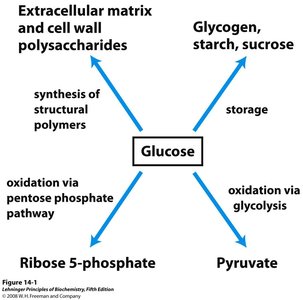
Overview of Glucose Utilization
Glucose is a central molecule in cellular metabolism, serving as a substrate for energy production, biosynthesis, and storage. Its fate in the cell depends on metabolic needs and tissue type.
Storage: Glucose can be stored as glycogen (animals) or starch (plants) for later energy use.
Energy Production: Glycolysis breaks down glucose to generate ATP and NADH for immediate energy needs.
Pentose Phosphate Pathway: Produces NADPH and ribose-5-phosphate for biosynthesis of lipids and nucleotides.
Structural Polysaccharides: Glucose is used to synthesize extracellular matrix and cell wall polysaccharides.
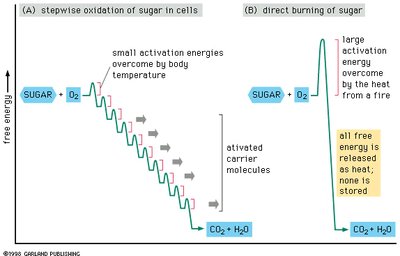
Stepwise Oxidation of Glucose vs. Direct Combustion
Cells oxidize glucose gradually, capturing energy in ATP and NADH, unlike direct burning which releases energy as heat and light. This stepwise process allows efficient energy storage and use.
Stepwise Oxidation: Small activation energies are overcome by enzymes, and energy is stored in carrier molecules.
Direct Combustion: All energy is released at once as heat, with none stored for cellular use.
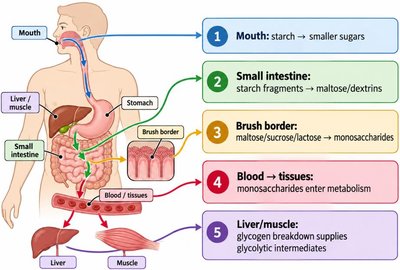
Carbohydrate Digestion and Entry into Glycolysis
Dietary Carbohydrate Digestion
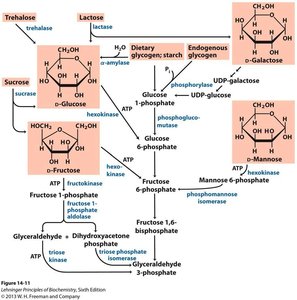
Carbohydrates are digested in several steps before entering glycolysis. Enzymes in the mouth, small intestine, and brush border break down polysaccharides into monosaccharides, which are absorbed and delivered to tissues.
Mouth: Salivary amylase begins starch/glycogen digestion.
Small Intestine: Pancreatic amylase continues digestion; brush border enzymes break down disaccharides.
Absorption: Monosaccharides are absorbed into the bloodstream and delivered to cells.
Stored Glycogen: Liver and muscle break down glycogen to supply glycolytic intermediates.
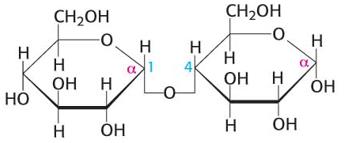
Glycosidic Bonds and Sugar Structure
Monosaccharides are joined by glycosidic bonds to form disaccharides and polysaccharides. The structure and stereochemistry of sugars affect their metabolism and recognition by enzymes.
Glycosidic Bond: Covalent bond formed between two monosaccharides, often at the anomeric carbon.
Example: α(1→4) glycosidic bond in maltose.
Feeder Pathways for Glycolysis
Various sugars and polysaccharides are converted into glycolytic intermediates before entering the core glycolytic pathway. Enzymes such as hexokinase and phosphoglucomutase facilitate these conversions.
Glycogen Breakdown: Releases glucose-1-phosphate, converted to glucose-6-phosphate.
Disaccharide Hydrolysis: Lactose, sucrose, and trehalose are broken down to monosaccharides.
Other Monosaccharides: Mannose and galactose are converted to glycolytic intermediates.
Glycolysis: Pathway and Energetics
Glycolysis Overview
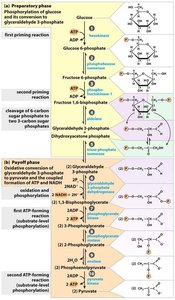
Glycolysis is a ten-step pathway that converts one molecule of glucose (6C) into two molecules of pyruvate (3C), generating ATP and NADH. It occurs in two phases: preparatory (investment) and payoff.
Preparatory Phase: 2 ATP are invested to activate glucose.
Payoff Phase: 4 ATP and 2 NADH are produced.
Net Yield: 2 pyruvate, 2 ATP, 2 NADH per glucose.
Substrate-Level Phosphorylation
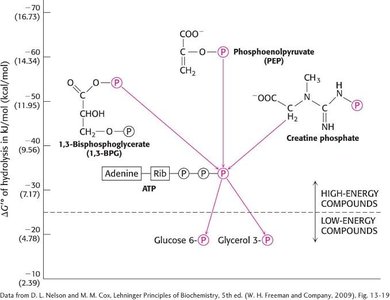
ATP is generated directly in glycolysis by transferring a phosphate group from a high-energy intermediate to ADP. This process is called substrate-level phosphorylation.
Key Intermediates: 1,3-bisphosphoglycerate and phosphoenolpyruvate (PEP).
Energetics: These intermediates have highly negative ΔG values, making phosphate transfer favorable.
NADH Production and Redox Balance
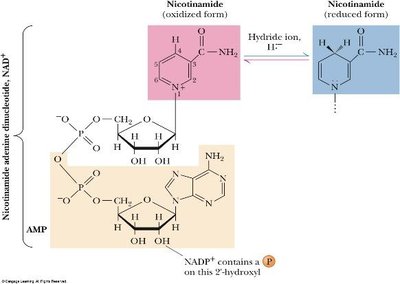
During glycolysis, glucose is partially oxidized, and high-energy electrons are transferred to NAD⁺, forming NADH. NADH carries electrons to later pathways, such as mitochondrial respiration, for further ATP production.
Reaction:
Importance: NADH stores reducing power for ATP synthesis.
Energetics and Regulation of Glycolysis
Glycolysis proceeds because the overall ΔG is negative. Some steps are near equilibrium and reversible, while others are irreversible and serve as control points.
Irreversible Steps: Steps 1 (hexokinase), 3 (phosphofructokinase-1), and 10 (pyruvate kinase).
Reversible Steps: Steps 2 and 4-9, direction depends on substrate/product concentrations.
Regulation: Key enzymes are regulated by energy status and metabolites.
Preparatory Phase of Glycolysis
Step 1: Phosphorylation of Glucose
Hexokinase catalyzes the phosphorylation of glucose to glucose-6-phosphate, trapping it inside the cell and priming it for further metabolism. This step is highly favorable and irreversible.
Reaction:
ΔG°': −16.7 kJ/mol
Cofactor: Mg²⁺ is required to shield negative charges on ATP.
Hexokinase vs. Glucokinase Regulation
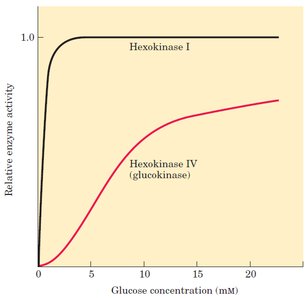
Hexokinase I (muscle/brain) has high affinity for glucose and is active at low concentrations, while glucokinase (liver) has lower affinity and is active only at high glucose levels. This allows tissues to prioritize glucose use based on physiological needs.
Hexokinase I: Low Km (~0.2 mM), inhibited by glucose-6-phosphate.
Glucokinase (Hexokinase IV): High Km (~10 mM), not inhibited by glucose-6-phosphate.
Liver-Specific Regulation of Glucokinase
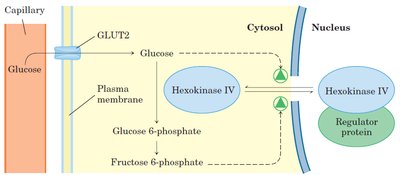
Glucokinase activity in the liver is regulated by sequestration in the nucleus and release to the cytosol based on glucose and fructose-6-phosphate levels. This mechanism ensures the liver responds appropriately to blood glucose changes.
Low Glucose: Glucokinase is sequestered/inhibited in the nucleus.
High Glucose: Glucokinase is released to the cytosol for phosphorylation of glucose.
Step 2: Phosphohexose Isomerization
Phosphohexose isomerase converts glucose-6-phosphate (aldose) to fructose-6-phosphate (ketose), preparing the molecule for further phosphorylation and cleavage. This step is reversible and near equilibrium.
Reaction:
ΔG°': +1.7 kJ/mol
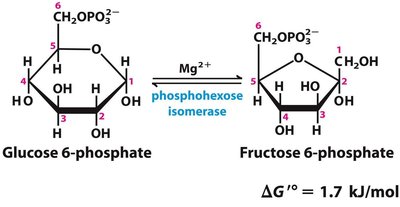
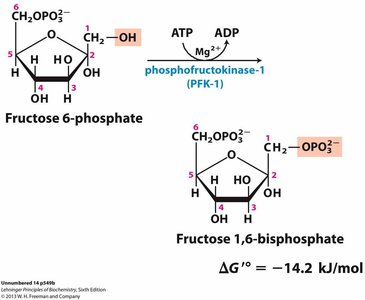
Step 3: 2nd Priming Phosphorylation
Phosphofructokinase-1 (PFK-1) adds a second phosphate to fructose-6-phosphate, forming fructose-1,6-bisphosphate. This is the first committed step of glycolysis and is highly regulated.
Reaction:
ΔG°': −14.2 kJ/mol
Regulation: ATP inhibits, AMP/ADP activate, citrate inhibits, fructose-2,6-bisphosphate strongly activates.
Payoff Phase of Glycolysis
Step 6: Oxidation of Glyceraldehyde-3-Phosphate (GAP)
GAP is oxidized by glyceraldehyde-3-phosphate dehydrogenase, producing 1,3-bisphosphoglycerate and NADH. This is the only redox reaction in glycolysis.
Reaction:
Importance: NADH stores electrons for later ATP production.
Step 7: First ATP Production
Phosphoglycerate kinase transfers a phosphate from 1,3-bisphosphoglycerate to ADP, forming ATP and 3-phosphoglycerate. This is substrate-level phosphorylation.
Reaction:
Net ATP: 2 ATP per glucose (replaces investment phase ATP).
Step 10: Second ATP Production and Pyruvate Formation
Pyruvate kinase catalyzes the transfer of phosphate from phosphoenolpyruvate (PEP) to ADP, forming ATP and pyruvate. The reaction is irreversible and regulated by energy and carbon status.
Reaction:
Regulation: ATP, acetyl-CoA, fatty acids, alanine inhibit; fructose-1,6-bisphosphate activates; liver isoform regulated by phosphorylation.
Fates of Pyruvate
Cellular Respiration vs. Fermentation
Pyruvate produced by glycolysis can enter different pathways depending on oxygen availability and cell type.
Cellular Respiration: Pyruvate is oxidized to acetyl-CoA and enters the TCA cycle for further energy extraction.
Alcohol Fermentation: In yeast, pyruvate is converted to ethanol to regenerate NAD⁺ under anaerobic conditions.
Lactate Fermentation: In muscle and RBCs, pyruvate is converted to lactate to regenerate NAD⁺ when oxygen is limited.
Glycolysis in Tumor Cells: The Warburg Effect
Tumor cells often exhibit elevated rates of glycolysis and glucose uptake, even under aerobic conditions. This phenomenon, known as the Warburg effect, supports rapid cell growth and division.
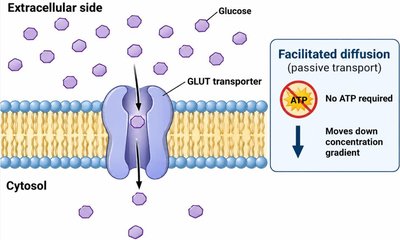
GLUT Transporters: Increased expression enhances glucose uptake.
High Glycolytic Flux: Compensates for low ATP yield by consuming more glucose.
Pentose Phosphate Pathway: Supports nucleotide synthesis for cell proliferation.
Lactate Production: Many tumor cells convert pyruvate to lactate, even with oxygen present.
Summary Table: Glycolysis Steps, Enzymes, and Energetics
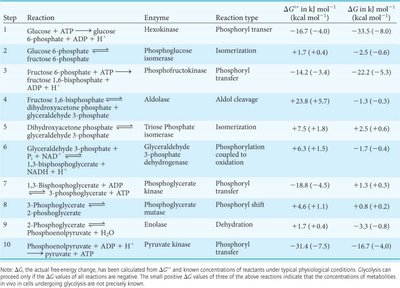
Step | Reaction | Enzyme | ΔG°' (kJ/mol) | ΔG (kJ/mol) |
|---|---|---|---|---|
1 | Glucose + ATP → Glucose-6-phosphate + ADP | Hexokinase | -16.7 | -27.0 |
2 | Glucose-6-phosphate → Fructose-6-phosphate | Phosphohexose isomerase | +1.7 | -4.0 |
3 | Fructose-6-phosphate + ATP → Fructose-1,6-bisphosphate + ADP | Phosphofructokinase-1 | -14.2 | -23.8 |
4 | Fructose-1,6-bisphosphate → DHAP + GAP | Aldolase | +23.8 | +0.4 |
5 | DHAP → GAP | Triose phosphate isomerase | +7.5 | +2.5 |
6 | GAP + NAD⁺ + Pi → 1,3-BPG + NADH + H⁺ | GAPDH | +6.3 | -1.3 |
7 | 1,3-BPG + ADP → 3-PG + ATP | Phosphoglycerate kinase | -18.5 | -4.5 |
8 | 3-PG → 2-PG | Phosphoglycerate mutase | +4.4 | +1.5 |
9 | 2-PG → PEP + H₂O | Enolase | +7.5 | -3.3 |
10 | PEP + ADP → Pyruvate + ATP | Pyruvate kinase | -31.4 | -16.7 |
Additional info: Table values are based on typical physiological conditions; actual ΔG values depend on substrate/product concentrations in cells.
