 Indietro
Introduction to Biochemistry and Amino Acids: Foundations and Chemical Principles
Guida di studio - Note intelligenti
 Appunti personalizzati basati sui tuoi materiali, ampliati con definizioni chiave, esempi e contesto.
Introduction to Biochemistry
Definition and Scope
Biochemistry is the study of the chemical processes and substances that occur within living organisms. It bridges biology and chemistry by exploring the molecular mechanisms underlying cellular function, structure, and regulation.
Chemistry of Life: Focuses on the molecules and reactions that sustain life.
Application: Involves understanding biological processes at the cellular and molecular level, including metabolism, genetic information flow, and cellular signaling.
Domains of Life
All living organisms are classified into three domains based on cellular and molecular characteristics: Bacteria, Archaea, and Eukarya.
Bacteria: Prokaryotic, unicellular organisms without a nucleus.
Archaea: Prokaryotic, often extremophiles, genetically distinct from bacteria.
Eukarya: Organisms with membrane-bound nuclei, including animals, plants, fungi, and protists.
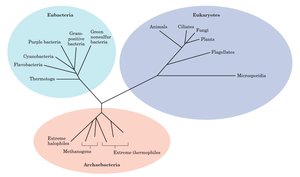
Unicellular vs. Multicellular Organisms
Organisms can be classified based on their cellular organization:
Unicellular: Composed of a single cell (e.g., bacteria, amoeba).
Multicellular: Composed of many cells (e.g., plants, animals).
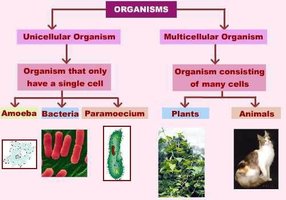
Impact of Biochemistry
Biochemistry has profound implications in various fields:
Human Health & Diseases: Understanding disease mechanisms and developing treatments (e.g., insulin for diabetes).
Medicine: Drug design, diagnostics, and therapeutics.
Agriculture: Enhancing crop yield, pest resistance, and soil health (e.g., Rhizobium bacteria for nitrogen fixation).
Industrial Applications: Production of enzymes, detergents, and biofuels.
Environmental Applications: Bioremediation and waste management.



Biomolecules and Cellular Organization
Major Classes of Biomolecules
Living systems are primarily composed of four major classes of biomolecules:
Proteins: Polymers of amino acids; function as enzymes, structural elements, and signaling molecules.
Lipids: Hydrophobic molecules; form membranes and store energy.
Carbohydrates: Sugars and polysaccharides; provide energy and structural support.
Nucleic Acids: DNA and RNA; store and transmit genetic information.
Monomers, Polymers, and Supramolecular Structures
Many biomolecules are polymers formed from repeating monomer units. These polymers can assemble into larger supramolecular structures essential for cellular function.
Monomer: Single building block (e.g., amino acid, nucleotide).
Polymer: Chain of monomers (e.g., protein, nucleic acid).
Supramolecular Structure: Assemblies of multiple polymers (e.g., ribosome, membrane).
Role of Carbon in Biomolecules
Carbon is the central element in biomolecules due to its unique chemical properties:
Bonding: Forms stable covalent bonds with itself and other elements (H, O, N, S, P).
Versatility: Can form single, double, or triple bonds, allowing for diverse molecular structures.
Small Size: Enables formation of complex, stable molecules.
Covalent and Noncovalent Interactions
Biomolecular structure and function depend on both covalent and noncovalent interactions:
Covalent Bonds: Strong bonds that form the backbone of molecules (e.g., peptide bonds in proteins, phosphodiester bonds in DNA).
Noncovalent Interactions: Weaker forces (hydrogen bonds, ionic interactions, van der Waals forces, hydrophobic effect) that determine molecular shape, folding, and interactions.
Proteins and Amino Acids
Proteins: Structure and Function
Proteins are polymers of amino acids linked by peptide bonds. They serve as enzymes, structural components, transporters, and signaling molecules.
Proteome: The complete set of proteins expressed in a cell under specific conditions.
Proteomics: The systematic study of the proteome.
Amino Acids: Structure and Properties
Amino acids are the building blocks of proteins. Each amino acid contains a central α-carbon, an amino group, a carboxyl group, a hydrogen atom, and a unique side chain (R group).
Peptide Bond Formation: A dehydration reaction between the carboxyl group of one amino acid and the amino group of another forms a peptide bond, releasing water.
Stability: The α-carbon forms four covalent bonds, making the structure stable.
Origin of Amino Acids
Amino acids may have formed abiotically on early Earth through chemical reactions driven by energy sources such as lightning and UV radiation. The Miller-Urey experiment demonstrated that amino acids could be synthesized from simple molecules under simulated primordial conditions.
Modern Synthesis: In living organisms, amino acids are synthesized via enzymatic biosynthetic pathways.
Chemical Behavior of Amino Acids in Water
Amino acids contain ionizable groups (amino and carboxyl) that can gain or lose protons depending on the pH of the environment.
Amino Group: Can gain a proton ($).
Carboxyl Group: Can lose a proton ($).
Zwitterion: At physiological pH, most amino acids exist as zwitterions, carrying both a positive and a negative charge but with no net charge overall.
pKa and pI of Amino Acids
The pKa is the pH at which an ionizable group is 50% protonated and 50% deprotonated. Amino acids typically have at least two pKa values (one for the amino group and one for the carboxyl group).
If pH < pKa, the group is mostly protonated.
If pH > pKa, the group is mostly deprotonated.
The isoelectric point (pI) is the pH at which the amino acid has no net charge and exists predominantly as a zwitterion.
Summary Table: Elements in Living Systems
Category | Elements | Approximate % of Body Weight |
|---|---|---|
Big Four | Carbon, Oxygen, Hydrogen, Nitrogen | 96% |
Major Elements | Calcium, Phosphorus, Potassium, Sulfur, Sodium, Chlorine, Magnesium | 3.5% |
Trace Elements | Iron, Zinc, Manganese, Copper, Molybdenum, Boron, Cobalt, Iodine, Selenium, etc. | 0.5% |
Class Summary
Biochemistry explores the chemistry of life, focusing on the molecular basis of cellular processes.
Living systems are built from proteins, lipids, carbohydrates, and nucleic acids, many of which are polymers.
Carbon's unique bonding properties enable the diversity of biomolecules.
Covalent bonds form molecular backbones; noncovalent interactions determine structure and function.
Proteins are polymers of amino acids, which are linked by peptide bonds.
Amino acids can gain or lose protons depending on pH, with their charge state described by pKa and pI values.
