 Indietro
Lipids and Biological Membranes: Structure, Function, and Transport
Guida di studio - Note intelligenti
 Appunti personalizzati basati sui tuoi materiali, ampliati con definizioni chiave, esempi e contesto.
10 | Lipids
General Properties and Classification of Lipids
Lipids are a structurally diverse class of organic molecules characterized by low solubility in water due to their hydrophobic nature. They serve multiple biological functions and are classified based on their structure and function.
Storage Lipids: Mainly triacylglycerols, used for energy storage.
Membrane Lipids: Include glycerophospholipids, sphingolipids, and sterols, forming the structural basis of biological membranes.
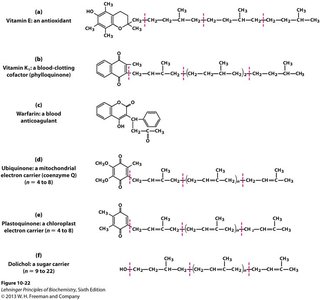
Auxiliary Lipids: Pigments, coenzymes, signaling molecules, antioxidants, etc.
Biological Functions of Lipids
Lipids perform a variety of essential functions in living organisms:
Energy Storage: Lipids are reduced compounds with high energy content and pack efficiently due to their hydrophobicity.
Insulation: Provide thermal insulation and mechanical protection.
Water Repellency: Prevent excessive wetting and water loss.
Buoyancy and Acoustics: Important in marine mammals for buoyancy and sound focusing.
Membrane Structure: Form the main structure of cell membranes.
Cofactors: Examples include vitamin K (blood clotting) and coenzyme Q (ATP synthesis).
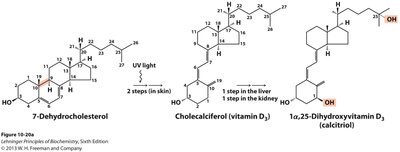
Signaling Molecules: Paracrine and steroid hormones, growth factors, and vitamins A and D.
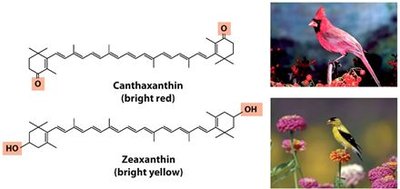
Pigments: Responsible for coloration in plants and animals.
Antioxidants: Vitamin E protects lipids from oxidative damage.
Classification of Lipids
Lipids are classified as follows:
Complex Lipids: Contain fatty acids and are further divided into storage and membrane lipids.
Auxiliary Lipids: Include pigments, coenzymes, signaling molecules, and antioxidants.
Fatty Acids: Structure and Nomenclature
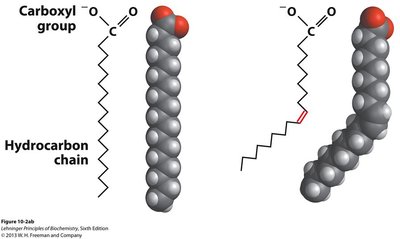
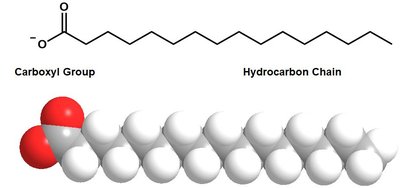
Fatty acids are carboxylic acids with hydrocarbon chains (typically 4–36 carbons). Most natural fatty acids have an even number of carbons and are unbranched.
Saturated Fatty Acids: No double bonds; more reduced, higher energy content.
Unsaturated Fatty Acids: One or more cis double bonds; can be monounsaturated or polyunsaturated.
Nomenclature: Fatty acids are named by chain length, number and position of double bonds, and organic chemistry rules. Example: 18:3(Δ9,12,15).
Triacylglycerols (TAGs): Structure and Function
Triacylglycerols are the primary storage form of fatty acids in biological systems. They consist of three fatty acid chains esterified to a glycerol backbone.
Fats: Solid TAGs.
Oils: Liquid TAGs.
Advantages: TAGs are more reduced and less hydrated than carbohydrates, providing efficient energy storage and less osmotic stress.
Energy Content: Fatty acids provide 9 kcal/g, carbohydrates 4 kcal/g.
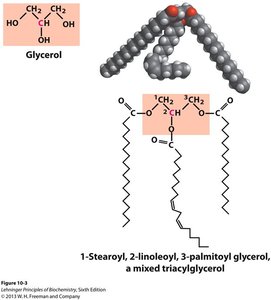
Membrane Lipids: Types and Properties
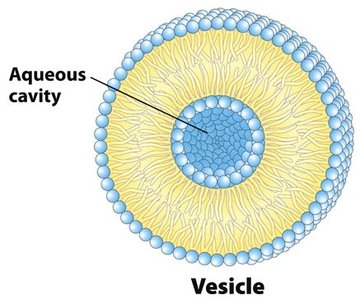
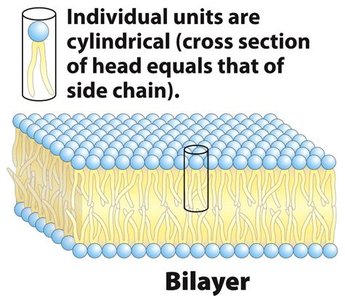
Membrane lipids are amphipathic molecules that spontaneously form aggregates such as micelles, vesicles, and bilayers due to hydrophobic interactions.
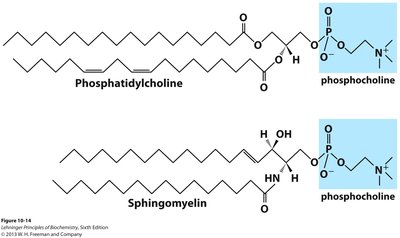
Glycerophospholipids: Primary constituents of cell membranes, composed of a glycerol backbone, two fatty acid tails, and a polar head group.
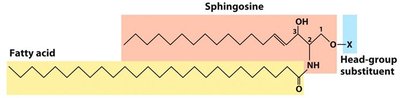
Sphingolipids: Have a sphingosine backbone, one fatty acid tail (amide linkage), and a polar head group (glycosidic or phosphodiester linkage).
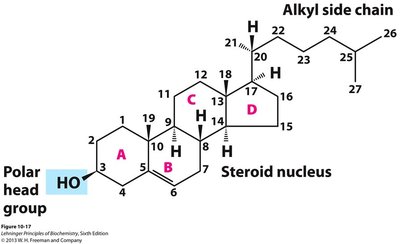
Sterols: Characterized by a rigid steroid nucleus and a polar head group; cholesterol is the major sterol in animal tissues.

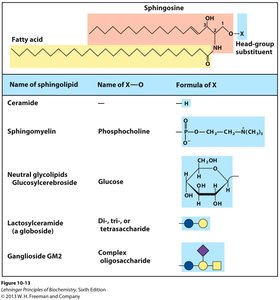
Glycosphingolipids and Blood Groups
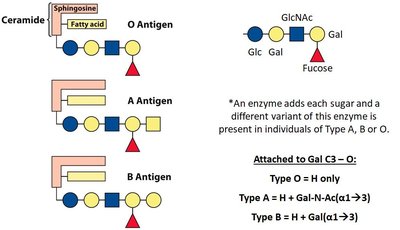
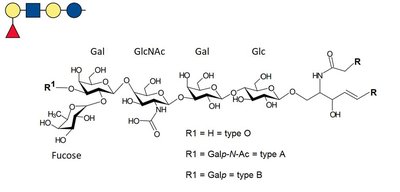
Glycosphingolipids are found on the outer face of plasma membranes and play a role in determining blood groups. The oligosaccharide head group structure is determined by specific glycosyltransferases.
O Antigen: Baseline oligosaccharide, no active glycosyltransferase.
A Antigen: Adds N-acetylgalactosamine.
B Antigen: Adds galactose.
Sterols and Cholesterol
Sterols are defined by a four-ring steroid nucleus, a polar hydroxyl group, and various nonpolar side chains. Cholesterol is the major sterol in animal tissues and modulates membrane properties.
Functions: Membrane thickening, precursor for bile acids and steroid hormones.
Other Biologically Relevant Lipids
Steroid Hormones: Oxidized derivatives of sterols, more polar, synthesized from cholesterol, and transported in the bloodstream.
Eicosanoids: Derived from arachidonic acid, include prostaglandins (inflammation), thromboxanes (blood clotting), and leukotrienes (smooth muscle contraction).
Vitamins: Vitamin A (vision, development), Vitamin D (calcium uptake), Vitamin E (antioxidant), Vitamin K (blood clotting).
11 | Biological Membranes and Transport
Structure and Fluidity of Biological Membranes
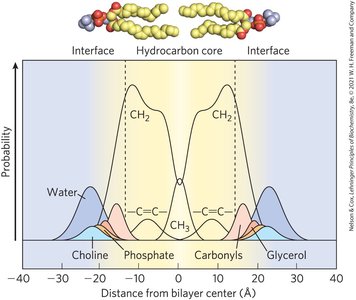
Biological membranes are composed of two lipid monolayers (leaflets) forming a bilayer, typically 50–80 Å thick. Membranes are dynamic, asymmetrical, and impermeable to ions and polar molecules.
Fluidity: Determined by fatty acid composition and cholesterol content.
Chain Length: Longer chains increase melting point.
Double Bonds: More double bonds decrease melting point.
Cholesterol: Adds rigidity and thickens membranes.
Melting Point and Packing of Fatty Acids
Saturated Fatty Acids: Pack orderly, higher melting points.
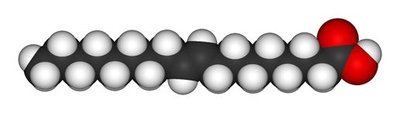
Unsaturated Fatty Acids: Cis double bonds introduce kinks, less orderly packing, lower melting points.
Trans Fatty Acids: Extended conformation, pack more regularly, higher melting points, associated with health risks.
Membrane Proteins: Types and Functions
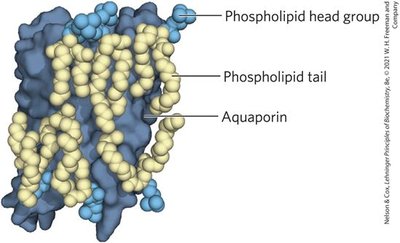
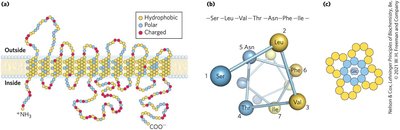
Membrane proteins constitute 25–75% of membrane mass and serve as receptors, channels, pumps, and enzymes.
Peripheral Proteins: Associate with membrane via electrostatic interactions and H-bonds.
Amphitropic Proteins: Reversibly associate with membranes, regulated by covalent or noncovalent interactions.
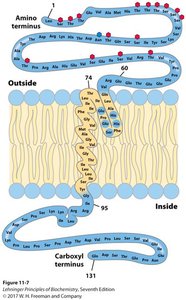
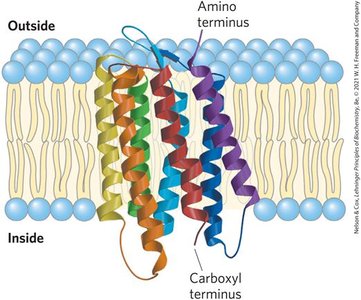
Integral Proteins: Tightly associated, contain hydrophobic amino acids, can span the membrane (monotopic, bitopic, polytopic).
Solute Transport Across Membranes
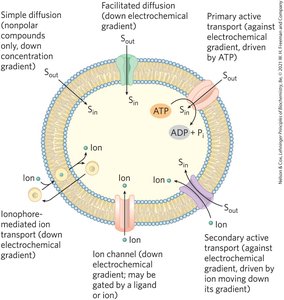
Cells acquire raw materials via membrane transport mechanisms.
Simple Diffusion: Nonpolar compounds diffuse unassisted.
Facilitated Diffusion: Polar compounds and ions require specific protein carriers; movement down concentration gradient.
Active Transport: Movement up concentration gradient, coupled to ATP hydrolysis (primary) or to the flow of another solute (secondary).
Transporters: Highly specific, saturatable, and can be uniport, antiport, or symport.
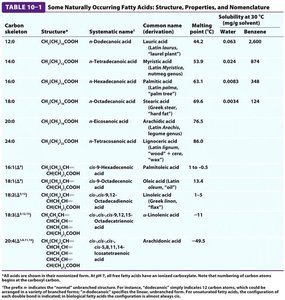
Summary Table: Fatty Acid Properties
The following table summarizes the structure, properties, and nomenclature of some naturally occurring fatty acids:
Carbon Skeleton | Structure | Systematic Name | Common Name | Melting Point (°C) | Solubility in Water (mg/g) |
|---|---|---|---|---|---|
12:0 | CH3(CH2)10COOH | dodecanoic acid | lauric acid | 44.2 | 2.6 |
16:0 | CH3(CH2)14COOH | hexadecanoic acid | palmitic acid | 63.1 | 0.056 |
18:0 | CH3(CH2)16COOH | octadecanoic acid | stearic acid | 69.6 | 0.038 |
18:1(Δ9) | CH3(CH2)7CH=CH(CH2)7COOH | cis-9-octadecenoic acid | oleic acid | 13.4 | 0.002 |
18:2(Δ9,12) | CH3(CH2)6CH=CHCH2CH=CH(CH2)6COOH | cis, cis-9,12-octadecadienoic acid | linoleic acid | -5 | 0.001 |
20:4(Δ5,8,11,14) | CH3(CH2)4CH=CHCH2CH=CHCH2CH=CHCH2CH=CH(CH2)2COOH | cis, cis, cis, cis-5,8,11,14-eicosatetraenoic acid | arachidonic acid | -49.5 | 0.001 |
Key Equations
Fatty Acid Nomenclature:
Energy Content:
Additional info:
Membrane fluidity is crucial for cell survival and is regulated by lipid composition and temperature.
Transporters and channels are essential for maintaining cellular homeostasis and responding to environmental changes.
