 Indietro
11/5 Lipids: Structure, Classification, and Biological Functions
Guida di studio - Note intelligenti
 Appunti personalizzati basati sui tuoi materiali, ampliati con definizioni chiave, esempi e contesto.
Lipids: Structure and Classification
Overview of Lipid Classes
Lipids are a diverse group of biomolecules essential for energy storage, membrane structure, and signaling. They are classified based on their structure and function into storage lipids (neutral) and membrane lipids (polar).
Storage lipids: Mainly triacylglycerols, used for energy storage.
Membrane lipids: Include phospholipids, glycolipids, and archaeal ether lipids, crucial for cellular membrane structure.
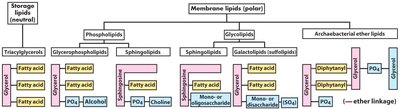
Triacylglycerols: Fat Storage in Cells
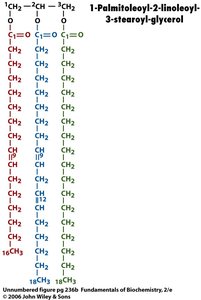
Triacylglycerols (triglycerides) are formed by the condensation of glycerol with three fatty acids. They are the primary form of fat storage in animals and plants, and are neutral at physiological pH.
Structure: Glycerol backbone esterified with three fatty acids.
Function: Efficient energy storage, insulation, and protection.
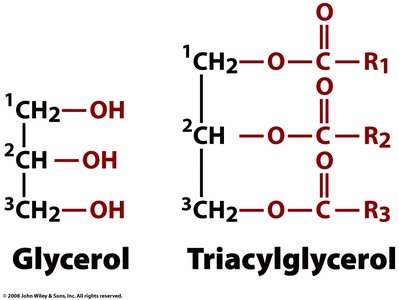
Cellular Fat Storage
Adipocytes (fat cells) in animals and oil bodies in plant seeds are specialized for storing triacylglycerols. 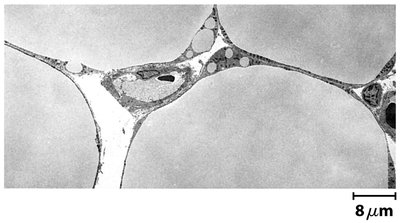
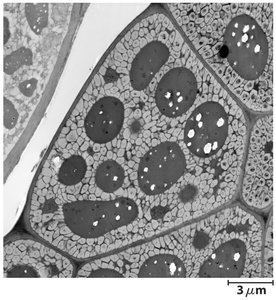
Energy Storage: Fats vs. Carbohydrates
Fats store more than twice the energy per gram compared to carbohydrates. Their hydrophobic tails require less water for solvation, reducing body weight. Fatty tissues also serve as insulation.
Energy density: Fats are more energy-rich than starch.
Hydration: Dehydrated fatty acid tails reduce water requirement.
Insulation: Fatty tissues help maintain body temperature.
Example: Polar Bears
Polar bears rely on fat reserves for survival during long fasting periods. Their diet is rich in triacylglycerides, allowing them to triple their body mass and sustain activity without food or water for months. 
Lipids and Membrane Structure
Micelles and Bilayers
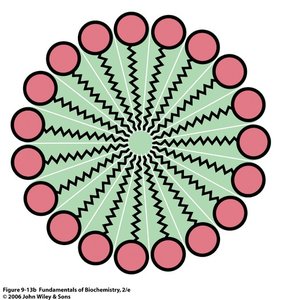
Single-tailed lipids (like fatty acids) form micelles due to their wedge-like van der Waals envelope. The favored size of micelles depends on the tail length and rigidity.
Micelles: Spherical aggregates of single-tailed lipids.
Bilayers: Formed by lipids with two tails, such as phospholipids.

Bilayer Formation
Some lipids, especially phospholipids, can form bilayers, which are the basis of biological membranes. 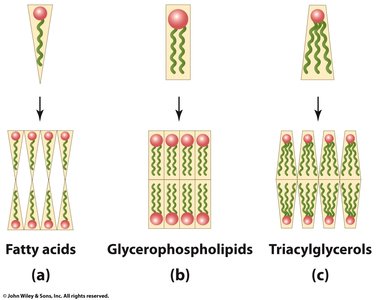
Membrane Lipids: Classes and Structure
Membrane lipids combine fatty acids and polar head groups via covalent bonds. The three main classes are:
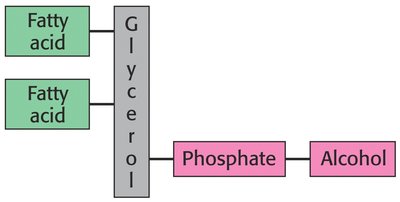
Phospholipids: Composed of fatty acid tails, a platform (glycerol or sphingosine), phosphate group, and an alcohol.
Glycolipids: Membrane lipids with a sugar head group.
Cholesterol: Sterol that modulates membrane fluidity.
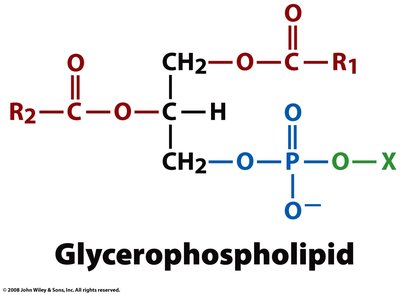
Phosphoglycerides: Phospholipids with a Glycerol Platform
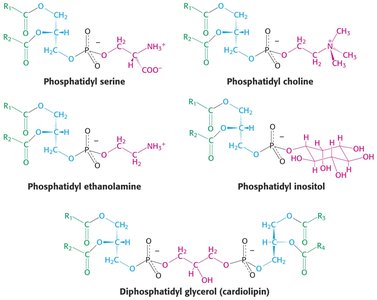
Phosphoglycerides are abundant in biological membranes. Their head group (X) defines the class of phospholipid.
R1 and R2: Fatty acid chains.
X: Head group (serine, choline, ethanolamine, etc.).
Common Phosphoglycerides
Phosphatidyl serine
Phosphatidyl choline
Phosphatidyl ethanolamine
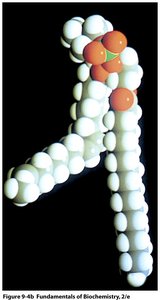
Space Filling Model of Phospholipid
The presence of cis double bonds in fatty acid chains leads to kinks, affecting membrane fluidity. Fats are often saturated, while oils are unsaturated. 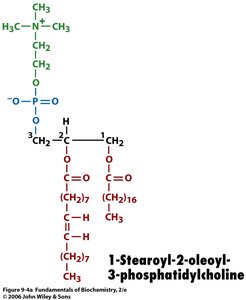
Glycolipids and Sphingolipids
Glycolipids
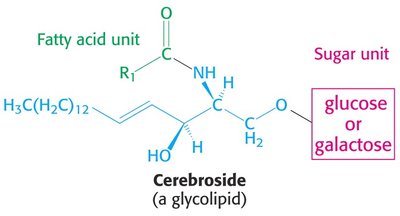
Glycolipids are membrane lipids with a sugar head group, connected via a glycosidic bond. 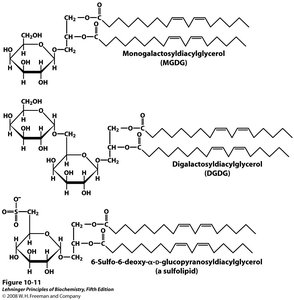
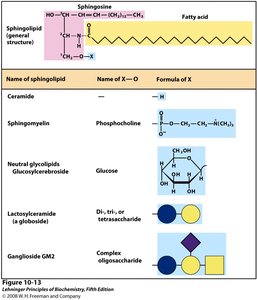
Sphingolipids
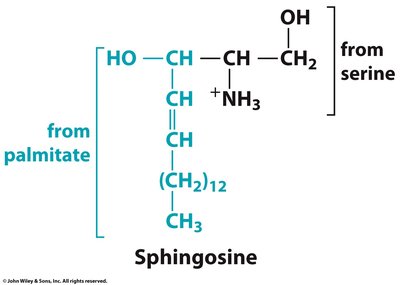
Sphingolipids use sphingosine as a backbone instead of glycerol. Sphingosine is covalently bound to another fatty acid via an amide bond. 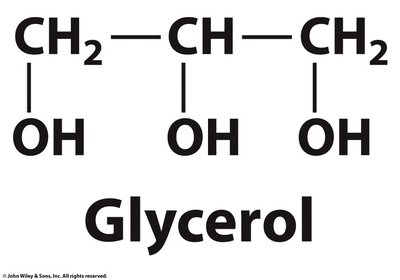
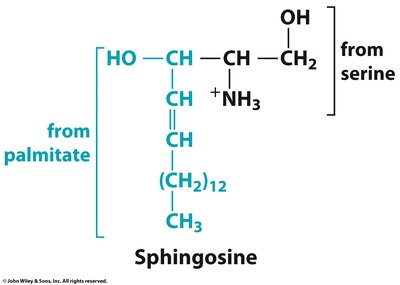
Sphingomyelin and Glycosphingolipids
Sphingomyelin: Contains phosphocholine; abundant in myelin sheath.
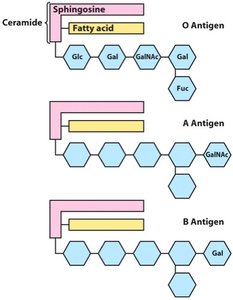
Glycosphingolipids: Head group is a sugar; defines blood groups.
Membrane Structure and Properties
Membrane Bilayers
Membrane lipid bilayers can extend indefinitely, forming sheets. Each layer is called a "leaflet."
Idealized Lipid Bilayer
60 Å across
15 Å for each head group
15 Å for each fully-extended tail group
Temperature and Phase Transitions
Membranes undergo a phase transition at a specific temperature (transition temperature).
Above transition temperature: Membrane is in a "liquid crystal" or "fluid state."
Below transition temperature: Membrane is gel-like and solid.
Lipid Mobility
Lipid tails are constantly in motion, with viscosity similar to light machine oil. Mobility is limited near head groups.
Factors Affecting Transition Temperature
Transition temperature increases with chain length and degree of saturation.
Higher temperatures require more saturated lipids for membrane integrity.
Membrane Composition and Asymmetry
Membrane lipid composition varies among organelles and between inner and outer leaflets. This asymmetry is important for membrane function and fluidity.
Cholesterol: Role in Membranes
Cholesterol is a rigid, planar molecule that modulates membrane fluidity.
Reduces movement of neighboring fatty acid tails.
Prevents close packing of tails.
Broadens temperature range of bilayer phase transition.
Example: Cholesterol supports an "ordered liquid" state between gel-like and fluid membrane phases.
Summary Table: Lipid Classes and Functions
Lipid Class | Structure | Main Function |
|---|---|---|
Triacylglycerols | Glycerol + 3 fatty acids | Energy storage |
Phospholipids | Glycerol/sphingosine + fatty acids + phosphate + alcohol | Membrane structure |
Glycolipids | Fatty acid + sugar head group | Membrane structure, cell recognition |
Cholesterol | Sterol ring structure | Modulates membrane fluidity |
Additional info: The notes expand on brief points to provide academic context, definitions, and examples for clarity and completeness.
