 Indietro
Nucleic Acid Structure and Nucleotide Metabolism: Biochemistry Study Notes
Guida di studio - Note intelligenti
 Appunti personalizzati basati sui tuoi materiali, ampliati con definizioni chiave, esempi e contesto.
Nucleic Acids
Nucleic Acid Structure
Nucleic acids are polymers composed of nucleotide monomers, which serve as the fundamental units for DNA and RNA. Each nucleotide consists of a nitrogenous base, a pentose sugar, and one or more phosphate groups. - Nitrogenous Bases: Classified as purines (double-ringed: adenine and guanine) or pyrimidines (single-ringed: thymine, cytosine, uracil). - Pentose Sugar: Ribose in RNA, 2-deoxyribose in DNA. - Phosphate Group: Attached to the 5’ carbon of the sugar via an ester bond. 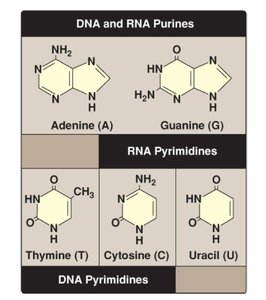
Nucleosides vs. Nucleotides
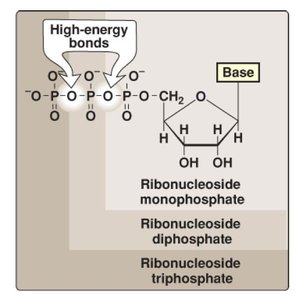
Nucleosides are composed of a nitrogenous base linked to a pentose sugar by an N-glycosidic bond. Nucleotides are nucleosides with one or more phosphate groups attached. - Ribonucleosides: Contain ribose (e.g., adenosine, cytidine). - Deoxyribonucleosides: Contain 2-deoxyribose (e.g., deoxyadenosine). - Nucleotides: Include mono-, di-, and triphosphates (e.g., ATP, GTP). 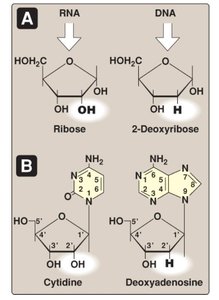
Bases: Purines & Pyrimidines
Purines
Purines are double-ringed nitrogenous bases found in both DNA and RNA. - Adenine (A) and Guanine (G) are the primary purines.
Pyrimidines
Pyrimidines are single-ringed bases. - Thymine (T) is found only in DNA. - Cytosine (C) is found in both DNA and RNA. - Uracil (U) is found only in RNA.
Purine Nucleotide Synthesis and Degradation
De Novo Purine Synthesis
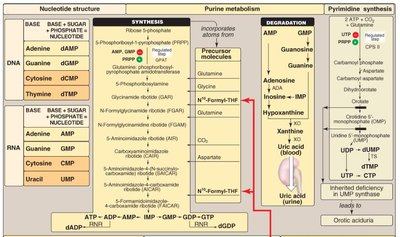
Purine nucleotides are synthesized from simple molecules, with the purine ring built stepwise on a ribose-5-phosphate backbone. - PRPP Synthesis: Ribose-5-phosphate + ATP → PRPP (via PRPP synthetase). PRPP is activated by inorganic phosphate and inhibited by purine nucleotides. 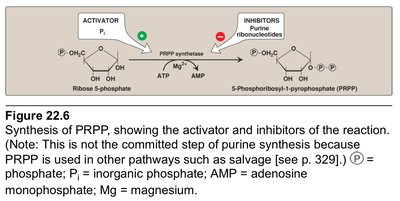 - Ring Assembly: Atoms in the purine ring are derived from glycine, glutamine, aspartate, CO2, and N10-formyl-tetrahydrofolate.
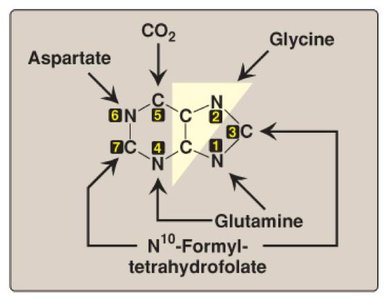 - IMP Synthesis: Inosine monophosphate (IMP) is the parent nucleotide for AMP and GMP.
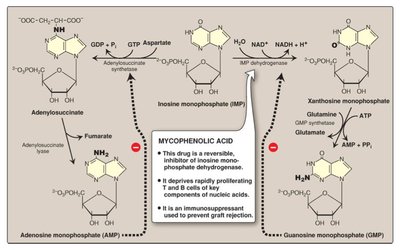 - AMP and GMP Synthesis: AMP is synthesized using GTP and aspartate; GMP uses ATP and glutamine.
Nucleoside Di- and Triphosphate Synthesis
Nucleoside monophosphate kinases and diphosphate kinases maintain nucleotide pools. - Adenylate kinase: AMP + ATP ↔ 2 ADP - Guanylate kinase: GMP + ATP ↔ GDP + ADP - Nucleoside diphosphate kinase: GDP + ATP ↔ GTP + ADP; CDP + ATP ↔ CTP + ADP 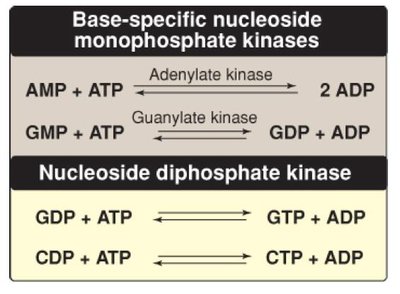
Purine Salvage Pathway
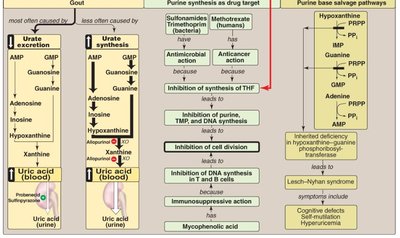
Salvage pathways recycle purine bases from nucleic acid turnover or diet. - Enzymes: Adenine phosphoribosyltransferase (APRT), hypoxanthine-guanine phosphoribosyltransferase (HGPRT). - Clinical Significance: Deficiency of HGPRT leads to Lesch-Nyhan syndrome, characterized by hyperuricemia, gout, and neurological symptoms. 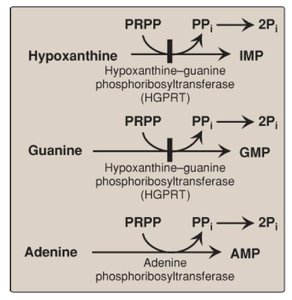
Deoxyribonucleotide Synthesis
Ribonucleotide reductase converts ribonucleoside diphosphates to deoxyribonucleoside diphosphates, essential for DNA synthesis. - Regulation: Maintains balanced deoxyribonucleotide supply. 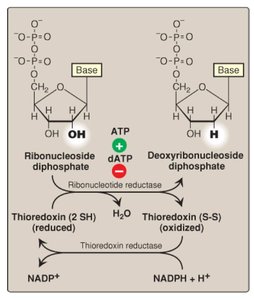
Purine Nucleotide Degradation
Purine nucleotides are degraded to uric acid, which is excreted in urine. - Key Steps: AMP → IMP → inosine → hypoxanthine → xanthine → uric acid. - Diseases: Gout (hyperuricemia), ADA deficiency (immunodeficiency).
Pyrimidine Nucleotide Synthesis and Degradation
De Novo Pyrimidine Synthesis
Unlike purines, the pyrimidine ring is synthesized before attachment to ribose-5-phosphate. - Sources: Glutamine, CO2, aspartate. - Regulated Step: Carbamoyl phosphate synthesis (CPS II), activated by PRPP and inhibited by UTP. 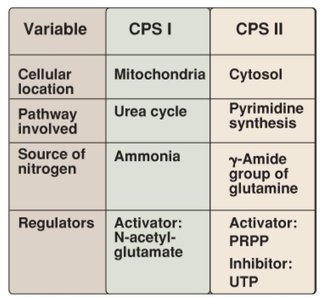
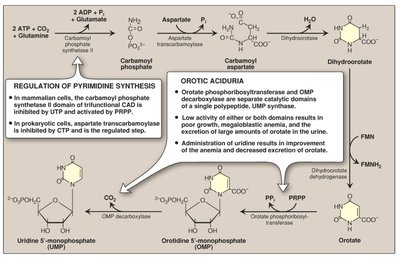 - Orotic Acid Synthesis: Dihydroorotate is oxidized to orotic acid, which is converted to OMP and then to UMP. - Clinical Significance: Hereditary orotic aciduria results from UMP synthase deficiency, causing orotic acid accumulation.
Cytidine Triphosphate Synthesis
CTP is synthesized by amination of UTP, using glutamine as the nitrogen source. 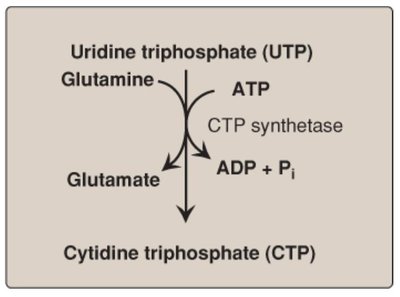
Deoxythymidine Monophosphate Synthesis
dUMP is methylated to dTMP by thymidylate synthase, using N5,N10-methylene-THF as a methyl donor. - Inhibitors: 5-fluorouracil (antitumor agent), methotrexate (inhibits DHF reductase). 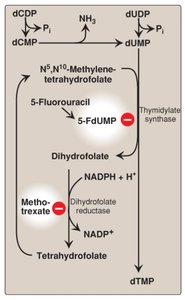
Pyrimidine Nucleotide Degradation
Pyrimidine rings are opened and degraded to highly soluble products: β-alanine (from CMP and UMP) and β-aminoisobutyrate (from TMP). - Clinical Application: Uridine supplementation is used in hereditary orotic aciduria.
Drug Targets and Clinical Correlations
PABA and Folic Acid Analogs
- PABA Analogs: Sulfonamides inhibit bacterial folic acid synthesis, affecting purine synthesis in bacteria. - Folic Acid Analogs: Methotrexate inhibits dihydrofolate reductase, limiting THF and thus purine and DNA synthesis in mammalian cells. 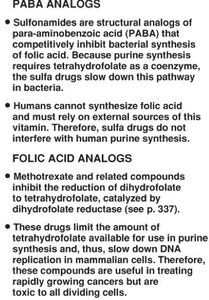
Concept Maps and Summary Tables
Nucleotide Structure, Synthesis, and Degradation
Comparison Table: CPS I vs. CPS II
Variable | CPS I | CPS II |
|---|---|---|
Cellular location | Mitochondria | Cytosol |
Pathway involved | Urea cycle | Pyrimidine synthesis |
Source of nitrogen | Ammonia | γ-Amide group of glutamine |
Regulators | Activator: N-acetyl-glutamate | Activator: PRPP Inhibitor: UTP |
Summary Table: Nucleoside Kinases
Reaction | Enzyme |
|---|---|
AMP + ATP ↔ 2 ADP | Adenylate kinase |
GMP + ATP ↔ GDP + ADP | Guanylate kinase |
GDP + ATP ↔ GTP + ADP | Nucleoside diphosphate kinase |
CDP + ATP ↔ CTP + ADP | Nucleoside diphosphate kinase |
Summary Table: Purine Salvage Pathway
Base | Enzyme | Product |
|---|---|---|
Hypoxanthine | HGPRT | IMP |
Guanine | HGPRT | GMP |
Adenine | APRT | AMP |
Summary Table: Drug Targets in Nucleotide Metabolism
Drug | Target | Effect |
|---|---|---|
Sulfonamides | Bacterial folic acid synthesis | Inhibits purine synthesis in bacteria |
Methotrexate | Dihydrofolate reductase | Inhibits THF regeneration, slows DNA synthesis |
5-Fluorouracil | Thymidylate synthase | Inhibits dTMP synthesis, antitumor action |
Key Concepts and Clinical Relevance
- Nucleotide metabolism is essential for DNA and RNA synthesis, cell division, and energy transfer. - Defects in nucleotide metabolism can lead to clinical disorders such as gout, Lesch-Nyhan syndrome, ADA deficiency, and hereditary orotic aciduria. - Drug targets in nucleotide metabolism are important in antimicrobial and anticancer therapies. Additional info: Expanded explanations and clinical context were added to ensure completeness and academic quality.
