 Indietro
Regulation of Gene Expression in Eukaryotes: Steroid Hormones and Embryonic Development
Guida di studio - Note intelligenti
 Appunti personalizzati basati sui tuoi materiali, ampliati con definizioni chiave, esempi e contesto.
Regulation of Gene Expression by Steroid Hormones
Introduction to Steroid Hormones
Steroid hormones are a class of lipids derived from cholesterol, characterized by their four-ring structure and hydrophobic nature. They function as signaling molecules, regulating numerous physiological processes in both animal and plant cells. - Key Point 1: Steroid hormones include testosterone, estradiol, cortisol, aldosterone, and synthetic steroids like prednisone. - Key Point 2: These hormones are produced in specific organs (e.g., testes, ovaries, adrenal cortex) and exert their effects by modulating gene expression. - Example: Testosterone regulates male sexual development, while cortisol controls glucose metabolism. 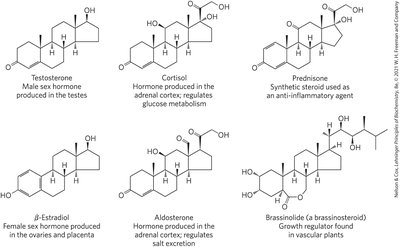

Mechanism of Gene Regulation by Steroid Hormones
Steroid hormones regulate gene expression by interacting with intracellular receptors known as steroid hormone receptors (SHRs). These receptors act as transcription factors upon activation. - Key Point 1: Steroid hormones are transported in the blood by carrier proteins and diffuse through the plasma membrane of target cells. - Key Point 2: In the cytoplasm, the hormone binds to the SHR, causing dissociation from the chaperone protein HSP70, dimerization, and exposure of the nuclear localization signal. - Key Point 3: The activated SHR dimer enters the nucleus and binds to hormone response elements (HREs) in the promoter regions of target genes, often via zinc finger motifs. - Key Point 4: This binding recruits co-activators and other transcription factors, modulating gene expression and resulting in specific cellular responses. 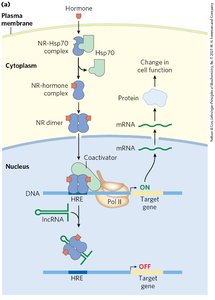

Hormone Response Elements (HREs)
HREs are specific DNA sequences in the promoter regions of target genes that are recognized by ligand-bound SHRs. - Key Point 1: HREs typically consist of conserved 6 bp palindromic repeats separated by variable nucleotides. - Example: The estrogen response element: RGGTCAN3TGACCY; androgen response element: GG(A/T)ACAN2TGTTCT.
Clinical Applications of Steroid Hormone Regulation
Understanding steroid hormone-mediated gene regulation has led to important medical applications. - Key Point 1: RU486 (mifepristone) is an antagonist of the progesterone receptor, preventing implantation by blocking gene activation. - Key Point 2: Tamoxifen is used in breast cancer therapy; it competes with estrogen for receptor binding, inhibiting expression of genes required for cancer cell proliferation. 

Regulation of Gene Expression in Embryonic Development
Genetic Control of Early Embryonic Development
Embryonic development is orchestrated by a hierarchy of gene expression, with precise temporal and spatial regulation. - Key Point 1: The Nobel Prize in Physiology or Medicine 1995 was awarded for discoveries in genetic control of embryonic development, using Drosophila melanogaster as a model organism. - Key Point 2: Developmental stages are regulated by sequential activation of gene subsets, including maternal, morphogen, and homeotic genes. 
Maternal Genes and Morphogens
Maternal genes are expressed in the mother and their mRNAs are deposited unevenly in the egg, influencing early development. - Key Point 1: Morphogens such as Bicoid (anterior) and Nanos (posterior) establish polarity and regulate downstream gene expression. - Key Point 2: Bicoid acts as a transcription factor and translational repressor, while Nanos represses translation of hunchback mRNA at the posterior. - Example: Mutations in bicoid result in embryos lacking anterior structures and duplicating posterior segments. 
Gene Regulation Cascade in Embryogenesis
The cascade of gene regulation involves multiple subsets, leading to the formation of body segments and structures. - Key Point 1: Maternal mRNAs/proteins regulate expression of embryonic genes, forming stripes and segments. - Key Point 2: Hunchback acts as a negative regulator, and the cascade continues with further gene subsets.
Homeotic (Hox) Genes and Anatomical Identity
Hox genes are master control genes expressed after segmentation, determining the anatomical identity of each segment. - Key Point 1: Mutations in Hox genes cause homeosis, where one body part develops features of another (e.g., Antennapedia, Bithorax mutants). - Key Point 2: The homeobox is a highly conserved ~180 bp sequence encoding a homeodomain with a helix-turn-helix motif for DNA binding. 
Conservation and Relevance of Developmental Genes
Developmental genes, including Hox genes, are highly conserved across species, including humans. - Key Point 1: Studying Drosophila and mouse mutants provides insights into human development, stem cell research, and medical applications. - Key Point 2: Stem cells are classified by their developmental potential: totipotent, pluripotent, multipotent, and unipotent.
Stem Cell Type | Developmental Potential |
|---|---|
Totipotent | Can differentiate into any tissue or a complete organism |
Pluripotent | Can differentiate into many tissue types, but not a complete organism |
Multipotent | Can differentiate into several related cell types |
Unipotent | Can differentiate into only one cell type |
Summary Table: Key Genes in Drosophila Embryogenesis
Gene | Function | Mutation Phenotype |
|---|---|---|
Bicoid | Anterior morphogen, transcription factor, translational repressor | Loss of anterior structures, duplication of posterior |
Nanos | Posterior morphogen, translational repressor | Loss of posterior structures |
Hunchback | Negative regulator in cascade | Altered segment formation |
Hox (Homeobox) | Master control of segment identity | Homeosis (e.g., legs in place of antennae) |
Further Reading
- Lehninger Biochemistry: Nelson and Cox, Ed. VII, Ch 28, section 28.3 (pp. 1083-1092). - Refer to figures in the lecture notes for visual guidance. Additional info: Academic context was added to clarify the mechanisms and clinical relevance of gene regulation by steroid hormones and developmental genes.
