 Indietro
Regulation of Gene Expression in Prokaryotes: Structure, Mechanisms, and Applications
Guida di studio - Note intelligenti
 Appunti personalizzati basati sui tuoi materiali, ampliati con definizioni chiave, esempi e contesto.
Regulation of Gene Expression in Prokaryotes
Introduction to Genes and Gene Expression
Gene expression is a fundamental process in biochemistry, involving the conversion of genetic information from DNA into functional products such as proteins or RNA molecules. The regulation of gene expression is crucial for cellular function, adaptation, and survival, especially in prokaryotes like Escherichia coli.
Gene: A region of DNA that can be expressed to produce a final functional product, either a polypeptide or an RNA molecule.
Transcription: The process by which RNA polymerase synthesizes RNA from a DNA template.
Regulatory DNA sequences: Elements such as promoters and operators that control the initiation and regulation of transcription.
Housekeeping genes: Genes under constitutive expression, essential and nearly constant in all cells.
Regulated genes: Genes whose expression levels vary according to cellular needs; can be inducible or repressible.
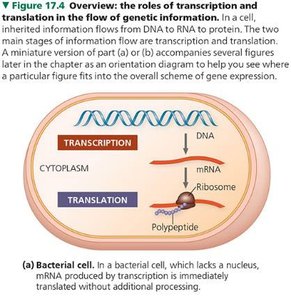
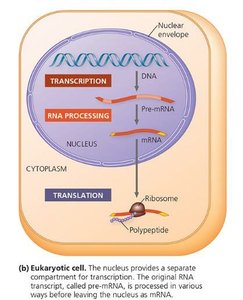
Gene Transcription: Mechanism and Regulation
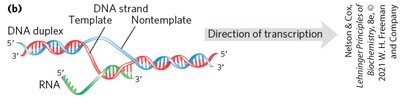
Transcription in bacteria is carried out by RNA polymerase, which does not require a primer and initiates RNA synthesis at the transcription start site (TSS). Only the 3’ to 5’ strand of DNA is used as a template, and the resulting RNA is polymerized in the 5’ to 3’ direction.
Transcription bubble: A local unwinding of DNA (~17 bp) where RNA polymerase synthesizes RNA. About 8 bases form an RNA-DNA duplex during transcription.
Promoters: Specific DNA sequences upstream of the TSS that are bound by transcription factors and RNA polymerase to initiate transcription.
Transcription factors (TF): Regulatory proteins that bind at promoters and mediate transcription, including activators and repressors.
Transcription terminator: Sequence at the end of the gene that signals the end of transcription.

Types of Gene Regulation: Housekeeping vs. Regulated Genes
Gene expression can be constitutive (housekeeping genes) or regulated (inducible or repressible genes). Housekeeping genes are essential for basic cellular functions and are expressed at constant levels, while regulated genes respond to environmental or cellular signals.
Inducible genes: Normally 'off' or expressed at low levels, but can be turned on in response to specific signals.
Repressible genes: Normally 'on' or highly expressed, but can be turned off when not needed.
Transcriptional Regulation in Bacteria
Negative vs. Positive Regulation
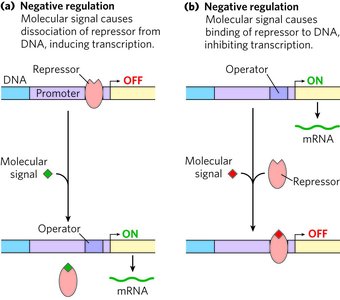
Transcriptional regulation in bacteria involves negative and positive mechanisms, mediated by repressors and activators, respectively.
Negative regulation: Repressors bind to operator sequences, preventing transcription. A signal can cause the repressor to dissociate, inducing transcription, or bind, shutting down transcription.
Positive regulation: Activators bind to DNA, enhancing transcription. A signal can cause the activator to bind, inducing transcription, or dissociate, shutting down transcription.

Mechanisms of Transcriptional Regulation
Bacteria utilize a single RNA polymerase, but achieve regulation through the use of different sigma (σ) factors and transcription factors.
Sigma factors: Proteins that direct RNA polymerase to specific promoter sequences. For example, σ70 is used for most E. coli promoters, while σ32 is used during heat shock.
Transcription factors: Activators or repressors that bind to promoters and respond to environmental signals, often by binding small effector molecules or undergoing modifications.
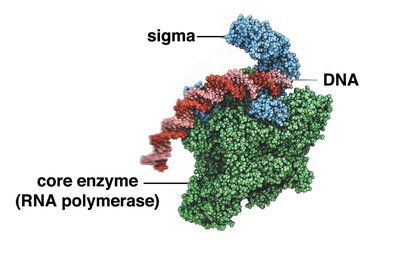
Promoter Structure and Consensus Sequences
Many E. coli promoters have conserved –10 and –35 regions that interact with sigma factors. Mutations in these regions can reduce RNA polymerase affinity and affect gene expression.
UP element: AT-rich sequence upstream of the –35 region, interacting with the α subunit of RNA polymerase to enhance binding.
Consensus sequence: Typical sequence found in promoter regions, crucial for efficient transcription initiation.


Heat Shock Response
Environmental stresses such as heat shock induce transcription of new products to protect the cell. RNA polymerase replaces σ70 with σ32, binding to different promoters and expressing chaperone proteins.
σ32: Sigma factor encoded by the rhoH gene, directs RNA polymerase to heat shock promoters.
Chaperone proteins: Help maintain correct protein conformation during stress.
Operons and Inducible Expression: The Lac Operon
Operon Structure and Function
Bacterial genes with related functions are often organized into operons, regulated by a common promoter and transcribed as a single mRNA encoding multiple proteins.
Operon: A cluster of genes under the control of a single promoter, with a single transcription start and termination site.
Ribosome-binding site (RBS): Shine-Dalgarno sequence preceding each start codon in the operon.
The Lac Operon: Structure and Regulation
The lac operon in E. coli is a classic example of inducible gene expression, allowing the cell to metabolize lactose when glucose is unavailable.
lacZ: Encodes β-galactosidase, which breaks down lactose into galactose and glucose.
lacY: Encodes galactoside permease, essential for lactose uptake.
lacA: Encodes thiogalactoside trans-acetylase, with a less defined role.
lacI: Encodes the LacI repressor, not part of the operon but adjacent.
Regulatory DNA Sequences and Proteins
The lac operon is regulated by several DNA sequences and proteins:
P: Common promoter for lac operon.
O1: Main operator, binds LacI repressor to prevent transcription.
O2 and O3: Secondary operator sites with lower affinity for LacI.
CRP-binding site: Overlaps the promoter, binds CRP (cAMP receptor protein) when cAMP is present.
Mechanism of Lac Operon Regulation
The lac operon is regulated by the presence or absence of lactose and glucose:
LacI repressor: Binds to operator when lactose is absent, blocking transcription.
Allolactose: Inducer formed from lactose, binds LacI and causes it to dissociate from the operator.
CRP (cAMP receptor protein): Binds to DNA only when cAMP is present, which occurs when glucose is low.
RNA polymerase: Binds efficiently to the promoter only when CRP-cAMP is bound.
Regulatory Scenarios
High glucose, no lactose: Low/no cAMP, CRP cannot bind, LacI remains bound, no transcription.
High glucose, high lactose: Low/no cAMP, CRP cannot bind, LacI not bound, weak RNA polymerase binding, low transcription.
No glucose, no lactose: High cAMP, CRP binds, but LacI remains bound, no transcription.
No glucose, high lactose: High cAMP, CRP binds, allolactose binds LacI, LacI dissociates, strong RNA polymerase binding, high transcription.
Applications: lacZ Gene as a Selection Marker in Biotechnology
The lacZ gene is widely used in molecular cloning as a selection marker through alpha-complementation and blue/white screening.
Alpha-complementation: Special E. coli strains express the omega fragment of β-galactosidase, while plasmid vectors provide the alpha fragment. Functional enzyme forms only when both fragments are present.
Blue/white screening: Non-recombinant plasmids allow α-complementation, producing blue colonies on X-gal media. Recombinant plasmids disrupt α fragment, resulting in white colonies.
IPTG: Induces lac operon expression but is not metabolized.
Ampicillin: Selects for cells containing plasmid.
X-gal: Substrate for β-galactosidase, produces blue product upon cleavage.
Summary Table: Regulation Mechanisms
Regulation Type | Key Protein | Effect | Example |
|---|---|---|---|
Negative Regulation | Repressor (LacI) | Blocks transcription | Lac operon (no lactose) |
Positive Regulation | Activator (CRP-cAMP) | Enhances transcription | Lac operon (low glucose, lactose present) |
Additional info: The notes cover the structure and regulation of prokaryotic gene expression, focusing on transcriptional mechanisms, promoter structure, sigma factors, operons, and the lac operon as a model system. Applications in biotechnology, such as blue/white screening, are also included for practical context.
