 Indietro
A Tour of the Cell: Structure and Function of Prokaryotic and Eukaryotic Cells
Guida di studio - Note intelligenti
 Appunti personalizzati basati sui tuoi materiali, ampliati con definizioni chiave, esempi e contesto.
Cell Structure and Function
Overview of Cell Types
Cells are the fundamental units of life, and all organisms are composed of one or more cells. There are two main types of cells: prokaryotic and eukaryotic. The distinction between these cell types is foundational to understanding biological diversity and cellular function.
Prokaryotic cells are found in the domains Bacteria and Archaea.
Eukaryotic cells make up protists, fungi, animals, and plants.
Basic Features of All Cells
Plasma membrane: A selective barrier that encloses the cell.
Cytosol: A semifluid substance where cellular components are suspended.
Chromosomes: Structures carrying genetic information (DNA).
Ribosomes: Complexes that synthesize proteins.
Prokaryotic Cells
Structure and Characteristics
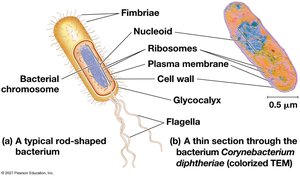
Prokaryotic cells are generally smaller and simpler than eukaryotic cells. They lack a nucleus and membrane-bound organelles.
No nucleus; DNA is located in an unbound region called the nucleoid.
No membrane-bound organelles.
Cytoplasm is bound by the plasma membrane.
Eukaryotic Cells
Structure and Characteristics
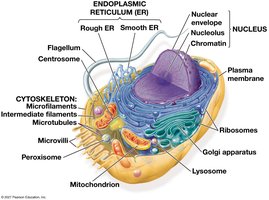
Eukaryotic cells are typically larger and more complex than prokaryotic cells. They contain a true nucleus and a variety of membrane-bound organelles.
DNA is enclosed within a double-membrane nucleus.
Possess membrane-bound organelles (e.g., mitochondria, endoplasmic reticulum).
Cytoplasm is the region between the plasma membrane and the nucleus.
The Plasma Membrane
Structure and Function
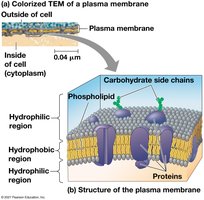
The plasma membrane is a critical structure that defines the boundary of the cell and regulates the movement of substances in and out.
Composed of a phospholipid bilayer with embedded proteins and carbohydrates.
Exhibits selective permeability, allowing some substances to cross more easily than others.
The Nucleus and Ribosomes
The Nucleus
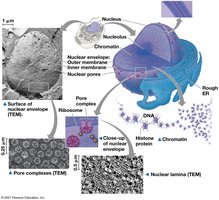
The nucleus is the most prominent organelle in eukaryotic cells and houses most of the cell's genetic material.
Enclosed by a nuclear envelope (double membrane).
Contains nuclear pores for molecular exchange.
DNA is organized into chromosomes and associated with proteins to form chromatin.
The nucleolus is the site of ribosomal RNA (rRNA) synthesis.
Ribosomes
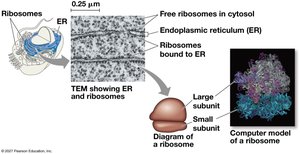
Ribosomes are the molecular machines responsible for protein synthesis. They can be found free in the cytosol or bound to the endoplasmic reticulum.
Composed of rRNA and proteins.
Free ribosomes synthesize proteins for use within the cytosol.
Bound ribosomes synthesize proteins for membranes or export.
The Endomembrane System
Components and Functions
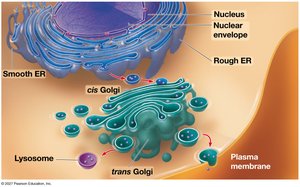
The endomembrane system is a group of interconnected organelles that work together in the synthesis, modification, and transport of cellular materials.
Nuclear envelope
Endoplasmic reticulum (ER)
Golgi apparatus
Lysosomes
Vacuoles
Plasma membrane
These components are either continuous or connected via vesicle transport.
Endoplasmic Reticulum (ER)
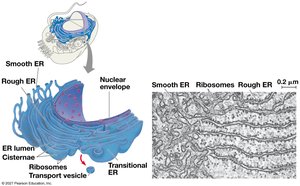
The ER is a network of membranes involved in protein and lipid synthesis. It is continuous with the nuclear envelope and has two regions:
Smooth ER: Lacks ribosomes; synthesizes lipids, detoxifies drugs, and stores calcium ions.
Rough ER: Studded with ribosomes; synthesizes proteins and membranes.
Golgi Apparatus
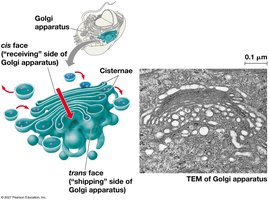
The Golgi apparatus modifies, sorts, and packages proteins and lipids for storage or transport out of the cell. It consists of flattened sacs called cisternae.
Receives products from the ER at the cis face.
Ships modified products from the trans face.
Lysosomes
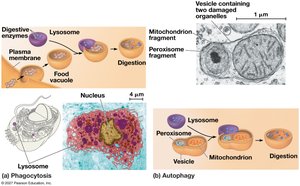
Lysosomes are membrane-bound sacs containing hydrolytic enzymes for digestion of macromolecules. They play a key role in cellular cleanup and recycling.
Digest food particles and damaged organelles (autophagy).
Enzymes function best in acidic environments.
Vacuoles
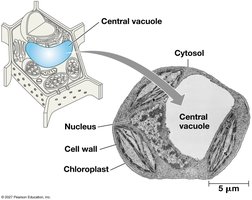
Vacuoles are large vesicles with diverse functions, especially prominent in plant cells.
Food vacuoles: Formed by phagocytosis.
Contractile vacuoles: Pump excess water out of cells (in protists).
Central vacuole: Stores ions and contributes to plant cell growth.
Endomembrane System Relationships
Organelles of the endomembrane system are functionally and physically connected, facilitating the flow of materials within the cell.
Energy-Related Organelles
Mitochondria
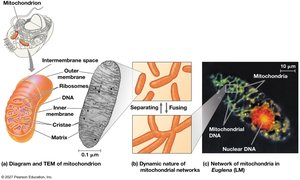
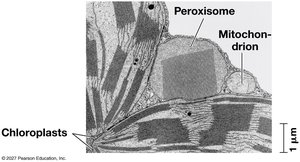
Mitochondria are the sites of cellular respiration, converting energy from organic molecules into ATP. They are found in nearly all eukaryotic cells.
Have a double membrane: smooth outer membrane and highly folded inner membrane (cristae).
Contain their own DNA and ribosomes.
Matrix: Site of metabolic reactions.
Chloroplasts
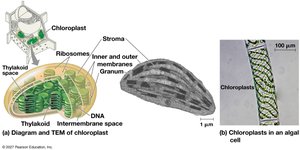
Chloroplasts are the sites of photosynthesis in plants and algae. They contain the pigment chlorophyll and have a complex internal structure.
Composed of thylakoids (stacked into grana) and stroma (fluid matrix).
Belong to a group of organelles called plastids.
Peroxisomes
Peroxisomes are specialized metabolic compartments that contain enzymes for oxidative reactions, such as breaking down fatty acids and detoxifying harmful substances.
Produce hydrogen peroxide as a byproduct, which is then converted to water.
Glyoxysomes in plant seeds convert fatty acids to sugars.
The Cytoskeleton
Structure and Function
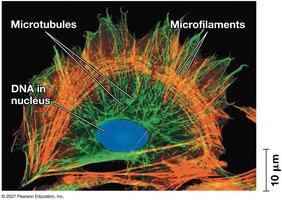
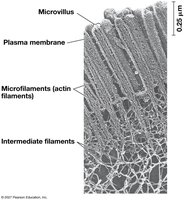
The cytoskeleton is a dynamic network of protein fibers that provides structural support, facilitates cell movement, and organizes organelles within the cell.
Composed of microtubules, microfilaments, and intermediate filaments.
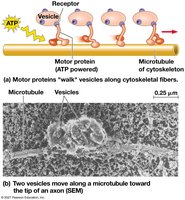
Interacts with motor proteins for intracellular transport.
Microtubules
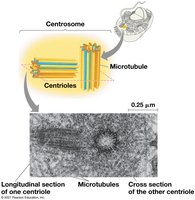
Microtubules are hollow rods made of tubulin dimers. They are the thickest cytoskeletal fibers and play roles in cell shape, organelle movement, and chromosome separation during cell division.
Grow out from the centrosome in animal cells, which contains a pair of centrioles.
Form the structural basis of cilia and flagella.
Microfilaments (Actin Filaments)
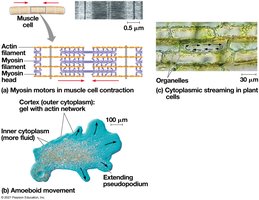
Microfilaments are thin, solid rods composed of actin. They support cell shape and are involved in cell movement, including muscle contraction and cytoplasmic streaming.
Form the cortex beneath the plasma membrane.
Interact with myosin for cellular motility.
Intermediate Filaments
Intermediate filaments are more permanent structures that provide mechanical support and anchor organelles in place. They are intermediate in size between microtubules and microfilaments.
Extracellular Structures and Cell Junctions
Cell Walls
The cell wall is an extracellular structure found in plants, fungi, and some protists. It provides protection, maintains cell shape, and prevents excessive water uptake.
Composed mainly of cellulose in plants.
Extracellular Matrix (ECM) in Animal Cells
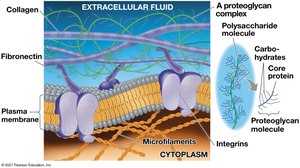
Animal cells lack cell walls but are surrounded by an elaborate ECM composed of glycoproteins such as collagen, proteoglycans, and fibronectin. The ECM supports and regulates cellular activities.
Integrins are receptor proteins in the plasma membrane that connect the ECM to the cytoskeleton.
Cell Junctions
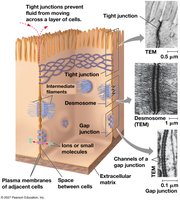
Cells in multicellular organisms adhere, interact, and communicate through specialized junctions.
Tight junctions: Prevent leakage of extracellular fluid.
Desmosomes: Anchor cells together into strong sheets.
Gap junctions: Provide cytoplasmic channels for communication between adjacent cells.
Plasmodesmata: Channels that connect plant cells, allowing the passage of water, solutes, and some macromolecules.
Additional info: The cytoskeleton and extracellular structures are essential for maintaining cell integrity, facilitating communication, and enabling multicellularity in complex organisms.
