 Indietro
A Tour of the Cell: Structure and Function in Eukaryotic and Prokaryotic Cells
Guida di studio - Note intelligenti
 Appunti personalizzati basati sui tuoi materiali, ampliati con definizioni chiave, esempi e contesto.
Chapter 6: A Tour of the Cell
Introduction to Cell Biology
Cells are the fundamental units of life, forming the basis of all living organisms. Understanding cell structure and function is essential for studying biology, as cells carry out the processes necessary for life.
Microscopy and Cell Study
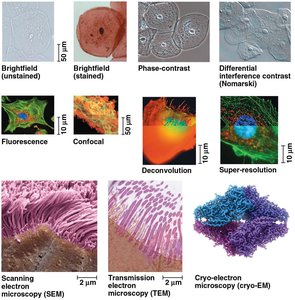
Microscopes are essential tools for visualizing cells and their components, which are typically too small to be seen with the naked eye. Different types of microscopy provide varying levels of magnification, resolution, and contrast.
Magnification: The ratio of an object's image size to its real size.
Resolution: The clarity of the image, or the minimum distance between two distinguishable points.
Contrast: Visible differences in brightness between parts of the sample.
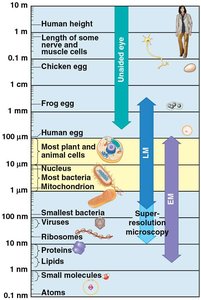
Light microscopes (LM) can magnify specimens up to 1,000 times, but their resolution is limited. Electron microscopes (EM) provide much higher resolution, allowing detailed study of subcellular structures. Specialized techniques such as fluorescence, confocal, and cryo-electron microscopy further enhance visualization.
Cell Fractionation
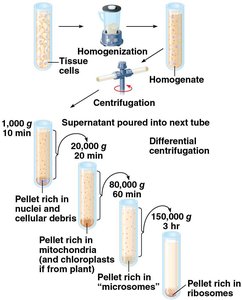
Cell fractionation is a technique used to separate cellular components for study. It involves homogenizing tissue and centrifuging the resulting mixture to isolate organelles based on size and density.
Differential centrifugation: Sequential centrifugation at increasing speeds separates nuclei, mitochondria, microsomes, and ribosomes.
Purpose: Enables scientists to determine the functions of organelles by studying them in isolation.
Cell Types and Their Features
Prokaryotic vs. Eukaryotic Cells
All cells share certain basic features, but they are classified as prokaryotic or eukaryotic based on their structural differences.
Prokaryotic cells: Lack a nucleus and membrane-bound organelles. DNA is found in the nucleoid region. Examples include bacteria and archaea.
Eukaryotic cells: Have a nucleus enclosed by a double membrane and possess membrane-bound organelles. Examples include protists, fungi, plants, and animals.
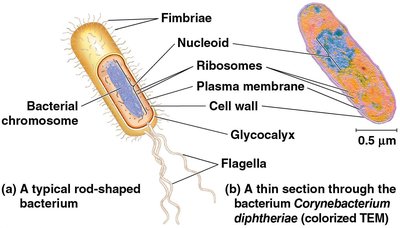
Both cell types have a plasma membrane, cytosol, chromosomes, and ribosomes.
The Plasma Membrane
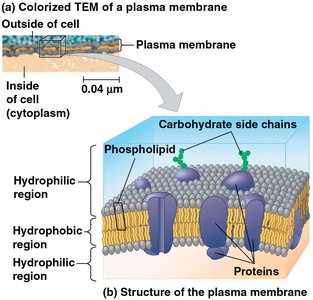
The plasma membrane is a selective barrier that regulates the passage of substances into and out of the cell. Its structure is a phospholipid bilayer with embedded proteins and carbohydrate side chains.
Hydrophilic regions: Face outward toward the aqueous environment.
Hydrophobic regions: Face inward, away from water.
Surface Area to Volume Ratio
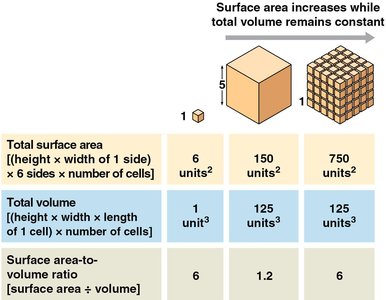
The surface area-to-volume ratio is critical for cell function, as it affects the ability of the cell to exchange materials with its environment. As cells increase in size, their volume grows faster than their surface area, limiting efficient transport.
Formula: Surface area / Volume
Implication: Smaller cells have a higher surface area-to-volume ratio, facilitating efficient exchange.
Eukaryotic Cell Structure
Internal Organization and Organelles
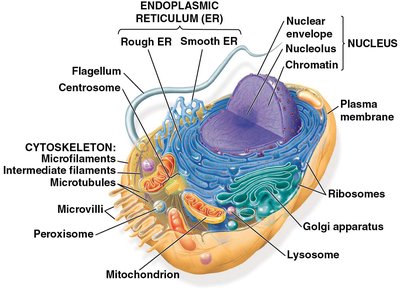
Eukaryotic cells contain numerous organelles, each with specialized functions. Internal membranes compartmentalize the cell, allowing distinct processes to occur simultaneously.
Nucleus: Contains genetic material and controls cellular activities.
Endoplasmic Reticulum (ER): Synthesizes proteins and lipids.
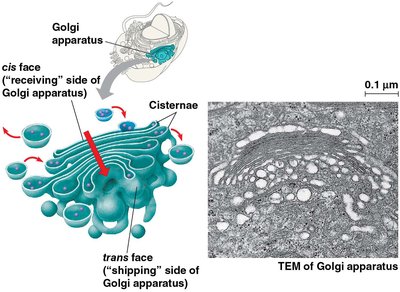
Golgi Apparatus: Modifies, sorts, and packages proteins and lipids.
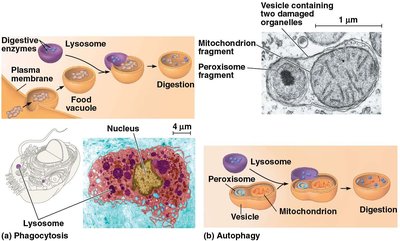
Lysosomes: Digest macromolecules and recycle cellular components.
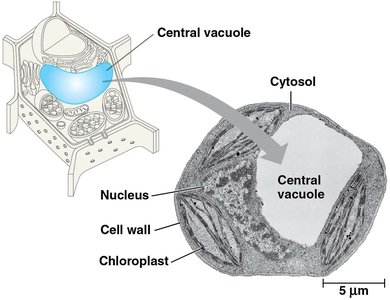
Vacuoles: Store substances and maintain cell structure.
Mitochondria: Generate ATP through cellular respiration.
Chloroplasts (in plants): Conduct photosynthesis.
Cytoskeleton: Provides structural support and facilitates movement.
Animal and Plant Cell Differences
While animal and plant cells share many organelles, plant cells have unique features such as a cell wall, chloroplasts, and a central vacuole.
Cell wall: Provides structural support and protection.
Chloroplasts: Site of photosynthesis.
Central vacuole: Stores water and maintains turgor pressure.
The Nucleus and Ribosomes
Nucleus: Information Central
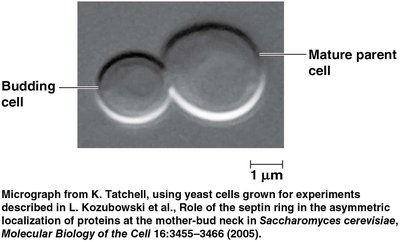
The nucleus is the repository of genetic information in eukaryotic cells. It is surrounded by a double membrane called the nuclear envelope, which contains nuclear pores for molecular transport.
Chromatin: DNA and associated proteins, condenses into chromosomes during cell division.
Nucleolus: Site of ribosomal RNA (rRNA) synthesis.
Ribosomes: Protein Factories
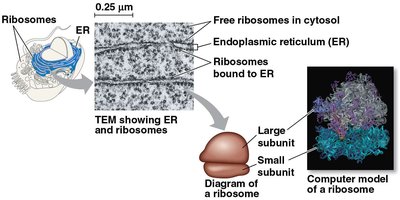
Ribosomes are complexes of rRNA and protein that synthesize polypeptides. They can be free in the cytosol or bound to the ER or nuclear envelope.
Free ribosomes: Synthesize proteins for use within the cell.
Bound ribosomes: Synthesize proteins for secretion or membrane insertion.
The Endomembrane System
Components and Functions
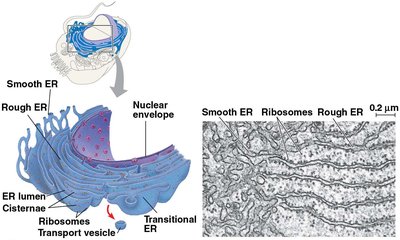
The endomembrane system includes the nuclear envelope, ER, Golgi apparatus, lysosomes, vacuoles, and plasma membrane. It regulates protein traffic and performs metabolic functions.
ER: Smooth ER synthesizes lipids and detoxifies; rough ER produces proteins.
Golgi apparatus: Modifies and packages proteins and lipids.
Lysosomes: Digestive organelles containing hydrolytic enzymes.
Vacuoles: Storage and maintenance compartments.
Summary Table: Major Eukaryotic Cell Organelles
Organelle | Main Function | Present in |
|---|---|---|
Nucleus | Stores genetic information | All eukaryotes |
Ribosome | Protein synthesis | All cells |
ER (Smooth/Rough) | Lipid/protein synthesis | All eukaryotes |
Golgi apparatus | Protein modification, sorting | All eukaryotes |
Lysosome | Digestion, recycling | Animals, some protists |
Vacuole | Storage, structure | Plants, fungi, some protists |
Mitochondrion | ATP production | All eukaryotes |
Chloroplast | Photosynthesis | Plants, algae |
Cytoskeleton | Support, movement | All eukaryotes |
Conclusion
The internal organization of cells, especially eukaryotic cells, allows for compartmentalization and specialization of functions. This enables complex life processes and efficient cellular operation.
