 Indietro
Gen Biology Chp 6
Guida di studio - Note intelligenti
 Appunti personalizzati basati sui tuoi materiali, ampliati con definizioni chiave, esempi e contesto.
Chapter 6: A Tour of the Cell
Introduction to Cell Structure and Function
Cells are the fundamental units of life, and their internal organization enables them to carry out essential biological functions. Eukaryotic cells, in particular, possess complex internal structures that allow for compartmentalization and specialization.
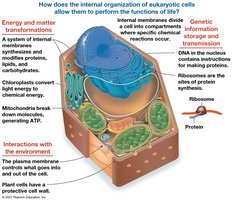
Energy and Matter Transformations: Internal membranes synthesize and modify proteins, lipids, and carbohydrates. Mitochondria generate ATP, and chloroplasts carry out photosynthesis.
Genetic Information Storage and Transmission: DNA is stored in the nucleus, and ribosomes synthesize proteins using genetic instructions.
Interactions with the Environment: The plasma membrane regulates the passage of substances, and plant cells have a protective cell wall.
Microscopy and Biochemistry: Tools for Studying Cells
Microscopy and cell fractionation are essential techniques for visualizing and analyzing cellular structures and functions.
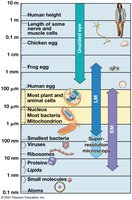
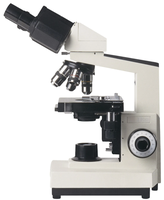
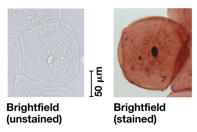
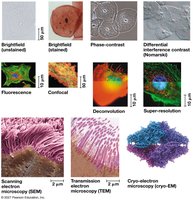
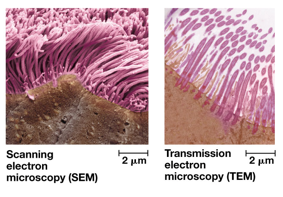
Microscopy: Light microscopes use visible light and glass lenses to magnify specimens. Electron microscopes (SEM and TEM) use electron beams for higher resolution.
Key Parameters: Magnification (image size vs. real size), Resolution (clarity/minimum distinguishable distance), and Contrast (brightness differences).
Recent Advances: Fluorescence microscopy and cryo-electron microscopy allow for detailed visualization of cellular structures.
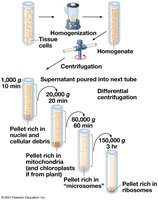
Cell Fractionation: Centrifugation separates organelles based on density, enabling study of individual components.
Types of Cells: Prokaryotic vs. Eukaryotic
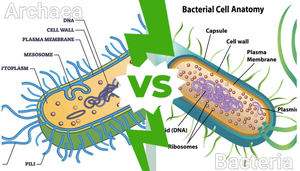
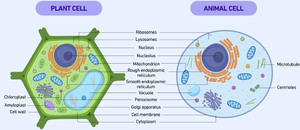
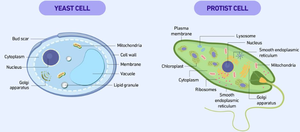
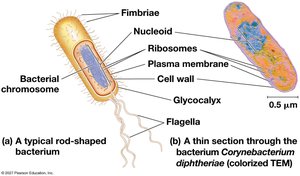
Cells are classified as prokaryotic or eukaryotic based on their structural features. Prokaryotes include Bacteria and Archaea, while eukaryotes include protists, fungi, animals, and plants.
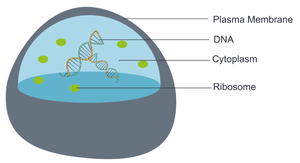
Basic Features of All Cells: Plasma membrane, cytosol, chromosomes, and ribosomes.
Prokaryotic Cells: Lack a nucleus and membrane-bound organelles; DNA is found in the nucleoid region.
Eukaryotic Cells: Have a nucleus and other membrane-bound organelles; generally larger and more complex.
Cell Size and Surface Area-to-Volume Ratio
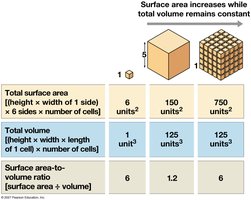
The size of cells is limited by the surface area-to-volume ratio, which affects the efficiency of nutrient and waste exchange.
Surface Area: Determines the rate of exchange of materials.
Volume: Determines the amount of metabolic activity.
Ratio: As cells grow, volume increases faster than surface area, limiting cell size.
Number of Cells | Total Surface Area | Total Volume | Surface Area-to-Volume Ratio |
|---|---|---|---|
1 | 6 units2 | 1 unit3 | 6 |
125 | 750 units2 | 125 units3 | 6 |
1 (large) | 6 units2 | 1 unit3 | 1.2 |
Plasma Membrane Structure
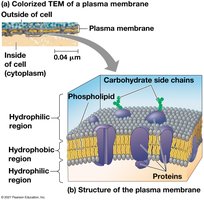
The plasma membrane is a double layer of phospholipids with embedded proteins, carbohydrates, and other molecules. It regulates the passage of substances into and out of the cell.
Phospholipid Bilayer: Hydrophilic heads face outward; hydrophobic tails face inward.
Proteins: Serve as channels, receptors, and enzymes.
Carbohydrate Side Chains: Involved in cell recognition.
Internal Membranes and Compartmentalization
Eukaryotic cells use internal membranes to create compartments, allowing for specialized environments and processes within the cell.
Organelles: Plant and animal cells share most organelles, such as mitochondria, endoplasmic reticulum, and Golgi apparatus.
Compartmentalization: Enables incompatible processes to occur simultaneously.
Genetic Instructions: Storage and Use
The nucleus stores genetic information, and ribosomes use this information to synthesize proteins.
Nucleus: Contains most of the cell's DNA; surrounded by a double membrane (nuclear envelope).
Nuclear Pores: Regulate entry and exit of molecules.
Nuclear Lamina: Protein layer maintaining nuclear shape.
Chromatin: DNA-protein complex; condenses into chromosomes during cell division.
Nucleolus: Site of ribosomal RNA synthesis.
Ribosomes: Build proteins in the cytosol (free) or on the endoplasmic reticulum (bound).
The Endomembrane System
The endomembrane system regulates protein traffic and performs metabolic functions. It includes the nuclear envelope, endoplasmic reticulum, Golgi apparatus, lysosomes, vacuoles, and plasma membrane.
Endoplasmic Reticulum (ER): Smooth ER synthesizes lipids and detoxifies; rough ER produces proteins and glycoproteins.
Golgi Apparatus: Modifies, sorts, and packages products from the ER.
Lysosomes: Digest macromolecules in an acidic environment.
Vacuoles: Store substances and maintain cell structure; central vacuole in plants contains sap.
Mitochondria and Chloroplasts: Energy Conversion
Mitochondria and chloroplasts are organelles that convert energy from one form to another. Mitochondria perform cellular respiration, while chloroplasts carry out photosynthesis.
Mitochondria: Have a double membrane; inner membrane forms cristae for increased surface area.
Chloroplasts: Contain thylakoids (stacked as granum) and stroma; site of photosynthesis.
Endosymbiosis Theory: Suggests mitochondria and chloroplasts originated from engulfed bacteria; supported by double membranes, circular DNA, and independent reproduction.
Peroxisomes: Oxidative organelles that detoxify and break down fatty acids.
Cytoskeleton: Structure and Movement
The cytoskeleton is a network of fibers that organizes cell structure, anchors organelles, and enables movement.
Microtubules: Hollow rods made of tubulin; shape cell, guide organelle movement, and separate chromosomes.
Microfilaments (Actin Filaments): Solid rods; support cell shape, enable motility, and drive cytoplasmic streaming.
Intermediate Filaments: Provide structural support and anchor organelles.
Motor Proteins: Interact with cytoskeletal fibers to produce movement.
Cilia and Flagella: Microtubule-based structures for cell movement; share a common structure with dynein motor proteins.
Extracellular Components and Cell-Cell Connections
Cells synthesize and secrete materials outside the cell, forming structures such as cell walls and extracellular matrices. These components are essential for protection, communication, and adhesion.
Plant Cell Walls: Made of cellulose; protect and maintain cell shape.
Extracellular Matrix (ECM) in Animals: Composed of glycoproteins; regulates cell behavior and gene activity via integrins.
Cell Junctions: Tight junctions prevent leakage, desmosomes anchor cells, and gap junctions allow communication.
Plasmodesmata: Channels connecting plant cells for transport of water and solutes.
Coordination of Cellular Activities
Cellular components work together to perform complex functions, such as immune responses and metabolic processes. The integration of organelles, cytoskeleton, and membranes is essential for cell function.
Additional info: These notes expand on brief points with academic context, definitions, and examples to provide a comprehensive overview suitable for General Biology students.
