 Indietro
Ch.4-A Tour of the Cell
Guida di studio - Note intelligenti
 Appunti personalizzati basati sui tuoi materiali, ampliati con definizioni chiave, esempi e contesto.
Chapter 4 – A Tour of the Cell
Cell Theory and Cell Size
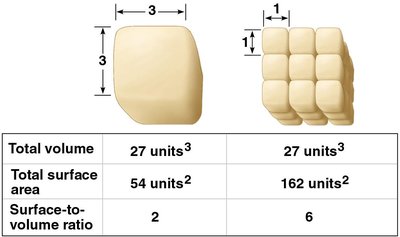
The cell is the fundamental unit of life, and all living organisms are composed of cells. Cell theory states that (1) all living things are made of cells, and (2) all cells arise from pre-existing cells. Cells are typically small to maximize their surface area-to-volume ratio, which is crucial for efficient exchange of materials with their environment.
Cell Theory: All organisms are composed of cells; cells are the basic unit of structure and function; new cells arise from existing cells.
Surface Area-to-Volume Ratio: Smaller cells have a higher surface area relative to their volume, allowing for more efficient nutrient and waste exchange.
Formula:
Example: A cube divided into smaller cubes increases the total surface area while keeping the volume constant, improving exchange efficiency.
Prokaryotic vs. Eukaryotic Cells
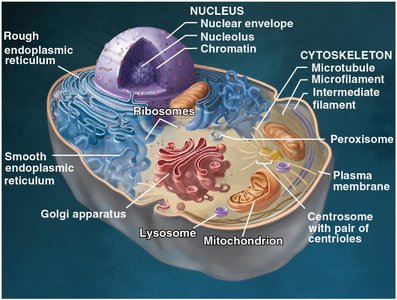
Cells are classified as prokaryotic or eukaryotic based on their internal structure. Prokaryotic cells lack a nucleus and membrane-bound organelles, while eukaryotic cells possess these features.
Prokaryotic Cells: Simpler structure, no nucleus, DNA located in the nucleoid, lack membrane-bound organelles.
Eukaryotic Cells: Complex structure, DNA enclosed in a nucleus, contain membrane-bound organelles (e.g., mitochondria, endoplasmic reticulum).
Shared Features: Both have plasma membranes, cytoplasm, ribosomes, and genetic material.
Animal vs. Plant Cells
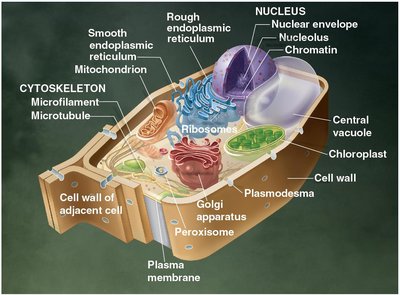
Animal and plant cells are both eukaryotic but differ in certain structures and functions. Plant cells have cell walls, chloroplasts, and a large central vacuole, while animal cells lack these but have centrioles and lysosomes.
Plant Cells: Cell wall, chloroplasts, central vacuole, plasmodesmata.
Animal Cells: Lysosomes, centrioles, extracellular matrix.
Example: Chloroplasts in plant cells enable photosynthesis, while lysosomes in animal cells digest cellular waste.
Structure and Function of the Nucleus, Chromosomes, and Ribosomes
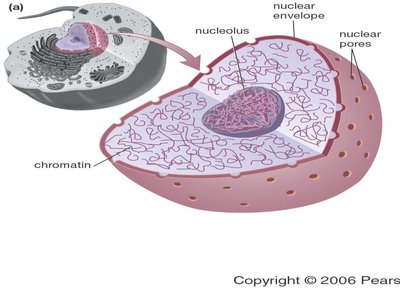
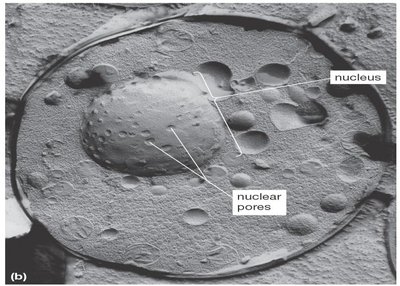
The nucleus is the control center of the cell, containing genetic material organized as chromosomes. Ribosomes are responsible for protein synthesis.
Nucleus: Enclosed by a nuclear envelope, contains chromatin (DNA and proteins), nucleolus (site of ribosome assembly).
Chromosomes: Linear structures composed of DNA and proteins, carry genetic information.
Ribosomes: Small complexes of RNA and protein, found free in cytoplasm or attached to rough ER, synthesize proteins.
The Endomembrane System
The endomembrane system is a group of organelles involved in the synthesis, modification, transport, and breakdown of cellular materials. It includes the nuclear envelope, endoplasmic reticulum, Golgi apparatus, lysosomes, vesicles, vacuoles, and plasma membrane.
Endoplasmic Reticulum (ER): Rough ER (protein synthesis), Smooth ER (lipid synthesis, detoxification).
Golgi Apparatus: Modifies, sorts, and ships proteins and lipids.
Lysosomes: Digestive compartments, recycle cellular components.
Vacuoles: Storage and maintenance, central vacuole in plants stores water and nutrients.
Mitochondria and Chloroplasts
Mitochondria and chloroplasts are energy-converting organelles. Mitochondria perform cellular respiration, converting food into ATP, while chloroplasts carry out photosynthesis in plants and algae.
Mitochondria: Double membrane, own DNA, cristae increase surface area for ATP production.
Chloroplasts: Double membrane, own DNA, contain chlorophyll, thylakoid stacks (grana) for light reactions, stroma for dark reactions.
The Cytoskeleton
The cytoskeleton is a network of protein fibers that provides structural support, enables cell movement, and organizes cell contents. It consists of microtubules, intermediate filaments, and microfilaments.
Microtubules: Hollow rods of tubulin, shape and support cell, involved in cell division, cilia, and flagella.
Intermediate Filaments: Reinforce cell shape, anchor organelles.
Microfilaments: Actin filaments, support cell shape, involved in movement and muscle contraction.
Cilia and Flagella
Cilia and flagella are extensions of the cell membrane used for locomotion and movement of substances. Both are composed of microtubules.
Flagella: Long, whip-like, used for cell movement.
Cilia: Short, numerous, move substances or cells.
Extracellular Matrix and Cell Walls
The extracellular matrix (ECM) in animal cells provides structural support and regulates cell behavior. Plant cells have cell walls composed of cellulose, which provide rigidity and protection.
ECM: Binds cells, supports plasma membrane, communicates with cytoskeleton.
Cell Wall: Found in plants, bacteria, fungi; composed of polysaccharides (cellulose in plants); contains plasmodesmata for cell communication.
Functional Categories of Eukaryotic Organelles
Eukaryotic cell structures can be grouped based on four main functions: genetic control, manufacturing/distribution/breakdown, energy processing, and structural support/movement/communication.
Genetic Control: Nucleus, ribosomes.
Manufacturing, Distribution, Breakdown: ER, Golgi apparatus, lysosomes, vacuoles.
Energy Processing: Mitochondria, chloroplasts.
Structural Support, Movement, Communication: Cytoskeleton, plasma membrane, cell wall, ECM.
