 Indietro
A Tour of the Cell: Structure, Function, and Diversity
Guida di studio - Note intelligenti
 Appunti personalizzati basati sui tuoi materiali, ampliati con definizioni chiave, esempi e contesto.
Tour of the Cell
Introduction to Cell Biology
Cells are the fundamental units of life, and all living organisms are composed of one or more cells. Understanding cell structure and function is essential for studying biology, as cells carry out the processes necessary for life.
Microscopy and Cell Visualization
Light and Electron Microscopy
Microscopy is crucial for studying cells, as most cellular structures are too small to be seen with the naked eye. There are two main types of microscopy:
Light Microscopy: Uses visible light to illuminate specimens, allowing observation of living cells and their general structure.
Electron Microscopy: Uses beams of electrons for much higher resolution. Two main types are:
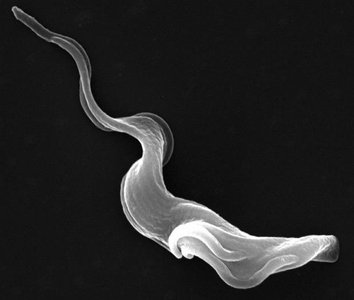
Scanning Electron Microscopy (SEM): Provides detailed 3D images of cell surfaces.
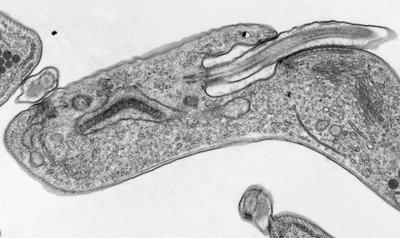
Transmission Electron Microscopy (TEM): Reveals internal cell structures in high detail.
Cell Types and Domains of Life
Prokaryotic vs. Eukaryotic Cells
Cells are classified into two main types based on their internal organization:
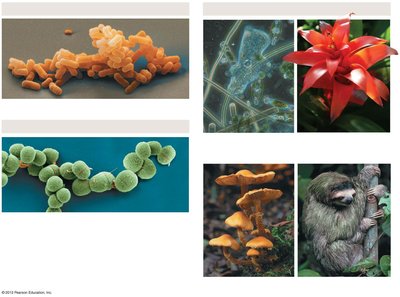
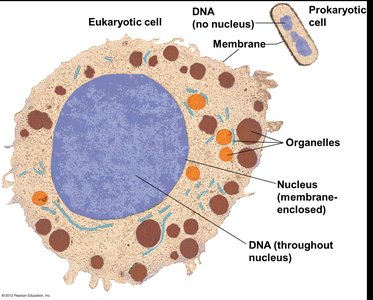
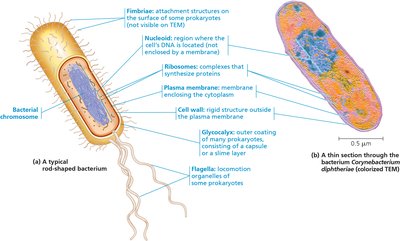
Prokaryotic Cells: Lack a membrane-bound nucleus; DNA is located in a region called the nucleoid. Examples include Bacteria and Archaea.
Eukaryotic Cells: Have a true nucleus enclosed by a membrane and possess various membrane-bound organelles. Examples include Protists, Fungi, Plants, and Animals.
Similarities and Differences
Similarities: All cells have a plasma membrane, cytosol, chromosomes (genetic material), and ribosomes (protein synthesis).
Differences: Eukaryotes have a nucleus and organelles; prokaryotes do not. Prokaryotes are generally smaller.
Prokaryotic Cell Structure
Cell Wall: Provides structural support and shape.
Plasma Membrane: Controls movement of substances in and out.
Nucleoid: Region containing DNA.
Ribosomes: Sites of protein synthesis.
Other Structures: Some have flagella for movement, fimbriae for attachment, and a glycocalyx for protection.
Cell Size and Surface-to-Volume Ratio
Importance of Surface-to-Volume Ratio
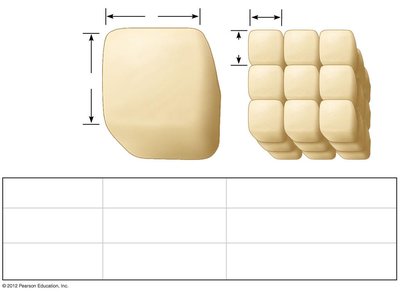
Cell size is limited by the surface area available for exchange of materials. As a cell grows, its volume increases faster than its surface area, making it less efficient at transporting materials.
Active cells require a high surface-to-volume ratio for efficient exchange of substances.
Cell Membranes and Macromolecules
Phospholipids and Membrane Structure
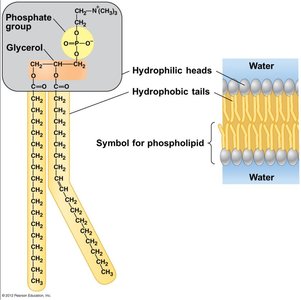
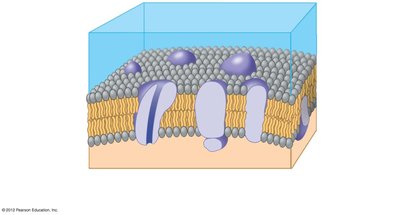
The plasma membrane is primarily composed of a phospholipid bilayer with embedded proteins. Phospholipids have hydrophilic (water-attracting) heads and hydrophobic (water-repelling) tails, forming a selective barrier.
Amino Acids and Protein Structure
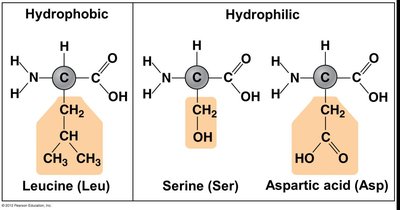
Amino acids, the building blocks of proteins, have different R groups that determine their chemical properties. Some are hydrophobic, while others are hydrophilic.
Fluid Mosaic Model
The plasma membrane is described by the fluid mosaic model, where proteins and lipids move laterally within the bilayer, allowing flexibility and dynamic function.
Internal Organization of Eukaryotic Cells
Compartmentalization and Organelles
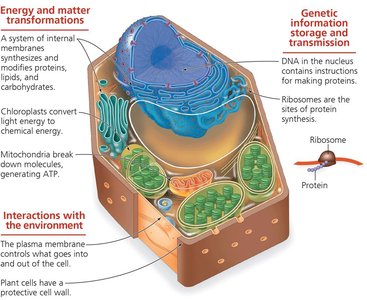
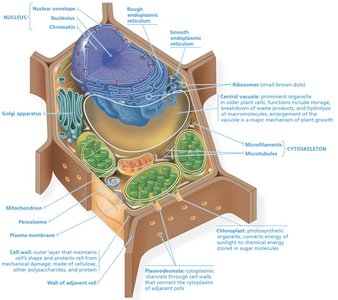
Eukaryotic cells contain internal membranes that divide the cell into compartments, each with specialized functions. This compartmentalization allows for efficient and regulated biochemical reactions.
Genetic Control: Nucleus and Ribosomes
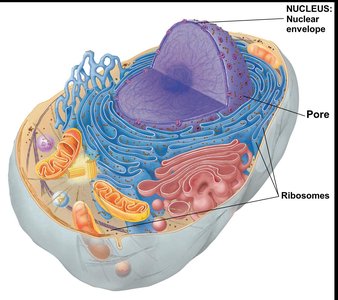
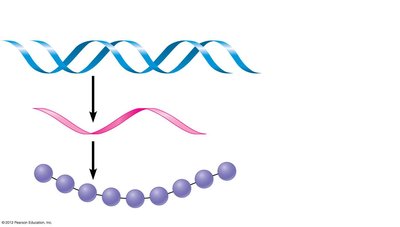
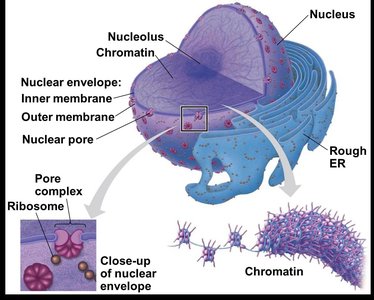
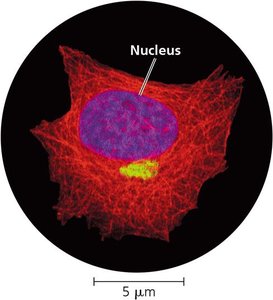
Nucleus: Contains most of the cell's DNA and is the site of transcription (DNA to RNA).
Ribosomes: Not membrane-bound; sites of protein synthesis (translation of RNA to protein).
The Endomembrane System
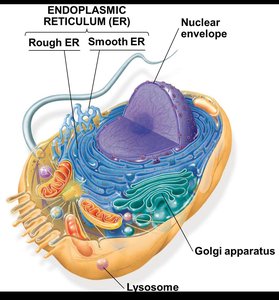
The endomembrane system is a network of membranes inside eukaryotic cells that regulates protein traffic and performs metabolic functions. It includes the nuclear envelope, endoplasmic reticulum (ER), Golgi apparatus, lysosomes, vacuoles, and vesicles.
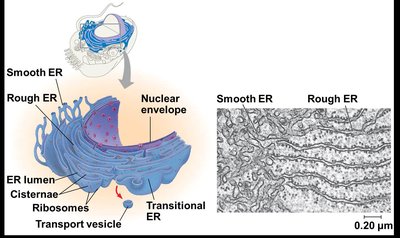
Endoplasmic Reticulum (ER)
Smooth ER: Synthesizes lipids, detoxifies drugs, and stores calcium ions.
Rough ER: Studded with ribosomes; synthesizes and modifies proteins, produces membranes.
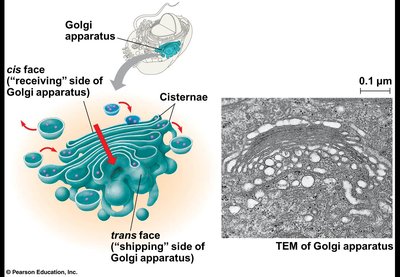
Golgi Apparatus
Modifies, sorts, and packages proteins and lipids for storage or transport out of the cell.
Has a cis (receiving) face and a trans (shipping) face.
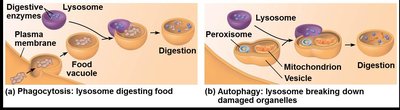
Lysosomes
Membranous sacs containing digestive enzymes; break down macromolecules, old organelles, and foreign substances.
Vacuoles
Large vesicles with diverse functions: food storage, water regulation, and waste disposal.
Energy-Related Organelles
Mitochondria and Chloroplasts
Mitochondria: Sites of cellular respiration; convert chemical energy from food into ATP (catabolic metabolism).
Chloroplasts: Sites of photosynthesis in plants and algae; convert solar energy into chemical energy (anabolic metabolism).
Peroxisomes
Single-membrane organelles that detoxify harmful substances and metabolize fatty acids.
Endosymbiont Theory
This theory proposes that mitochondria and chloroplasts originated as free-living prokaryotes that were engulfed by ancestral eukaryotic cells, forming a symbiotic relationship.
Cytoskeleton and Cell Movement
Cytoskeletal Elements
Microtubules: Thick, hollow tubes made of tubulin; provide tracks for movement, form cilia and flagella, and separate chromosomes during cell division.
Microfilaments: Thin filaments made of actin; support cell shape and enable movement (e.g., muscle contraction, amoeboid movement).
Intermediate Filaments: Fibrous proteins coiled into cables; provide mechanical support and anchor organelles.
Cilia and Flagella
Cilia: Short, numerous appendages for movement or moving substances across cell surfaces.
Flagella: Longer, usually one or a few per cell; used for locomotion.
Extracellular Structures and Cell Connections
Extracellular Matrix (ECM) in Animals
Composed of glycoproteins and other molecules; provides structural support, cell signaling, and anchorage.
Cell Junctions in Animal Tissues
Tight Junctions: Seal cells together to prevent leakage.
Anchoring Junctions (Desmosomes): Fasten cells together into strong sheets.
Gap Junctions: Allow communication and exchange of materials between cells.
Plant Cell Walls and Plasmodesmata
Cell Wall: Rigid structure made of cellulose, polysaccharides, and proteins; provides support and protection.
Plasmodesmata: Channels between plant cells that allow transport and communication.
Summary Table: Prokaryotic vs. Eukaryotic Cells
Feature | Prokaryotic Cells | Eukaryotic Cells |
|---|---|---|
Nucleus | No | Yes |
Membrane-bound Organelles | No | Yes |
Size | Smaller | Larger |
Examples | Bacteria, Archaea | Protists, Fungi, Plants, Animals |
Key Terms
Organelle: Specialized structure within a cell that performs a specific function.
Plasma Membrane: Selectively permeable barrier that surrounds the cell.
Cytoplasm: The region between the plasma membrane and the nucleus, containing organelles and cytosol.
ATP: Adenosine triphosphate, the main energy currency of the cell.
