 Indietro
A Tour of the Cell: Structure and Function in General Biology
Guida di studio - Note intelligenti
 Appunti personalizzati basati sui tuoi materiali, ampliati con definizioni chiave, esempi e contesto.
A Tour of the Cell
Overview of Cell Types
Cells are the fundamental units of life, and all organisms are composed of either prokaryotic or eukaryotic cells. Understanding the differences and similarities between these cell types is essential for studying biology.
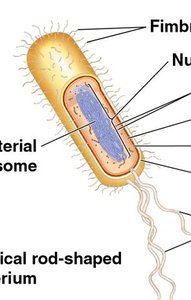
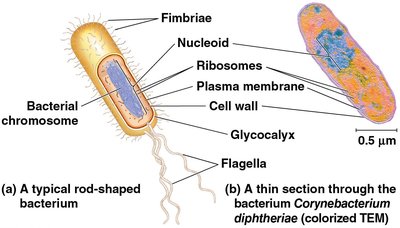
Prokaryotic Cells: Found in Bacteria and Archaea; lack a nucleus and membrane-bound organelles.
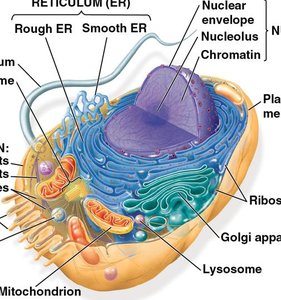
Eukaryotic Cells: Found in protists, fungi, animals, and plants; possess a nucleus and membrane-bound organelles.
Basic Features of All Cells: Plasma membrane, cytosol, chromosomes, and ribosomes.
Comparing Prokaryotic and Eukaryotic Cells
Prokaryotic cells are simpler and smaller, while eukaryotic cells are more complex and larger. The compartmentalization in eukaryotic cells allows for specialized functions.
Prokaryotic Cells: DNA in nucleoid, no membrane-bound organelles, cytoplasm bound by plasma membrane.
Eukaryotic Cells: DNA in nucleus, membrane-bound organelles, cytoplasm between plasma membrane and nucleus.
Cell Size and Surface Area-to-Volume Ratio
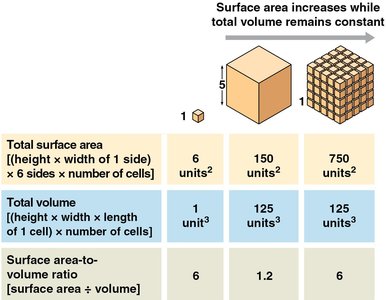
Cell size is limited by metabolic requirements. The surface area-to-volume ratio is critical for efficient exchange of materials.
Plasma Membrane: Selective barrier for passage of oxygen, nutrients, and waste.
Surface Area-to-Volume Ratio: As cell size increases, volume grows faster than surface area, affecting transport efficiency.
Internal Organization of Eukaryotic Cells
Cellular Compartments and Membranes
Eukaryotic cells have internal membranes that divide the cell into compartments, allowing incompatible processes to occur simultaneously.
Organelles: Specialized structures with unique functions.
Membrane Structure: Double layer of phospholipids and other lipids.
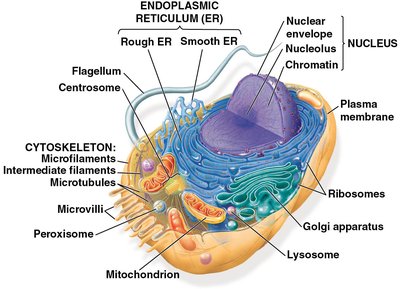
The Nucleus: Information Central
The nucleus houses most of the cell's genetic material and is surrounded by a double membrane called the nuclear envelope.
Nuclear Envelope: Double membrane with nuclear pores for molecular transport.
Nuclear Lamina: Protein network maintaining nuclear shape.
Chromatin: DNA-protein complex; condenses into chromosomes during cell division.
Nucleolus: Site of ribosomal RNA (rRNA) synthesis.
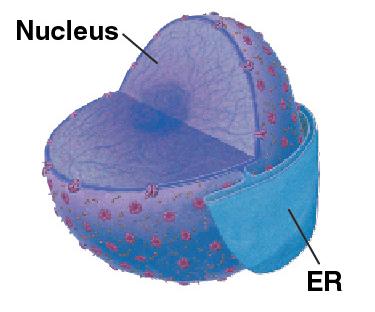
Ribosomes: Protein Factories
Ribosomes are complexes of rRNA and protein that synthesize proteins. They are found free in the cytosol or bound to the endoplasmic reticulum (ER).
Free Ribosomes: Synthesize proteins for use within the cell.
Bound Ribosomes: Synthesize proteins for secretion or membrane insertion.

The Endomembrane System
Components and Functions
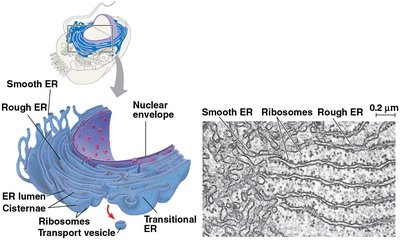
The endomembrane system regulates protein traffic and performs metabolic functions. It includes the nuclear envelope, ER, Golgi apparatus, lysosomes, vacuoles, and plasma membrane.
Endoplasmic Reticulum (ER): Biosynthetic factory; continuous with nuclear envelope.
Smooth ER: Synthesizes lipids, detoxifies drugs, stores calcium ions.
Rough ER: Studded with ribosomes; builds proteins, distributes transport vesicles, membrane factory.
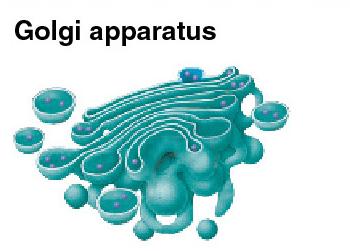
Golgi Apparatus: Modifies, sorts, and packages proteins and macromolecules.
Lysosomes: Digestive compartments; hydrolytic enzymes break down macromolecules.
Vacuoles: Maintenance compartments; food, contractile, and central vacuoles with diverse functions.
Energy Conversion Organelles
Mitochondria and Chloroplasts
Mitochondria and chloroplasts are organelles that convert energy from one form to another. Mitochondria are the site of cellular respiration, while chloroplasts are the site of photosynthesis.
Mitochondria: Smooth outer membrane, folded inner membrane (cristae), intermembrane space, and matrix; ATP synthesis.
Chloroplasts: Contain chlorophyll; thylakoids stacked as grana, stroma as internal fluid; photosynthesis.
Peroxisomes: Oxidative organelles; break down fatty acids, detoxify harmful compounds.
The Cytoskeleton
Support and Motility
The cytoskeleton is a network of fibers that provides structural support, maintains cell shape, and enables cell movement.
Microtubules: Hollow rods made of tubulin; shape cell, guide organelle movement, separate chromosomes.
Microfilaments (Actin Filaments): Twisted double chain of actin; support cell shape, involved in motility.
Intermediate Filaments: More permanent fixtures; support cell shape, fix organelles in place.
Specialized Structures: Centrosomes, Cilia, and Flagella
Microtubules form specialized structures such as centrosomes, centrioles, cilia, and flagella, which are involved in cell division and movement.
Centrosome: Microtubule organizing center in animal cells.
Cilia and Flagella: Extensions for movement; share a common structure of microtubules and motor proteins.
Extracellular Components and Cell Connections
Cell Walls and Extracellular Matrix (ECM)
Cells synthesize and secrete materials outside the plasma membrane. Plant cells have cell walls, while animal cells have an extracellular matrix (ECM).
Cell Wall: Extracellular structure in plants, prokaryotes, fungi, and some protists; made of cellulose, polysaccharides, and protein.
ECM: Glycoproteins (collagen, proteoglycans, fibronectin); binds to integrins in plasma membrane; regulates cell behavior and gene activity.
Integration of Cellular Components
Coordination of Cellular Activities
Cellular components work together to perform complex functions. For example, macrophages coordinate cytoskeleton, lysosomes, and plasma membrane to destroy bacteria.
Cellular Integration: None of the cell’s components work alone; coordination is essential for life processes.
Summary Table: Prokaryotic vs. Eukaryotic Cells
Feature | Prokaryotic Cell | Eukaryotic Cell |
|---|---|---|
Nucleus | Absent | Present |
Membrane-bound Organelles | Absent | Present |
Cell Size | Small (0.1–5 µm) | Larger (10–100 µm) |
Domains | Bacteria, Archaea | Eukarya (Protists, Fungi, Animals, Plants) |
DNA Location | Nucleoid | Nucleus |
