 Indietro
A Tour of the Cell: Structure, Function, and Organization
Guida di studio - Note intelligenti
 Appunti personalizzati basati sui tuoi materiali, ampliati con definizioni chiave, esempi e contesto.
Chapter 6: A Tour of the Cell
Introduction to Cells
Cells are the fundamental units of structure and function in all living organisms. Understanding cell structure and function is essential for studying biology, as cells carry out the processes necessary for life.
Cell Theory: All living things are composed of cells; cells are the basic units of life; all cells arise from pre-existing cells.
Microscopy: Cells are typically too small to be seen with the naked eye, requiring microscopes for visualization.
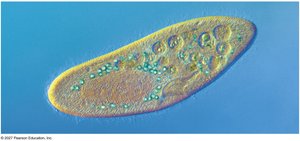
Microscopy and Cell Study
Microscopes are essential tools for biologists to study cells. Different types of microscopes provide varying levels of magnification, resolution, and contrast.
Magnification: The ratio of an object's image size to its real size.
Resolution: The clarity of the image, or the minimum distance between two distinguishable points.
Contrast: Visible differences in brightness between parts of the sample.
[[9[[[[[[[[[[[[[[[=p='''''k' 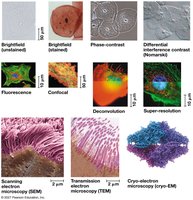
Cell Fractionation
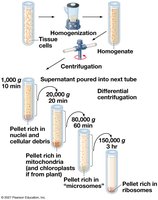
Cell fractionation is a technique used to separate cellular components for study. It involves homogenizing cells and using centrifugation to isolate organelles based on size and density.
Differential Centrifugation: Sequentially increasing centrifuge speeds to separate cell components.
Purpose: Enables scientists to determine the functions of organelles by studying them in isolation.
Types of Cells: Prokaryotic vs. Eukaryotic
Basic Features of All Cells
All cells share certain structural features:
Plasma membrane: Surrounds the cell, controlling entry and exit of substances.
Cytosol: Semifluid substance within the cell.
Chromosomes: Carry genetic information.
Ribosomes: Sites of protein synthesis.
Prokaryotic Cells
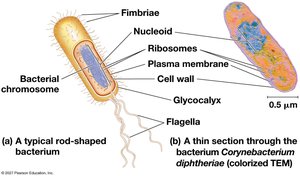
Prokaryotic cells, found in Bacteria and Archaea, lack a nucleus and membrane-bound organelles.
Nucleoid: Region where DNA is located, not enclosed by a membrane.
Cell wall: Provides structural support.
Smaller size: Generally smaller than eukaryotic cells.
Eukaryotic Cells
Eukaryotic cells, found in protists, fungi, animals, and plants, have a nucleus and membrane-bound organelles.
Nucleus: Enclosed by a double membrane, contains DNA.
Organelles: Specialized structures with distinct functions.
Larger size: Generally larger than prokaryotic cells.
Surface Area to Volume Ratio
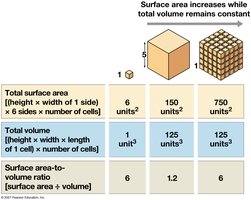
The surface area to volume ratio is critical for cell function, affecting the ability to exchange materials with the environment.
As cell size increases, volume grows faster than surface area.
Cells must maintain a high surface area to volume ratio for efficient transport.
Internal Organization of Eukaryotic Cells
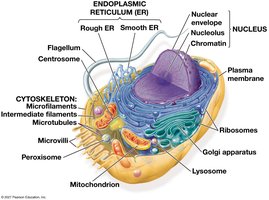
Overview of Eukaryotic Cell Structure
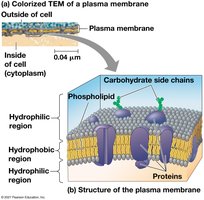
Eukaryotic cells are organized into compartments called organelles, each with specific functions. The basic fabric of biological membranes is a double layer of phospholipids.
The Nucleus and Ribosomes
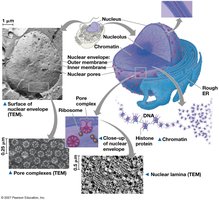
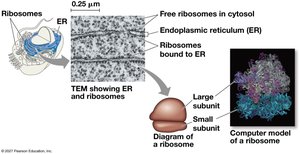
The nucleus houses genetic material and coordinates cellular activities. Ribosomes synthesize proteins using instructions from DNA.
Chromatin: DNA and associated proteins, condenses into chromosomes during cell division.
Nucleolus: Site of ribosomal RNA synthesis.
Ribosomes: Can be free in cytosol or bound to endoplasmic reticulum.
The Endomembrane System
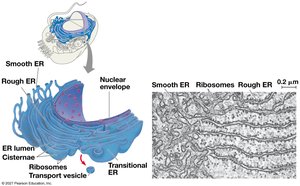
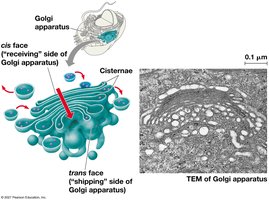
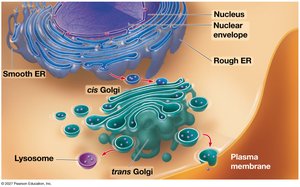
The endomembrane system regulates protein traffic and performs metabolic functions. It includes the nuclear envelope, endoplasmic reticulum, Golgi apparatus, lysosomes, vacuoles, and plasma membrane.
Endoplasmic Reticulum (ER): Smooth ER synthesizes lipids and detoxifies; Rough ER has ribosomes and produces proteins.
Golgi Apparatus: Modifies, sorts, and packages proteins and lipids.
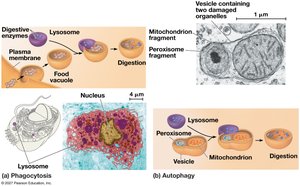
Lysosomes: Digestive organelles containing hydrolytic enzymes.
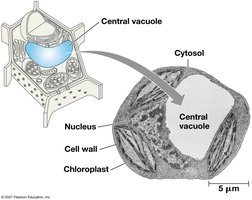
Vacuoles: Storage and maintenance compartments, especially prominent in plant cells.
Energy Conversion Organelles
Mitochondria and Chloroplasts
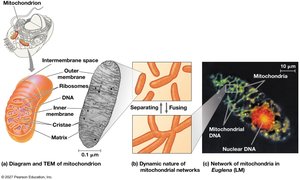
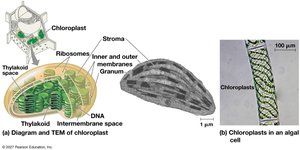
Mitochondria and chloroplasts are organelles that convert energy from one form to another. Mitochondria perform cellular respiration, while chloroplasts carry out photosynthesis.
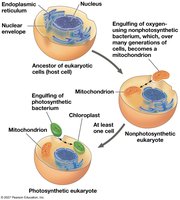
Endosymbiont Theory: Suggests mitochondria and chloroplasts originated from engulfed prokaryotic cells.
Double membrane: Both organelles are surrounded by two membranes.
Own DNA and ribosomes: Both contain circular DNA and ribosomes.
Peroxisomes
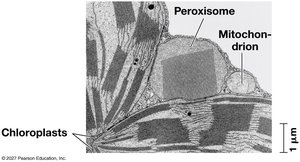
Peroxisomes are specialized metabolic compartments that carry out oxidation reactions, producing hydrogen peroxide and breaking down fatty acids.
Detoxification: Peroxisomes detoxify harmful substances, especially in the liver.
Glyoxysomes: Convert fatty acids to sugars in plant seeds.
The Cytoskeleton
Structure and Function
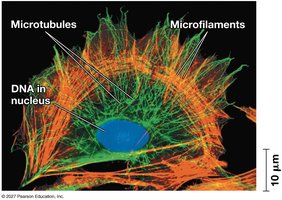
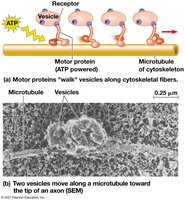
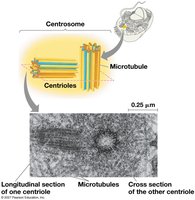
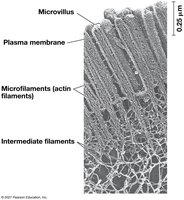
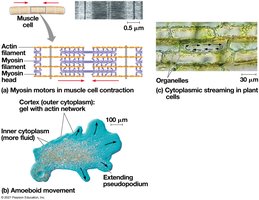
The cytoskeleton is a network of fibers that organizes cell structure and activities. It consists of microtubules, microfilaments, and intermediate filaments.
Microtubules: Hollow tubes, provide support and tracks for organelle movement.
Microfilaments: Actin filaments, involved in cell movement and shape.
Intermediate filaments: Provide structural stability.
Extracellular Components and Cell Connections
Cell Walls
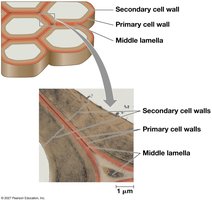
Plant cells have cell walls made of cellulose, providing protection and structural support. Some prokaryotes, fungi, and protists also have cell walls.
Primary cell wall: Thin and flexible.
Middle lamella: Contains pectins, glues cells together.
Secondary cell wall: Added for extra strength.
Extracellular Matrix (ECM) in Animal Cells
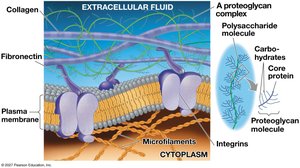
Animal cells lack cell walls but have an extracellular matrix composed of glycoproteins like collagen, proteoglycans, and fibronectin. The ECM provides structural support and regulates cell behavior.
Integrins: Receptor proteins that connect the ECM to the cytoskeleton.
Regulation: ECM influences gene activity and cell signaling.
Cell Junctions
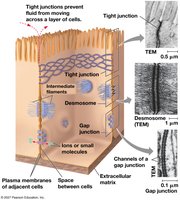
Cells in tissues are connected by junctions that allow communication and adhesion.
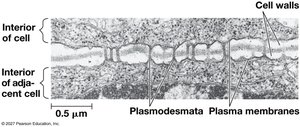
Plasmodesmata: Channels between plant cells for transport of water and solutes.
Tight junctions: Prevent leakage of extracellular fluid.
Desmosomes: Anchor cells together.
Gap junctions: Allow passage of ions and molecules between cells.
Coordination of Cellular Activities
Integration of Cell Components
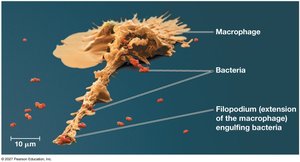
Cellular activities are coordinated by the interaction of various organelles and structures. For example, macrophages use their cytoskeleton, lysosomes, and plasma membrane to engulf and destroy bacteria.
Summary Table: Cytoskeleton Structure and Function
The cytoskeleton is composed of three main types of fibers, each with distinct structure and function.
Type | Structure | Function |
|---|---|---|
Microtubules | Hollow tubes of tubulin | Cell shape, organelle movement, chromosome separation |
Microfilaments | Actin filaments | Cell shape, muscle contraction, cell motility |
Intermediate Filaments | Fibrous proteins | Structural support, anchoring organelles |
Conclusion
The cell is a highly organized and dynamic unit, with specialized structures working together to maintain life. Understanding cell structure and function is foundational for all biological sciences.
