 Indietro
A Tour of the Cell: Structure, Function, and Organization
Guida di studio - Note intelligenti
 Appunti personalizzati basati sui tuoi materiali, ampliati con definizioni chiave, esempi e contesto.
Chapter 6: A Tour of the Cell
Introduction to Cells
Cells are the fundamental units of structure and function in all living organisms. Understanding cell structure and function is essential for studying biology at all levels, from molecular to ecological.
Cell Theory: All living things are composed of cells, and all cells arise from pre-existing cells.
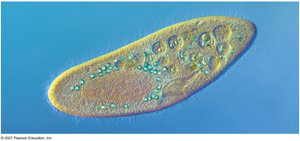
Microscopy: Cells are typically too small to be seen with the naked eye, requiring microscopes for visualization.
Microscopy and Cell Study
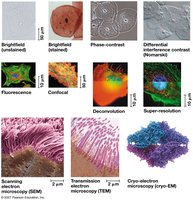
Microscopes are essential tools for biologists to study cells. Different types of microscopy provide varying levels of magnification, resolution, and contrast.
Magnification: The ratio of an object's image size to its real size.
Resolution: The clarity of the image, or the minimum distance between two distinguishable points.
Contrast: Visible differences in brightness between parts of the sample.
Cell Size and Scale
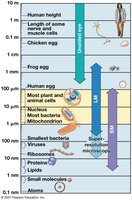
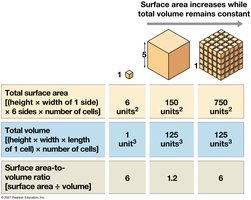
Cells vary greatly in size, from microscopic bacteria to larger plant and animal cells. The size of a cell is limited by its metabolic requirements and the surface area-to-volume ratio.
Surface Area-to-Volume Ratio: As a cell increases in size, its volume grows faster than its surface area, affecting the efficiency of material exchange.
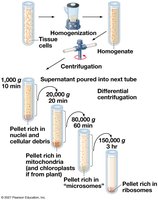
Cell Fractionation
Cell fractionation is a technique used to separate cellular components for study. It involves homogenization and centrifugation to isolate organelles based on size and density.
Differential Centrifugation: Sequential centrifugation at increasing speeds separates cell components.
Application: Enables scientists to study the functions of individual organelles.
Prokaryotic vs. Eukaryotic Cells
Basic Features of All Cells
All cells share certain features, including a plasma membrane, cytosol, chromosomes, and ribosomes.
Plasma Membrane: Selective barrier for material exchange.
Cytosol: Semifluid substance within the cell.
Chromosomes: Carry genetic information.
Ribosomes: Sites of protein synthesis.
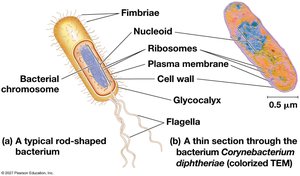
Prokaryotic Cells
Prokaryotic cells lack a nucleus and membrane-bound organelles. Their DNA is located in the nucleoid region.
Domains: Bacteria and Archaea.
Structure: Cell wall, plasma membrane, ribosomes, nucleoid, sometimes flagella and fimbriae.
Eukaryotic Cells
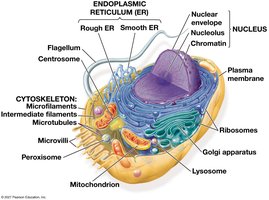
Eukaryotic cells have a nucleus and membrane-bound organelles. They are generally larger and more complex than prokaryotic cells.
Domains: Protists, fungi, animals, plants.
Structure: Nucleus, endoplasmic reticulum, Golgi apparatus, mitochondria, chloroplasts (in plants), cytoskeleton, etc.
Cell Membranes and Compartmentalization
Plasma Membrane Structure
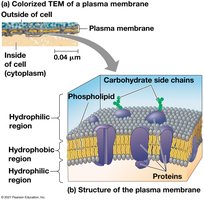
The plasma membrane is composed of a phospholipid bilayer with embedded proteins and carbohydrate side chains. It regulates the passage of substances into and out of the cell.
Phospholipid Bilayer: Hydrophilic heads face outward, hydrophobic tails face inward.
Proteins: Serve as channels, receptors, and enzymes.
Genetic Instructions: Nucleus and Ribosomes
Nucleus
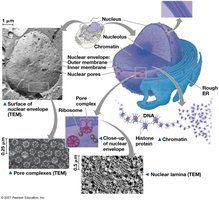
The nucleus houses most of the cell's DNA and is surrounded by a double membrane called the nuclear envelope. The nucleolus within the nucleus is the site of ribosomal RNA synthesis.
Chromatin: DNA and associated proteins; condenses into chromosomes during cell division.
Nucleolus: Site of ribosomal RNA (rRNA) synthesis.
Ribosomes
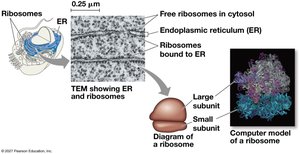
Ribosomes are complexes of rRNA and protein that synthesize proteins. They can be free in the cytosol or bound to the endoplasmic reticulum.
Free Ribosomes: Synthesize proteins for use within the cell.
Bound Ribosomes: Synthesize proteins for secretion or for use in membranes.
The Endomembrane System
Components and Functions
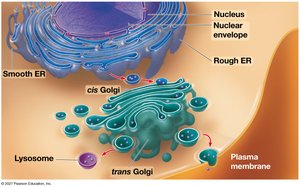
The endomembrane system includes the nuclear envelope, endoplasmic reticulum, Golgi apparatus, lysosomes, vacuoles, and plasma membrane. It regulates protein traffic and performs metabolic functions.
Vesicles: Transport materials between components.
Endoplasmic Reticulum (ER)
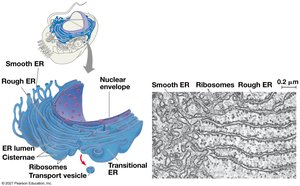
The ER is a network of membranes continuous with the nuclear envelope. It has two regions: smooth ER (lacks ribosomes) and rough ER (studded with ribosomes).
Smooth ER: Synthesizes lipids, detoxifies drugs, stores calcium ions.
Rough ER: Synthesizes proteins, distributes transport vesicles, produces membranes.
Golgi Apparatus
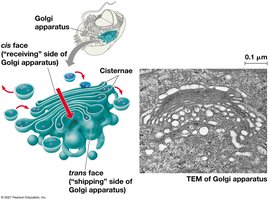
The Golgi apparatus consists of flattened sacs called cisternae. It modifies, sorts, and packages proteins and other products from the ER.
Cis Face: Receiving side.
Trans Face: Shipping side.
Lysosomes
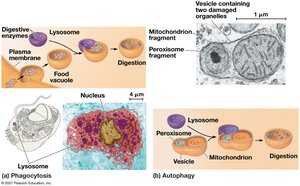
Lysosomes are membrane-bound sacs containing hydrolytic enzymes for digestion. They break down macromolecules and recycle cellular components.
Phagocytosis: Engulfing and digesting external particles.
Autophagy: Recycling internal organelles.
Vacuoles
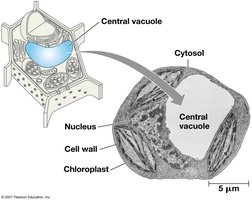
Vacuoles are large vesicles with diverse functions, including storage, waste disposal, and maintaining cell shape. Central vacuoles in plants store ions and contribute to growth.
Food Vacuoles: Formed by phagocytosis.
Contractile Vacuoles: Pump excess water out of cells.
Central Vacuole: Main repository of inorganic ions in plants.
Energy Conversion: Mitochondria, Chloroplasts, and Peroxisomes
Mitochondria
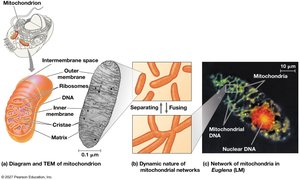
Mitochondria are the sites of cellular respiration, converting oxygen and nutrients into ATP. They have a double membrane and their own DNA.
Structure: Outer membrane, inner membrane (cristae), intermembrane space, matrix.
Function: ATP synthesis via cellular respiration.
Chloroplasts
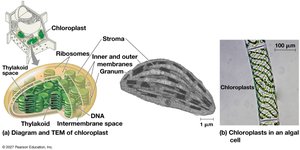
Chloroplasts are found in plants and algae and are the sites of photosynthesis. They contain chlorophyll and have a complex internal structure.
Structure: Thylakoids (stacked as grana), stroma, double membrane, own DNA.
Function: Conversion of light energy to chemical energy.
Peroxisomes
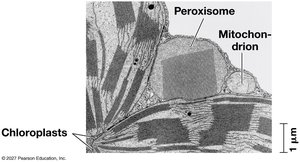
Peroxisomes are metabolic compartments that contain enzymes for oxidation reactions, including the breakdown of fatty acids and detoxification.
Function: Produce hydrogen peroxide, convert it to water, detoxify harmful substances.
Endosymbiont Theory
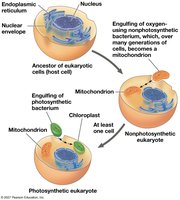
The endosymbiont theory explains the origin of mitochondria and chloroplasts as formerly free-living bacteria engulfed by ancestral eukaryotic cells.
Evidence: Double membranes, own DNA, ribosomes, independent replication.
The Cytoskeleton
Structure and Function
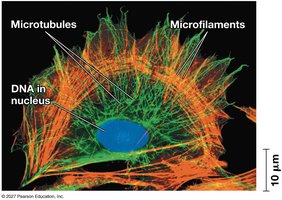
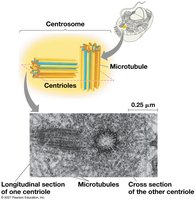
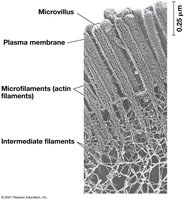
The cytoskeleton is a network of fibers that organizes cell structure and activities. It consists of microtubules, microfilaments, and intermediate filaments.
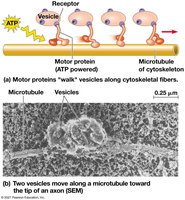
Microtubules: Hollow tubes, maintain cell shape, guide organelle movement.
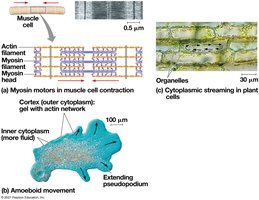
Microfilaments: Actin filaments, support cell shape, involved in motility.
Intermediate Filaments: Provide structural stability, anchor organelles.
Support and Motility
The cytoskeleton supports the cell and enables movement through interaction with motor proteins. Vesicles and organelles travel along cytoskeletal tracks.
Motor Proteins: Use ATP to move along cytoskeletal fibers.
Extracellular Components and Cell Connections
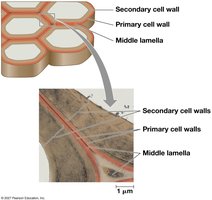
Cell Walls in Plants
Plant cells have cell walls made of cellulose, providing protection, shape, and preventing excessive water uptake. Cell walls may have multiple layers.
Primary Cell Wall: Thin and flexible.
Middle Lamella: Contains pectins, glues cells together.
Secondary Cell Wall: Added for extra strength.
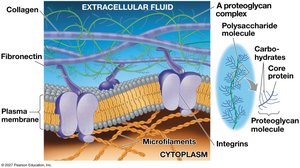
Extracellular Matrix (ECM) in Animal Cells
Animal cells lack cell walls but have an ECM composed of glycoproteins like collagen, proteoglycans, and fibronectin. The ECM provides structural support and regulates cell behavior.
Integrins: Receptor proteins that connect the ECM to the cytoskeleton.
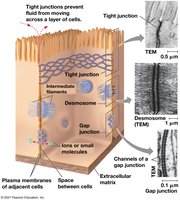
Cell Junctions
Cells in tissues are connected by junctions that facilitate adhesion, communication, and barrier formation.
Tight Junctions: Prevent leakage of extracellular fluid.
Desmosomes: Anchor cells together.
Gap Junctions: Allow passage of ions and molecules between cells.
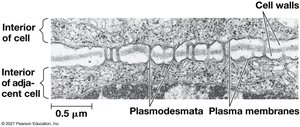
Plasmodesmata in Plant Cells
Plasmodesmata are channels between plant cells that allow the passage of water, solutes, and some macromolecules.
Coordination of Cellular Activities
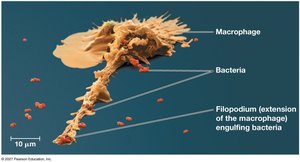
Cellular functions are coordinated among various organelles and structures. For example, macrophages use the cytoskeleton, lysosomes, and plasma membrane to engulf and destroy bacteria.
Summary Table: Cytoskeleton Structure and Function
Type | Structure | Function |
|---|---|---|
Microtubules | Hollow tubes (tubulin) | Cell shape, organelle movement, chromosome separation |
Microfilaments | Actin filaments | Cell shape, muscle contraction, cytoplasmic streaming |
Intermediate Filaments | Fibrous proteins | Cell shape, anchor organelles |
Key Equations
Surface Area of a Cube:
Volume of a Cube:
Surface Area-to-Volume Ratio:
Conclusion
The cell is a highly organized and dynamic unit, with specialized structures and functions that enable life. Understanding cell structure and function is foundational for all biological sciences.
