 Indietro
A Tour of the Cell: Structure and Function of Eukaryotic Cells
Guida di studio - Note intelligenti
 Appunti personalizzati basati sui tuoi materiali, ampliati con definizioni chiave, esempi e contesto.
The Cell: Introduction and Historical Context
Discovery and Definition of the Cell
The cell is the fundamental unit of life, first described by Robert Hooke in 1665 using a microscope. Anton van Leeuwenhoek later observed unicellular organisms, blood cells, and sperm cells, expanding our understanding of cellular diversity. By the 19th century, Matthias Schleiden and Theodore Schwann established the Cell Theory, which states:
All living organisms are composed of cells.
The cell is the basic unit of structure and function in living things.
All cells arise from pre-existing cells.
Cells transmit hereditary material to their descendants during cell division.
Cell Size and Microscopy
Relative Sizes of Cells and Their Components
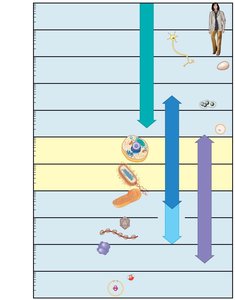
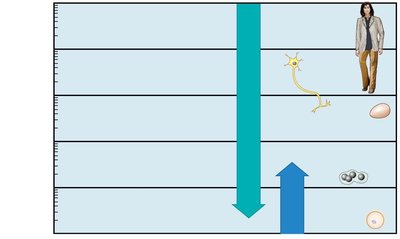
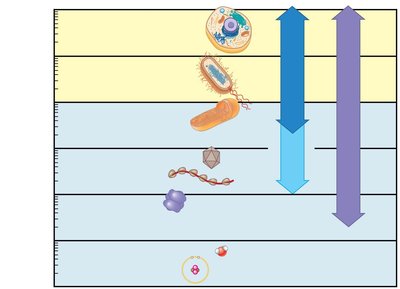
Cells and their components vary greatly in size, from atoms and small molecules to entire cells visible to the naked eye. Most plant and animal cells are between 10–100 μm in diameter, while organelles like mitochondria and chloroplasts are smaller, and viruses and ribosomes are even tinier.
Light Microscopy (LM): Used to view cells and some organelles up to about 100 nm.
Electron Microscopy (EM): Allows visualization of much smaller structures, such as ribosomes and viruses.
Types of Cells: Prokaryotic vs. Eukaryotic
Prokaryotic Cells
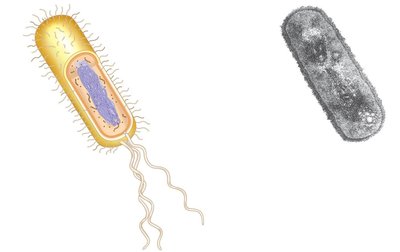
Prokaryotic cells, such as bacteria, lack a nucleus and membrane-bound organelles. Their DNA is located in a region called the nucleoid. They are generally smaller and simpler than eukaryotic cells.
Key structures: Plasma membrane, cell wall, capsule, flagella, fimbriae, ribosomes, nucleoid.
Eukaryotic Cells
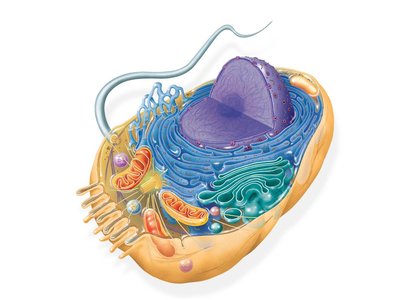
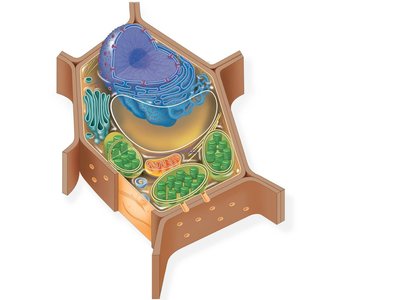
Eukaryotic cells are more complex, containing a nucleus and various membrane-bound organelles. They are found in animals, plants, fungi, and protists.
Key organelles: Nucleus, endoplasmic reticulum, Golgi apparatus, mitochondria, lysosomes, peroxisomes, cytoskeleton.
Cellular Membranes
Structure and Function of the Plasma Membrane
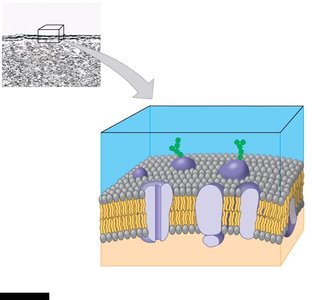
The plasma membrane is a selectively permeable barrier composed of a phospholipid bilayer with embedded proteins. It regulates the movement of substances into and out of the cell and facilitates communication with the environment.
Phospholipid bilayer: Hydrophilic heads face outward; hydrophobic tails face inward.
Proteins: Serve as channels, receptors, and enzymes.
Carbohydrate side chains: Involved in cell recognition.
Internal Organization of Eukaryotic Cells
Nucleus
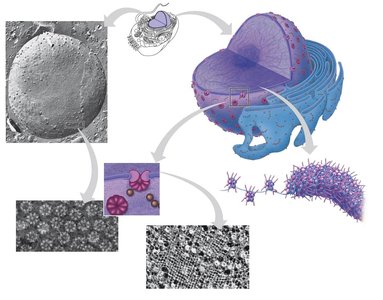
The nucleus contains most of the cell's genetic material and is surrounded by a double membrane called the nuclear envelope. Nuclear pores regulate the exchange of materials between the nucleus and cytoplasm.
Nucleolus: Site of ribosome synthesis.
Chromatin: DNA and associated proteins.
Ribosomes
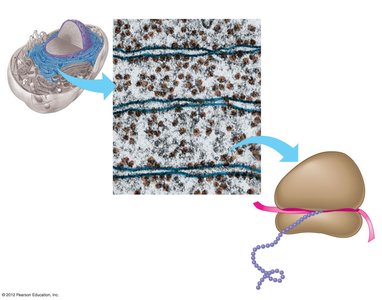
Ribosomes are the sites of protein synthesis. They can be free in the cytoplasm or bound to the endoplasmic reticulum (ER).
Free ribosomes: Synthesize proteins for use within the cell.
Bound ribosomes: Synthesize proteins for export or for membranes.
Endoplasmic Reticulum (ER)
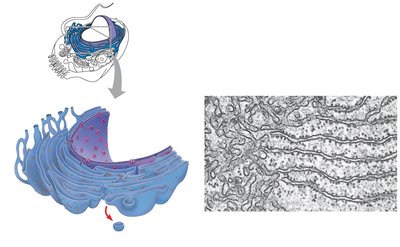
The ER is a network of membranes involved in protein and lipid synthesis. It is divided into rough ER (with ribosomes) and smooth ER (without ribosomes).
Rough ER: Synthesizes proteins and membranes.
Smooth ER: Synthesizes lipids, metabolizes carbohydrates, detoxifies drugs, and stores calcium ions.
Golgi Apparatus
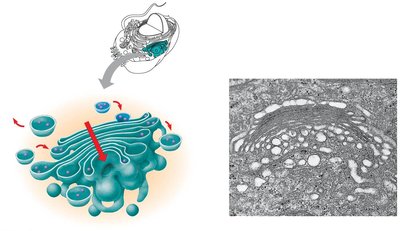
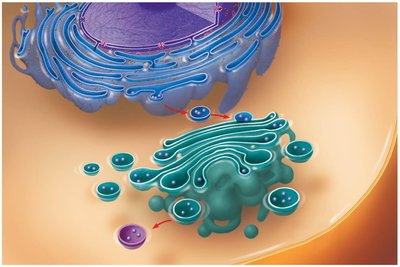
The Golgi apparatus modifies, sorts, and packages proteins and lipids for secretion or delivery to other organelles. It consists of flattened sacs called cisternae.
Cis face: Receiving side.
Trans face: Shipping side.
Lysosomes
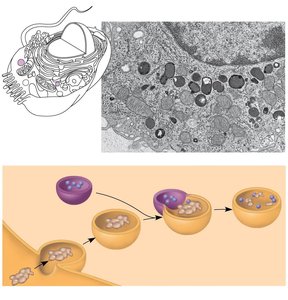
Lysosomes are membrane-bound sacs containing hydrolytic enzymes for digestion of macromolecules, old organelles, and foreign substances. They play a key role in cellular cleanup and recycling (autophagy).
Phagocytosis: Engulfing of large particles or cells.
Autophagy: Recycling of the cell's own components.
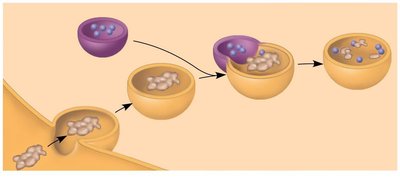
Vacuoles
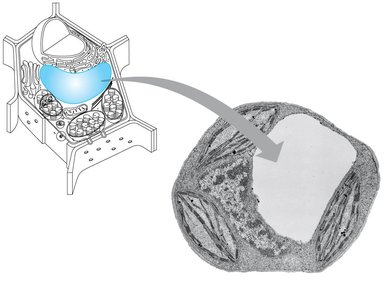
Vacuoles are large vesicles with diverse functions. In plant cells, the central vacuole stores water, ions, and nutrients, and helps maintain cell rigidity.
Central vacuole: Prominent in plant cells, important for storage and structural support.
The Endomembrane System
Components and Functions
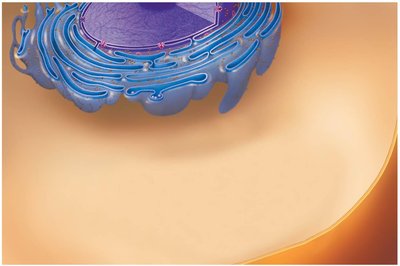
The endomembrane system includes the nuclear envelope, ER, Golgi apparatus, lysosomes, vacuoles, and plasma membrane. These structures are connected directly or via vesicles, coordinating the synthesis, modification, and transport of cellular materials.
Protein trafficking: Proteins synthesized in the ER are modified in the Golgi and transported to their destinations.
Mitochondria and Chloroplasts
Energy Conversion Organelles
Mitochondria are the sites of cellular respiration, converting glucose and oxygen into ATP. Chloroplasts, found in plants and algae, are the sites of photosynthesis, converting light energy into chemical energy.
Mitochondria: Double-membraned, contain their own DNA and ribosomes.
Chloroplasts: Contain chlorophyll, thylakoids, and their own DNA.
The Cytoskeleton
Organization and Function
The cytoskeleton is a network of protein fibers that provides structural support, facilitates cell movement, and organizes organelles within the cell. It includes microfilaments, intermediate filaments, and microtubules.
Microfilaments: Actin filaments involved in cell shape and movement.
Intermediate filaments: Provide mechanical support.
Microtubules: Involved in organelle movement and cell division.
Summary Table: Key Differences Between Prokaryotic and Eukaryotic Cells
Feature | Prokaryotic Cells | Eukaryotic Cells |
|---|---|---|
Nucleus | Absent | Present |
Membrane-bound organelles | Absent | Present |
Size | 1–10 μm | 10–100 μm |
Examples | Bacteria, Archaea | Plants, Animals, Fungi, Protists |
Additional info: This guide covers the main structures and functions of cells as outlined in Chapter 4: A Tour of the Cell, including historical context, cell theory, microscopy, and the comparison of prokaryotic and eukaryotic cells.
