 Indietro
Ch 6 Aerobic Cellular Respiration: Pathways, Mechanisms, and Evolution
Guida di studio - Note intelligenti
 Appunti personalizzati basati sui tuoi materiali, ampliati con definizioni chiave, esempi e contesto.
Ch. 6 - Cellular Respiration: Obtaining Energy from Food
Overview of Cellular Respiration
Cellular respiration is a fundamental metabolic pathway that enables cells to harvest energy from organic molecules, primarily glucose, to produce ATP. This process is essential for all eukaryotes and many prokaryotes, and it is tightly linked to the complementary process of photosynthesis in ecosystems.
Cellular respiration occurs in three main stages: glycolysis, the citric acid cycle, and the electron transport chain.
ATP is the universal energy carrier produced during these stages.
NADH and FADH2 are energy carriers generated and used to drive ATP synthesis.
Aerobic respiration requires molecular oxygen (O2).
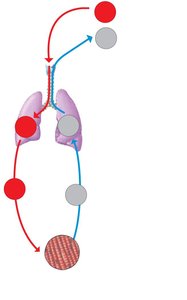
Photosynthesis and Cellular Respiration: Complementary Processes
Photosynthesis and cellular respiration are interconnected processes that cycle energy and matter through ecosystems. Photosynthesis converts solar energy into chemical energy, while cellular respiration releases that energy for cellular work.
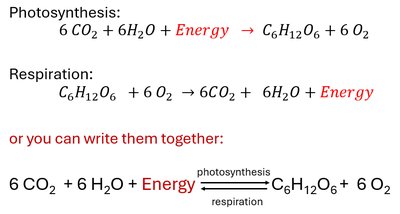
Photosynthesis equation:
Cellular respiration equation:
These equations are reverse processes, cycling carbon, oxygen, and energy.
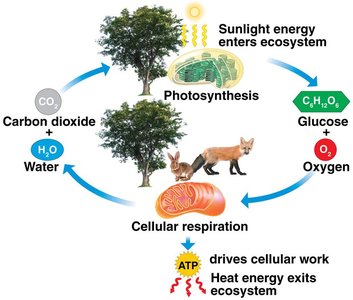
Producers and Consumers in Ecosystems
Most ecosystems depend on photosynthesis. Producers (autotrophs) convert sunlight into chemical energy, while consumers (heterotrophs) obtain energy by eating producers or other consumers.
Producers: Plants, algae, and some bacteria.
Consumers: Animals, fungi, and many bacteria.
Aerobic Cellular Respiration: Harvesting Food Energy
Aerobic cellular respiration is a series of enzyme-catalyzed reactions that break down glucose and other organic molecules to produce ATP. It occurs in both prokaryotes and eukaryotes, with eukaryotes using mitochondria for key steps.
ATP is produced from molecules consumed (consumers) or synthesized (producers).
NADH and FADH2 are generated and later used to produce ATP via electron transport chains.
Oxygen is essential for the mitochondrial reactions of aerobic respiration.
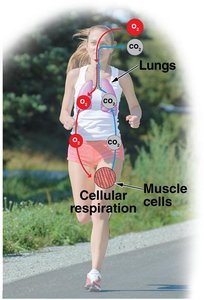
Location of Cellular Respiration Steps in Eukaryotes
Cellular respiration occurs in distinct cellular compartments:
Glycolysis: Cytosol
Citric Acid Cycle: Mitochondrial matrix
Electron Transport Chain: Inner mitochondrial membrane

Glycolysis
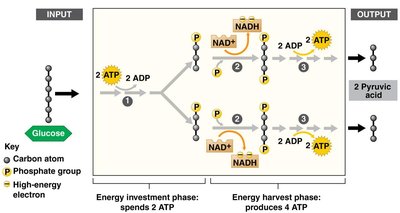
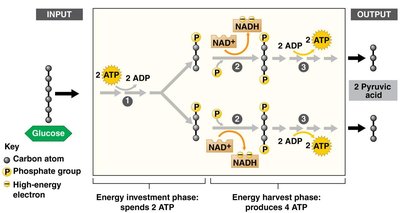
Glycolysis is the first stage of cellular respiration, breaking down glucose into pyruvate and generating ATP and NADH. It does not require oxygen and occurs in the cytosol.
Net products per glucose: 2 ATP, 2 NADH, 2 pyruvate
Energy investment phase: 2 ATP used
Energy harvest phase: 4 ATP produced
Preparatory (Transition) Reactions
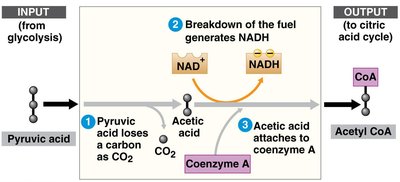
Before entering the citric acid cycle, pyruvate is converted to acetyl CoA in the mitochondrion. This step releases CO2 and generates NADH.
Pyruvate (3C) is converted to acetyl CoA (2C) with release of CO2.
2 NADH produced per glucose.
Citric Acid Cycle (Krebs Cycle, TCA Cycle)
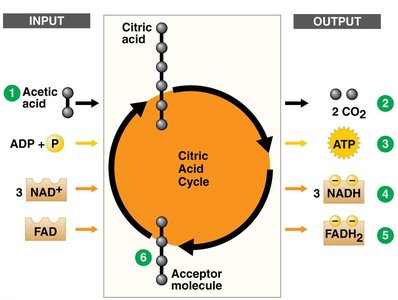
The citric acid cycle is a series of enzyme-driven reactions in the mitochondrial matrix. It completes the breakdown of glucose, producing ATP, NADH, FADH2, and CO2.
Inputs: Acetyl CoA, ADP + P, NAD+, FAD
Outputs: 2 CO2, ATP, 3 NADH, 1 FADH2 per cycle
Electron Transport Chain and ATP Synthase
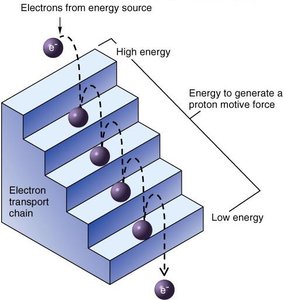
The electron transport chain (ETC) is located in the inner mitochondrial membrane. NADH and FADH2 donate electrons, which are transferred through protein complexes, releasing energy to pump protons and generate a proton gradient. ATP synthase uses this gradient to produce ATP.
High-energy electrons are transferred stepwise, losing energy at each step.
O2 is the final electron acceptor, forming water.
ATP synthase uses the proton gradient to phosphorylate ADP to ATP.
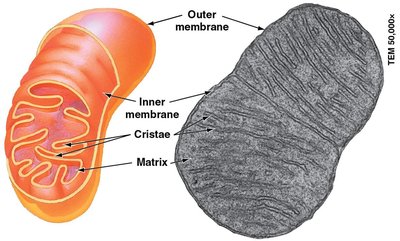
Structure-Function Relationship in Mitochondria
The inner membrane of mitochondria is highly folded (cristae), increasing surface area for electron transport chains and ATP synthase, maximizing ATP production.

Summary of ATP Yield
Cellular respiration yields about 32 ATP per glucose molecule, with most ATP produced during oxidative phosphorylation (ETC and ATP synthase).
Substrate-level phosphorylation: Direct ATP synthesis in glycolysis and citric acid cycle.
Oxidative phosphorylation: ATP synthesis via ETC and ATP synthase.
Fermentation: Anaerobic Pathways
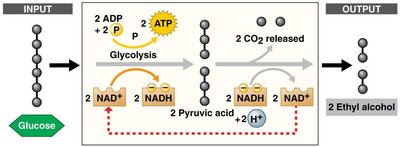
When oxygen is unavailable, cells use fermentation to regenerate NAD+ and allow glycolysis to continue. Fermentation produces less ATP and different end products depending on the organism.
Lactic acid fermentation: Produces lactic acid (e.g., in muscle cells).
Alcoholic fermentation: Produces ethanol and CO2 (e.g., in yeast).
No additional ATP is produced beyond glycolysis.
Evolution of Oxygen and Cellular Respiration
Earth's atmosphere initially lacked oxygen. Early prokaryotes used anaerobic pathways. Photosynthesis by cyanobacteria increased atmospheric O2, enabling aerobic respiration and the evolution of eukaryotes and multicellular life.
Great Oxidation Event: O2 accumulation led to mass extinctions and new evolutionary opportunities.
Eukaryotes: Appeared when O2 reached about 2% of present-day levels.
Multicellular life: Evolved when O2 reached current levels (~700 million years ago).
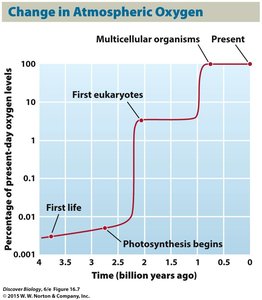
Table: Comparison of Aerobic Respiration and Fermentation
Process | Oxygen Required? | ATP Yield (per glucose) | End Products |
|---|---|---|---|
Aerobic Respiration | Yes | ~32 | CO2, H2O |
Fermentation | No | 2 | Lactic acid or Ethanol + CO2 |
Key Terms and Definitions
ATP (Adenosine Triphosphate): The main energy currency of the cell.
NADH/FADH2: Electron carriers used in cellular respiration.
Glycolysis: The breakdown of glucose to pyruvate.
Citric Acid Cycle: Series of reactions that further oxidize acetyl CoA.
Electron Transport Chain: Series of protein complexes that transfer electrons and generate ATP.
Fermentation: Anaerobic process to regenerate NAD+ for glycolysis.
Additional info: The notes include inferred details about the evolutionary timeline and the structure-function relationship in mitochondria for completeness.
