 Indietro
An Introduction to Metabolism: Cellular Energy and Enzyme Function
Guida di studio - Note intelligenti
 Appunti personalizzati basati sui tuoi materiali, ampliati con definizioni chiave, esempi e contesto.
An Introduction to Metabolism
Overview of Metabolism
Metabolism encompasses all chemical reactions that occur within living organisms to sustain life. These reactions are organized into metabolic pathways, which are either catabolic (breaking down molecules) or anabolic (building up molecules). - Metabolic Pathways: Series of chemical reactions catalyzed by enzymes, transforming substrates into products. - Catabolic Pathways: Break down complex molecules, releasing energy. - Anabolic Pathways: Build complex molecules from simpler ones, requiring energy input. 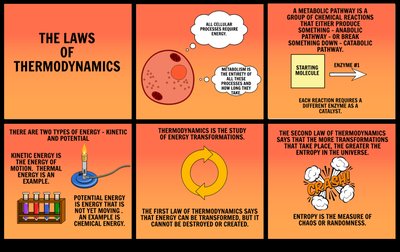
Catabolic vs. Anabolic Pathways
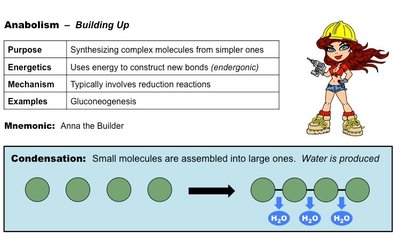
Catabolic and anabolic pathways are fundamental to cellular metabolism, each serving distinct purposes and energetics. Catabolic Pathways: - Purpose: Breakdown of complex molecules into simpler ones. - Energetics: Release energy (exergonic). - Mechanism: Often involve oxidation reactions. - Example: Glycolysis. 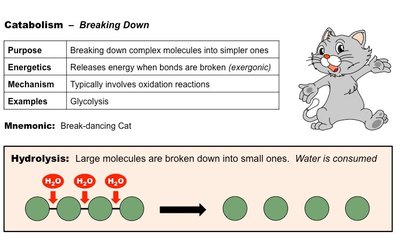 Anabolic Pathways: - Purpose: Synthesis of complex molecules from simpler ones. - Energetics: Require energy input (endergonic). - Mechanism: Typically involve reduction reactions. - Example: Gluconeogenesis.
Energy of Reactions: Spontaneous vs. Nonspontaneous
Chemical reactions can be classified based on their energy requirements and entropy changes. - Spontaneous Reactions: Occur without energy input; energy exits the system (exergonic); often catabolic; increase entropy. - Nonspontaneous Reactions: Require energy input; energy enters the system (endergonic); often anabolic; decrease entropy.
Equilibrium and Metabolism
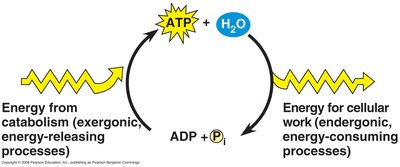
- Equilibrium: State of maximum stability where free energy is at its lowest. - Closed Systems: Eventually reach equilibrium and can no longer do work. - Open Systems (Cells): Maintain constant flow of materials and energy, preventing equilibrium. - Energy Coupling: Exergonic reactions provide energy for endergonic reactions.
ATP: The Energy Currency of the Cell
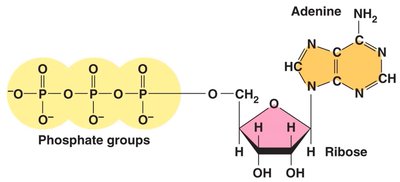
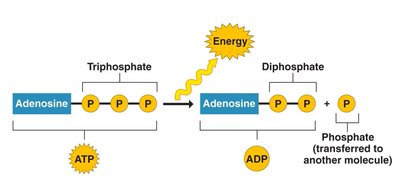
ATP (adenosine triphosphate) acts as an energy shuttle, storing and transferring energy within cells. - Structure: Composed of adenine, ribose, and three phosphate groups. - Energy Storage: High-energy bonds between phosphate groups; negative charges cause repulsion, making the bonds unstable. - Hydrolysis: Removal of the terminal phosphate group releases energy for cellular work. 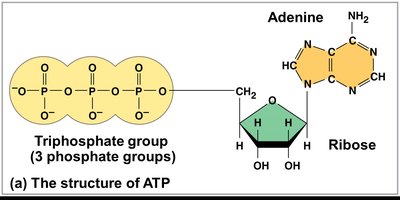
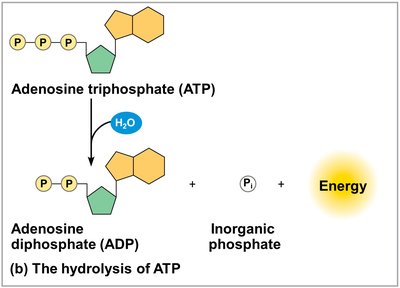

ATP Hydrolysis Equation
Enzymes: Biological Catalysts
Enzymes are proteins that accelerate chemical reactions by lowering the activation energy (EA) required to start the reaction. - Activation Energy (EA): The energy needed to initiate a reaction. - Enzyme Function: Enzymes are highly specific to their substrates and are not consumed in the reaction. - Enzyme Nomenclature: Usually end in "-ase". 
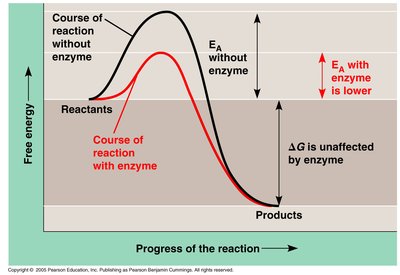
Effect of Enzymes on Reaction Rate
(change in free energy) is unaffected by enzymes, but (activation energy) is lowered, increasing reaction rate. 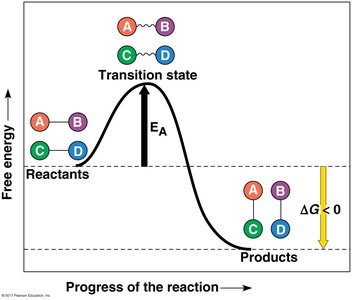
Substrate-Enzyme Interaction
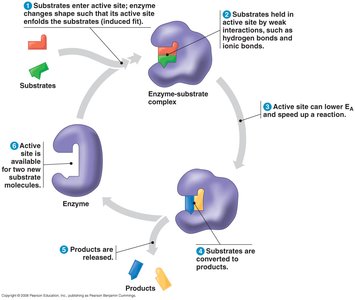
Enzymes facilitate reactions by binding substrates at their active sites, forming an enzyme-substrate complex. - Mechanisms to Lower EA: 1. Orienting substrates correctly 2. Straining substrate bonds 3. Providing a favorable microenvironment 4. Covalently bonding to the substrate 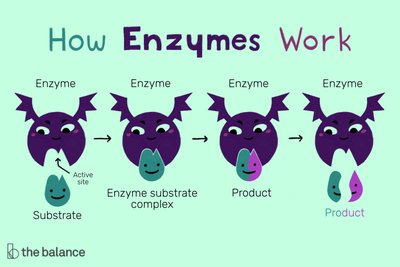
Factors Affecting Enzyme Activity
Enzyme effectiveness is influenced by several conditions: - Temperature: Each enzyme has an optimal temperature. - pH: Each enzyme has an optimal pH. - Substrate Concentration: Higher substrate levels can increase reaction rate up to a point. - Chemicals: Presence of inhibitors or activators. - Protein Shape: Denaturation can reduce activity. - Cofactors: Nonprotein helpers (inorganic ions or organic coenzymes). 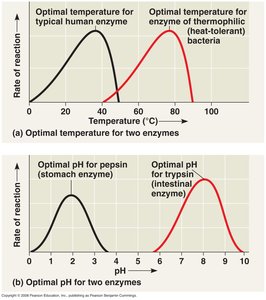

Cofactors and Enzyme Activation
- Apoenzyme: Protein portion of an enzyme. - Cofactor: Nonprotein helper; can be inorganic (metal ions) or organic (coenzymes, e.g., vitamins). - Holoenzyme: Apoenzyme plus cofactor; the whole, active enzyme. 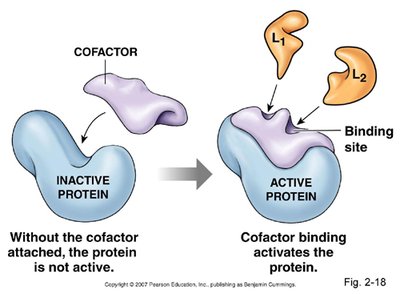
Enzyme Regulation: Inhibitors and Allosteric Control
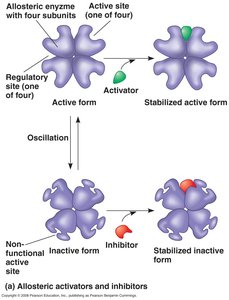
Enzyme activity can be regulated by inhibitors and allosteric mechanisms. - Competitive Inhibitors: Bind to the active site, blocking substrate access. - Noncompetitive Inhibitors: Bind elsewhere, changing enzyme shape and reducing activity. 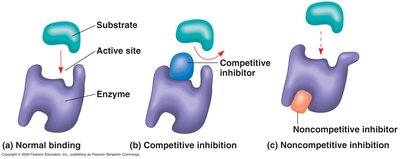 - Allosteric Regulation: Enzymes have regulatory sites; binding of activators or inhibitors can stabilize active or inactive forms. - Cooperativity: Binding of a substrate to one active site amplifies activity at other sites.
Feedback Inhibition
- Feedback Inhibition: The end product of a metabolic pathway inhibits an enzyme early in the pathway, preventing overproduction.
Summary Table: Catabolic vs. Anabolic Pathways
Pathway | Purpose | Energetics | Mechanism | Example |
|---|---|---|---|---|
Catabolic | Breakdown of molecules | Exergonic (energy released) | Oxidation reactions | Glycolysis |
Anabolic | Synthesis of molecules | Endergonic (energy required) | Reduction reactions | Gluconeogenesis |
Summary Table: Enzyme Regulation
Regulation Type | Mechanism | Effect |
|---|---|---|
Competitive Inhibition | Inhibitor binds active site | Blocks substrate |
Noncompetitive Inhibition | Inhibitor binds elsewhere | Changes enzyme shape |
Allosteric Regulation | Activator/inhibitor binds regulatory site | Stabilizes active/inactive form |
Feedback Inhibition | Product inhibits pathway | Prevents overproduction |
Additional info: Enzyme regulation is essential for maintaining homeostasis and efficient cellular function. Feedback inhibition is a common mechanism in biosynthetic pathways to conserve resources. ----------------------------------------
