 Indietro
Animal Behavior: Altruism, Learning, and Communication
Guida di studio - Note intelligenti
 Appunti personalizzati basati sui tuoi materiali, ampliati con definizioni chiave, esempi e contesto.
Animal Behavior
Altruism and Evolutionary Explanations
Altruism in animals refers to behaviors that decrease an individual's fitness while increasing the fitness of others. This phenomenon is explained through several evolutionary mechanisms.
Kin Selection: Behaviors that increase the reproductive success of relatives, even at a cost to the performer. The concept of inclusive fitness combines direct fitness (personal reproduction) and indirect fitness (helping relatives reproduce). Hamilton's Rule () predicts when altruism is favored, where r is genetic relatedness, B is the benefit to the recipient, and C is the cost to the actor.
Behavioral Manipulation: Parasites may manipulate host behavior to benefit their own fitness.
Mutualism: Cooperation between individuals for mutual benefit, such as lionesses hunting in packs.
Reciprocity: Unrelated organisms help each other in turn, with the expectation of future reciprocation. The Prisoner's Dilemma models this interaction.
Kin Selection in Eusocial Insects
Eusocial insects, such as honeybees, exhibit complex social structures and high relatedness among colony members due to haplodiploidy.
Haplodiploidy: Males are haploid, females are diploid. Sisters share 75% of their genes ().
Caste System: Division of labor with queens, workers, and drones.
Policing: Workers care for queen's eggs and may eat eggs laid by other workers.
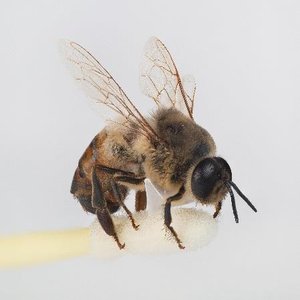
Eusociality in Mammals
The naked mole rat (Heterocephalus glaber) is a rare example of mammalian eusociality, with a single reproductive queen and suppressed reproduction among workers.
Reciprocity
Reciprocity involves unrelated individuals helping each other, often modeled by the Prisoner's Dilemma. Examples include monkeys grooming each other and guppies taking turns examining predators.
Learning and Communication
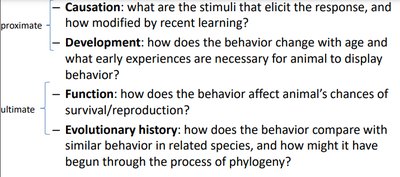
Ethology: Four Kinds of Explanation
Ethology seeks to explain animal behavior using four approaches:
Causation: Stimuli and learning that elicit responses.
Development: Changes in behavior with age and experience.
Function: Effects on survival and reproduction.
Evolutionary History: Comparison with related species and phylogenetic origins.
Innate Behaviors
Innate behaviors are genetically programmed and include reflexes, kinesis, taxis, fixed action patterns, supernormal stimuli, migration, and foraging.
Reflex: Rapid, involuntary response to stimulus.
Kinesis: Undirected movement in response to stimulus.
Taxis: Directed movement toward or away from stimulus.
Fixed Action Patterns: Instinctive responses triggered by specific stimuli.
Supernormal Stimuli: Exaggerated stimuli elicit stronger responses.
Migration: Seasonal movement for resource availability.
Foraging: Searching for and exploiting food resources.
Learning
Learning modifies behavior based on experience and is classified as non-associative or associative.
Non-Associative Learning
Habituation: Decreased response to repeated, non-threatening stimulus. Adaptive for energy conservation, but may be maladaptive if danger arises.
Sensitization: Increased response to repeated stimulus, especially if it is threatening. Adaptive for rapid reaction, but may cause overreaction.
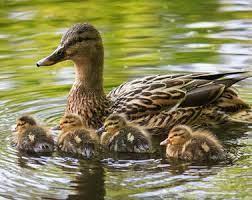
Imprinting: Rapid learning independent of species, such as ducklings bonding with the first adult seen.
Associative Learning
Classical Conditioning: Pairing a natural stimulus with a neutral signal to elicit a conditioned response. Example: nausea after eating a food associated with illness.
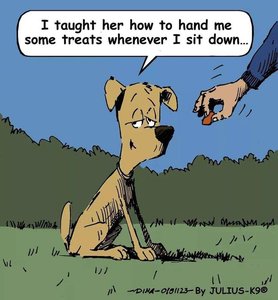
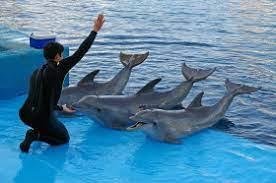
Operant Conditioning: Behavior is modified by consequences (reinforcement or punishment).
Positive Reinforcement: Adding a reward increases behavior frequency.
Negative Reinforcement: Removing an unpleasant stimulus increases behavior frequency.
Positive Punishment: Adding an unpleasant stimulus decreases behavior frequency.
Negative Punishment: Removing a pleasant stimulus decreases behavior frequency.
Extinction: Lack of consequence leads to decreased behavior.
Cognitive Learning
Cognitive learning involves manipulation of information using the mind, such as problem-solving and insight. 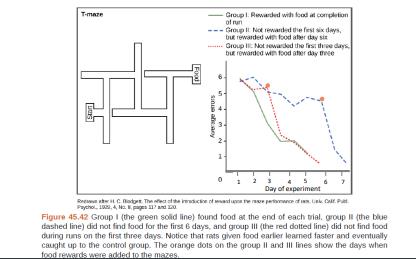
Communication
Communication is the exchange of information between individuals and can evolve into complex systems.
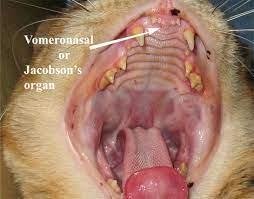
Olfactory: Use of pheromones for alarm, territory marking, and mating.
Visual: Bioluminescence, gestures, and facial expressions.
Acoustic: Alarm calls, territorial calls, mating calls, and human speech.
Mechanosensory: Honeybee waggle dance, fish lateral line system.
Olfactory Communication
Pheromones are chemical signals used for communication.
Alarm-signal: Highly volatile and diffusible.
Territory-marking/food-trail: Low volatility and diffusibility.
Sex pheromones: Low volatility, high diffusibility.
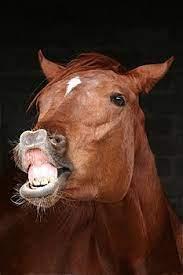
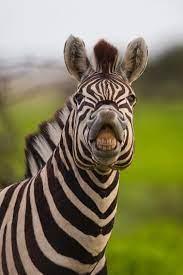
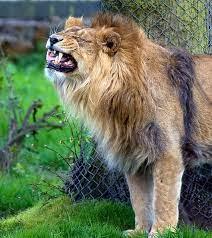
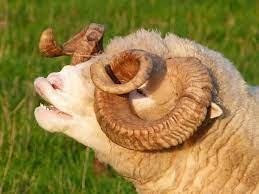
Visual Communication
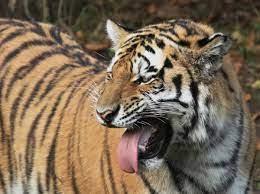
Visual signals include bioluminescence, gestures, and facial expressions.
Bioluminescence: Light production via luciferin and luciferase.
Gestures: Display of body parts or movements.
Facial Expression: Important in mammals for conveying emotion and intent.
Acoustic Communication
Acoustic signals are used for alarm, territory, mating, and complex information transfer.
Alarm Calls: Pure tone, hard to localize.
Territorial Calls: Broad frequency, easy to localize.
Mating Calls: Broad frequency, easy to localize.
Human Speech: Most complex form of acoustic communication.
Mechanosensory Communication
Mechanosensory signals include the honeybee waggle dance and fish lateral line system.
Summary Table: Types of Learning
Type | Definition | Example |
|---|---|---|
Habituation | Decreased response to repeated stimulus | Rat startle response |
Sensitization | Increased response to repeated stimulus | Allergic reaction |
Imprinting | Rapid bonding to first seen adult | Ducklings following mother |
Classical Conditioning | Pairing neutral signal with natural response | Nausea after food |
Operant Conditioning | Behavior modified by consequences | Dog training |
Cognitive Learning | Problem-solving, insight | T-maze experiment |
Summary Table: Communication Types
Type | Signal | Example |
|---|---|---|
Olfactory | Pheromones | Alarm, territory, sex |
Visual | Gestures, bioluminescence | Fireflies, facial expressions |
Acoustic | Calls, songs | Alarm calls, mating calls |
Mechanosensory | Touch, vibration | Honeybee dance, fish lateral line |
Key Equations
Hamilton's Rule:
Examples and Applications
Helping at the nest: Birds assist parents in raising siblings, increasing inclusive fitness.
Honeybee colony: Caste system and haplodiploidy increase relatedness and cooperation.
Dog training: Operant conditioning used to teach behaviors.
Dolphin training: Operant conditioning applied in marine mammals.
Rat maze learning: Cognitive learning demonstrated in laboratory experiments.
Additional info: Academic context was added to clarify definitions, examples, and mechanisms of animal behavior, learning, and communication.
