 Indietro
Animal Behavior: Altruism, Learning, and Communication
Guida di studio - Note intelligenti
 Appunti personalizzati basati sui tuoi materiali, ampliati con definizioni chiave, esempi e contesto.
Animal Behavior
Altruism and Evolutionary Mechanisms
Altruism in animals refers to behaviors that decrease an individual's fitness while increasing the fitness of others. This phenomenon is explained through several evolutionary mechanisms:
Kin Selection: Behaviors that increase the reproductive success of relatives, even at a cost to the performer. The concept of inclusive fitness combines direct fitness (personal reproduction) and indirect fitness (helping relatives reproduce). Hamilton's Rule () predicts when altruism is favored, where r is genetic relatedness, B is the benefit to the recipient, and C is the cost to the actor.
Behavioral Manipulation: Parasites may manipulate host behavior to benefit their own fitness.
Mutualism: Cooperation between individuals for mutual benefit, such as lionesses hunting in packs.
Reciprocity: Unrelated organisms help each other in turn, with the expectation of future reciprocation. The Prisoner's Dilemma models this interaction.
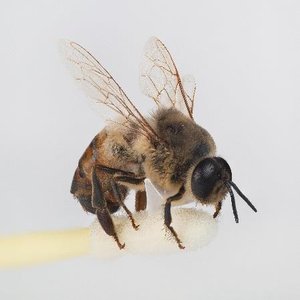
Kin Selection in Eusocial Insects
Eusocial insects, such as honeybees, exhibit complex social structures and high relatedness among siblings due to haplodiploidy. Female workers are more closely related to their sisters () than to their own offspring (), promoting altruistic behaviors.
Caste System: Division of labor with a single fertile queen, sterile workers, and reproductive males.
Policing: Workers care for queen's eggs and remove eggs laid by other workers.
Eusociality in Mammals
The naked mole rat (Heterocephalus glaber) is a rare example of mammalian eusociality, with a single reproductive queen and non-reproductive workers.
Reciprocity
Reciprocal altruism occurs when unrelated individuals help each other, expecting future benefits. Examples include monkeys grooming each other and guppies taking turns examining predators.
Learning and Communication
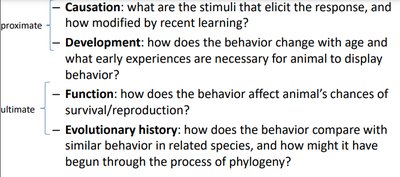
Ethology: Four Kinds of Explanation
Ethology seeks to explain animal behavior using four approaches:
Causation: What stimuli elicit the response?
Development: How does behavior change with age and experience?
Function: How does behavior affect survival and reproduction?
Evolutionary History: How does behavior compare with related species and phylogeny?
Innate Behaviors
Innate behaviors are genetically programmed and occur without prior learning:
Reflex: Rapid, involuntary response to stimulus.
Kinesis & Taxis: Movement in response to stimulus (kinesis = undirected, taxis = directed).
Fixed Action Patterns: Instinctive responses triggered by specific stimuli.
Supernormal Stimuli: Exaggerated stimuli elicit stronger responses.
Migration: Seasonal movement in response to resource availability.
Foraging: Searching for and exploiting food resources.
Learning
Learning modifies behavior based on experience and can be classified as non-associative or associative:
Non-Associative Learning
Habituation: Decreased response to repeated, non-threatening stimulus. Example: rat startle response.
Sensitization: Increased response to repeated stimulus with positive or negative result. Example: allergic reaction.
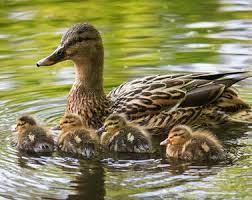
Imprinting: Rapid learning independent of species, such as ducklings bonding with the first adult seen.
Associative Learning
Classical Conditioning: Pairing a natural stimulus/response with a previously neutral signal. Example: food aversion after illness.
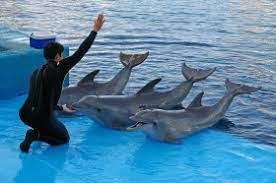
Operant Conditioning: Behavior modified by consequences (reinforcement or punishment). Types include positive/negative reinforcement and positive/negative punishment.
Operant Conditioning Table
Type | Stimulus | Effect on Behavior |
|---|---|---|
Positive Reinforcement | Add pleasant | Increase |
Negative Reinforcement | Remove unpleasant | Increase |
Positive Punishment | Add unpleasant | Decrease |
Negative Punishment | Remove pleasant | Decrease |
Cognitive Learning
Cognitive learning involves manipulation of information using the mind, such as problem-solving and insight.
Communication
Modes of Animal Communication
Animals communicate using various modalities, each with specific benefits and drawbacks:
Olfactory: Use of pheromones for alarm, territory marking, and mating.
Visual: Gestures, facial expressions, bioluminescence.
Acoustic: Alarm calls, territorial calls, mating calls, and complex information transfer.
Mechanosensory: Physical signals such as honeybee waggle-dance and fish lateral line system.
Olfactory Communication
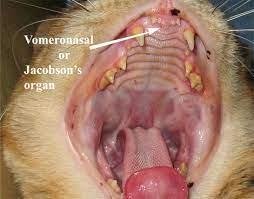
Pheromones are chemical signals used for communication within species. Types include alarm signals, territory marking, and sex pheromones. The Flehmen response facilitates pheromone transfer to the vomeronasal organ.
Visual Communication
Visual signals include bioluminescence, gestures, and facial expressions. These are important for species recognition, mating, and social interaction.
Acoustic Communication
Acoustic signals are used for alarm, territory, mating, and complex information transfer. Alarm calls are pure tones, while territorial and mating calls cover broad frequency ranges.
Mechanosensory Communication
Mechanosensory signals involve touch or movement, such as the honeybee waggle-dance, which communicates the location of food sources.
Summary Table: Modes of Communication
Mode | Example | Benefit | Drawback |
|---|---|---|---|
Olfactory | Pheromones | Long-lasting, species-specific | Slow, limited range |
Visual | Gestures, bioluminescence | Immediate, clear | Requires visibility |
Acoustic | Alarm calls | Travels far, rapid | May attract predators |
Mechanosensory | Waggle-dance | Precise, direct | Requires proximity |
Additional info:
Hamilton's Rule equation: (where is relatedness, is benefit, is cost).
Imprinting increases survival by ensuring young follow and learn from adults.
Operant conditioning is widely used in animal training and can be applied to humans for skill acquisition.
