 Indietro
Animal Behavior: Mechanisms, Evolution, and Ecological Context
Guida di studio - Note intelligenti
 Appunti personalizzati basati sui tuoi materiali, ampliati con definizioni chiave, esempi e contesto.
Animal Behavior
Introduction to Animal Behavior
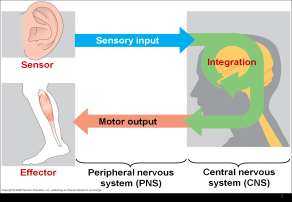
Animal behavior is the study of how animals interact with each other and their environment. It encompasses the actions carried out by muscles under the control of the nervous system, and these behaviors are subject to natural selection. Understanding animal behavior involves exploring how and why animals act in certain ways, including the mechanisms, development, evolutionary history, and adaptive value of behaviors.
Behavior: An action carried out by muscles under the control of the nervous system.
Behaviors and anatomical structures related to their performance are subject to natural selection.
Examples include birds singing, spiders building webs, and crabs performing courtship displays.
Key Questions in Animal Behavior (Tinbergen's Four Questions)
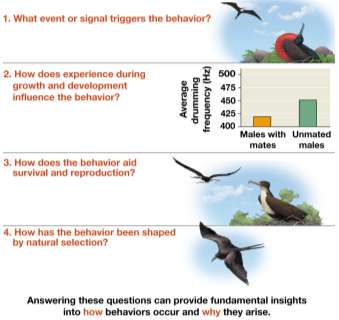
Niko Tinbergen, a pioneering ethologist, established a framework for understanding animal behavior by posing four fundamental questions:
1. What stimulus triggers the behavior? (Mechanism)
2. How does experience during growth and development influence the behavior? (Development)
3. How does the behavior aid survival and reproduction? (Function)
4. What is the behavior’s evolutionary history? (Evolution)
These questions are divided into:
Proximate (HOW) questions: Mechanisms and development of behavior.
Ultimate (WHY) questions: Adaptive value and evolutionary history.
Innate Behavior
Definition and Examples
Innate behaviors are genetically programmed and performed in the same way by all individuals of a species, regardless of experience. These behaviors are developmentally fixed and do not vary with learning.
Fixed Action Pattern (FAP): A sequence of unlearned acts directly linked to a simple stimulus (sign stimulus).
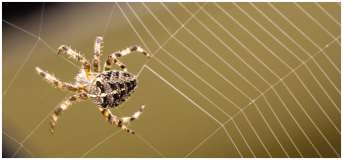
Example: Web building in spiders is an innate behavior.
Fixed Action Patterns in Stickleback Fish
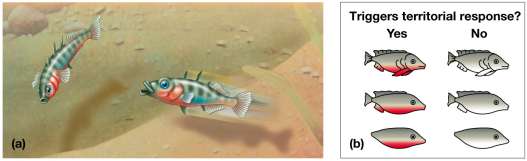
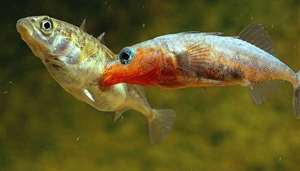
Male stickleback fish exhibit a fixed action pattern of aggressive behavior in response to the red underside of another male (the sign stimulus). This response is innate and is triggered even by unrealistic models with red coloration.
Behavioral Rhythms
Some innate behaviors are tied to regular cycles, such as migration or courtship displays linked to lunar or seasonal cycles. Animals use environmental cues like the sun, stars, or Earth's magnetic field for orientation.
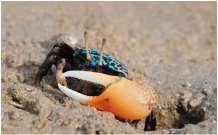
Example: Male fiddler crabs perform courtship displays during new or full moons when tidal movements are greatest.
Learning and Experience
Learning and Its Mechanisms
Learning is the modification of behavior based on specific experiences. The capacity for learning depends on the genetically coded development and organization of the nervous system. Both genetic predisposition (nature) and environmental influence (nurture) shape learning and behavior.
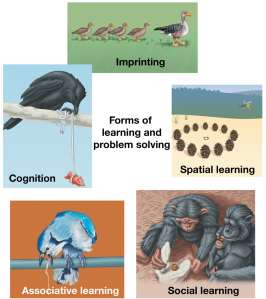
Imprinting: A form of learning occurring during a sensitive period, where young animals form attachments and learn key behaviors.
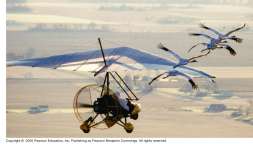
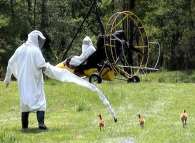
Example: Migratory birds imprint on objects or individuals they first encounter, which can be used in conservation efforts.
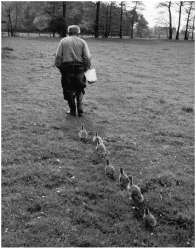
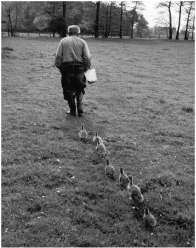
Imprinting in Waterfowl
Many waterfowl species imprint on the first moving object they see after hatching, which is usually their mother but can be a human or another animal if exposed first.
Spatial Learning and Cognitive Maps
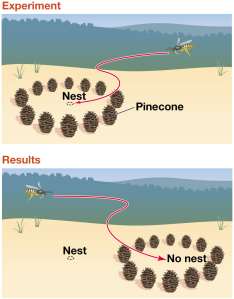
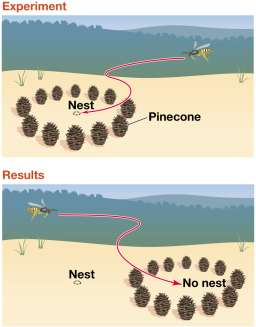
Spatial learning involves establishing memories that reflect the spatial structure of the environment. Some animals form cognitive maps—internal representations of spatial relationships between objects in their surroundings.
Example: Wasps use landmarks to locate their nests.
Associative Learning
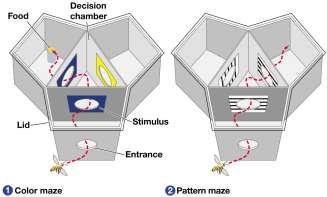
Associative learning is the ability to associate one environmental feature with another. It includes:
Classical conditioning: Associating a neutral stimulus with a significant one (e.g., Pavlov’s dogs).
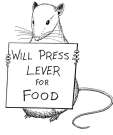
Operant conditioning: Associating a behavior with a reward or punishment (e.g., rats pressing a lever for food).
Associative Learning in Nature
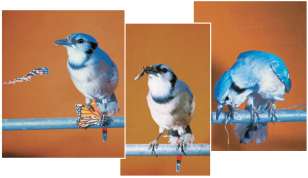
Animals can learn to avoid certain foods or predators based on negative experiences. For example, blue jays avoid eating monarch butterflies after a distasteful experience.
Cognition and Problem Solving
Cognition involves awareness, reasoning, recollection, and judgment. It is the most complex form of learning and includes problem-solving abilities, such as devising methods to overcome obstacles.
Examples: Primates, marine mammals, corvids (crows and ravens), and even some insects demonstrate cognitive abilities.
Development of Learned Behaviors
Some learned behaviors develop gradually or in distinct stages. For example, songbirds memorize their species’ song during a sensitive period and later practice until the song is perfected.
Social Learning and Culture
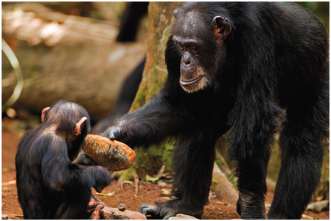
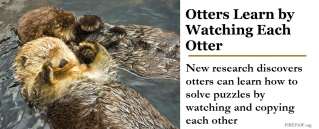
Social learning occurs when animals observe and interpret the behaviors of others. Culture is a system of information transfer through social learning or teaching that influences the behavior of individuals in a population.
Example: Young chimpanzees learn to crack nuts by watching experienced individuals.
Communication in Animals
Modes of Communication
Communication is the transmission and reception of signals between animals. Signals can be visual, chemical, tactile, or auditory, and often occur in stimulus-response chains.
Example: Male fiddler crabs wave their large claw to attract females.
Honeybee Communication
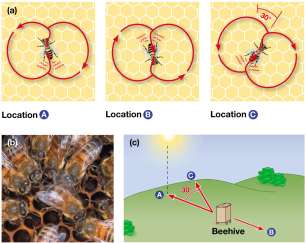
Honeybees use symbolic communication, such as the waggle dance, to convey information about the direction and distance of food sources to other members of the hive.
Pheromone Communication
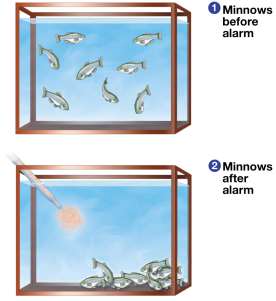
Many animals communicate through chemical signals called pheromones, which can trigger specific behavioral responses even at very low concentrations. For example, injured minnows release alarm substances that cause a fright response in nearby fish.
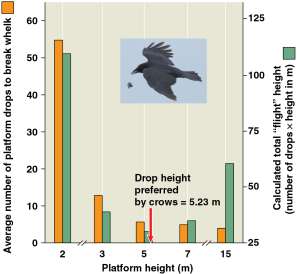
Selection on Animal Behavior
Foraging Behavior
Foraging, or food-obtaining behavior, involves recognizing, searching for, capturing, and eating food. The optimal foraging model predicts that natural selection favors behaviors that maximize benefits (nutrition) and minimize costs (energy expenditure, predation risk).
Costs: Energy, risk of predation
Benefits: Nutrition for self and offspring
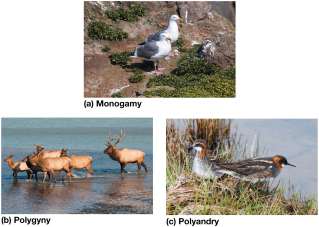
Mating Behavior and Mate Choice
Mating behavior and mate choice are crucial for reproductive success. Mating systems include monogamy, polygyny, and polyandry, each with different patterns of parental care and sexual selection.
Monogamous pairs: Similar appearance, both parents care for offspring
Polygamous pairs: One sex is more competitive or showy
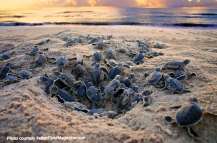
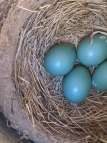
Paternal Care and Certainty
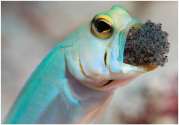
Paternal care is influenced by the certainty of paternity. In species with internal fertilization, paternal certainty is lower, while in external fertilization, it is higher, leading to different parental strategies.
Sexual Selection and Competition
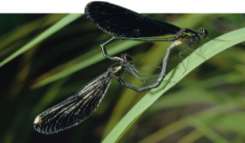
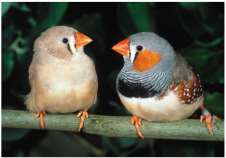
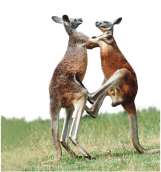
Sexual selection leads to sexual dimorphism and can occur through female choice (intersexual selection) or male-male competition (intrasexual selection). Female choice often drives the evolution of elaborate male traits.
Game Theory and Behavioral Strategies
Game Theory in Animal Behavior
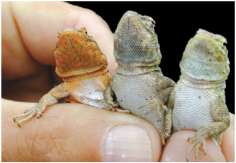
Game theory evaluates behavioral strategies in situations where the outcome depends on the strategies of all individuals involved. For example, side-blotched lizards exhibit three color morphs, each with a different mating strategy, forming a rock-paper-scissors dynamic.
Altruism and Kin Selection
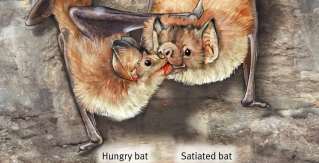
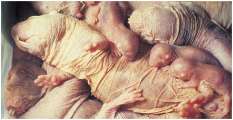
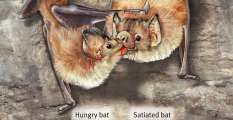
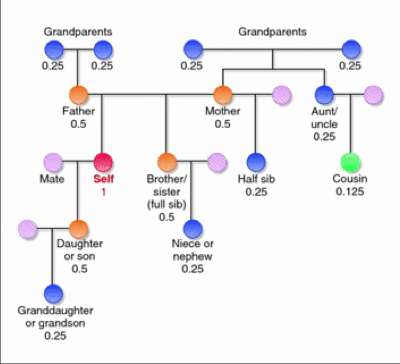
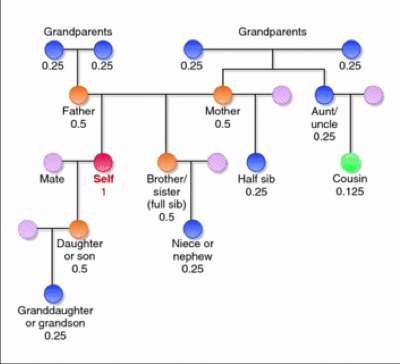
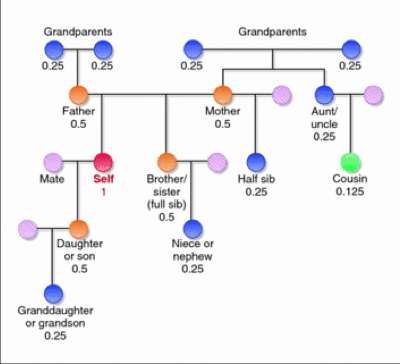
Altruism is behavior that reduces an individual's fitness but increases the fitness of others. Kin selection explains how altruism can evolve if it increases the reproductive success of relatives. The coefficient of relatedness (r) quantifies the probability of shared genes.
Hamilton's Rule: Natural selection favors altruism when
r = 0.5 for siblings, 0.25 for aunts/uncles and nieces/nephews, 0.125 for cousins
Kin Selection and Hamilton's Rule
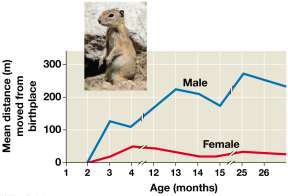
Kin selection favors altruistic behavior by increasing the reproductive success of relatives. The effect decreases as relatedness decreases. Hamilton's Rule is expressed as:
Where B = benefit to recipient, C = cost to altruist, r = coefficient of relatedness
Genetic Variation and the Evolution of Behavior
Genetic and Environmental Influences
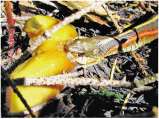
Behavioral variation between populations may reflect genetic differences, environmental influences, or both. For example, coastal and inland garter snakes differ in their diet preferences due to both environmental availability and genetic predisposition.
Genetic Basis of Behavior in Voles
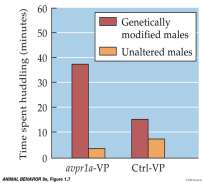
Pair bonding in voles is influenced by the presence of vasopressin receptors. Prairie voles are monogamous due to vasopressin release during mating, while meadow voles are not. Inserting the prairie vole receptor gene into meadow voles induces pair bonding behavior.
Summary
Animal behavior is shaped by genetic, developmental, ecological, and evolutionary factors.
Both innate and learned behaviors contribute to survival and reproductive success.
Communication, social learning, and culture play significant roles in animal societies.
Natural selection, sexual selection, and kin selection drive the evolution of behavioral strategies.
