 Indietro
Animal Diversity and Body Plans: Study Notes for General Biology
Guida di studio - Note intelligenti
 Appunti personalizzati basati sui tuoi materiali, ampliati con definizioni chiave, esempi e contesto.
Animal Diversity
What is an Animal?
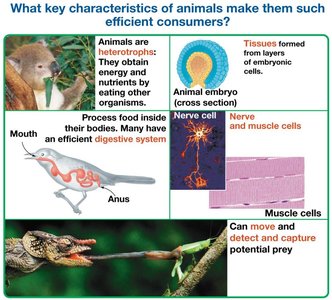
Animals are a diverse group of multicellular eukaryotes distinguished by their unique characteristics and evolutionary history. They are heterotrophic organisms, meaning they obtain energy and nutrients by ingesting other organisms. Animal cells lack cell walls and are organized into specialized tissues derived from embryonic germ layers.
Multicellular eukaryotes: Animals are composed of multiple cells with a nucleus and organelles.
Heterotrophs: Animals ingest food and digest it internally using enzymes.
Development: Embryogenesis involves fertilization, cleavage, blastula formation, and gastrulation.
Specialized tissues: Germ layers form tissues such as muscle and nerve cells.
Evolutionary Origins and Relationships
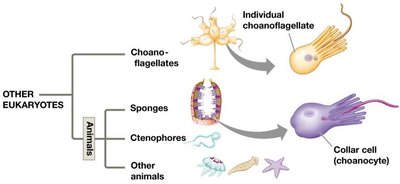
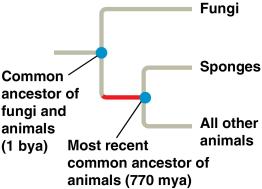
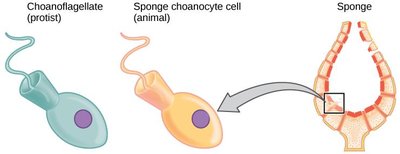
Animals belong to the domain Eukarya and share a common ancestor with other eukaryotes. Molecular and morphological evidence suggests that protists called choanoflagellates are the closest living relatives to animals. The common ancestor of all animals lived approximately 770 million years ago.
Choanoflagellates: Single-celled or colonial protists with a flagellum and collar structure.
Animal family tree: Includes Porifera (sponges), Ctenophora, and other animal phyla.
Animal Body Plans (Bauplans)
Symmetry
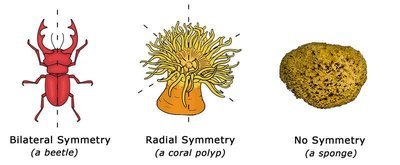
Body symmetry is a key trait used to classify animals. It reflects their lifestyle and evolutionary adaptations.
Bilateral symmetry: Body has left/right, dorsal/ventral, and anterior/posterior sides. Typical of actively moving animals.
Radial symmetry: Body arranged around a central axis. Common in sessile or drifting animals.
No symmetry: Some animals, like sponges, lack symmetry.
Animal Development: Germ Layers
During embryogenesis, animals develop distinct germ layers through gastrulation. These layers give rise to specialized tissues and organs.
Ectoderm: Outermost layer; forms skin and nervous system.
Mesoderm: Middle layer; forms muscles and, in bilaterians, other organs.
Endoderm: Innermost layer; forms digestive tract.
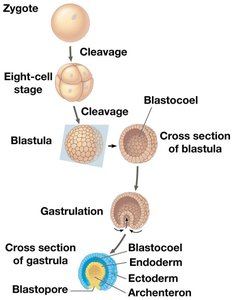
Fate of the Blastopore: Protostomes vs. Deuterostomes
The fate of the blastopore during development distinguishes two major groups of animals:
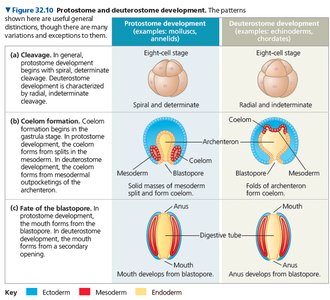
Protostomes: Blastopore becomes the mouth; spiral and determinate cleavage. Includes mollusks and annelids.
Deuterostomes: Blastopore becomes the anus; radial and indeterminate cleavage. Includes echinoderms and chordates.
Body Cavities
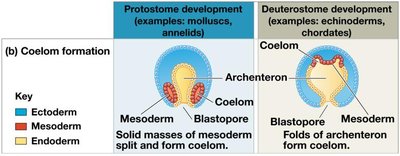
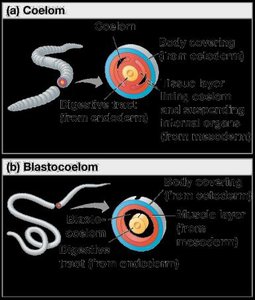
Most bilaterian animals possess a body cavity (coelom), which is a fluid- or air-filled space between the digestive tract and the body wall. The coelom cushions organs, acts as a hydrostatic skeleton, and allows organs to grow independently.
Coelomate: Body cavity completely lined by mesoderm.
Blastocoelomate: Body cavity between mesoderm and endoderm (formerly pseudocoelomate).
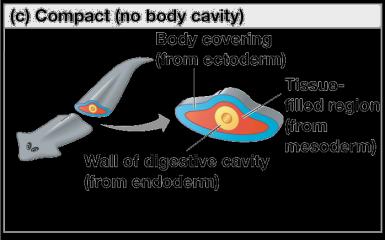
Acoelomate: No body cavity; compact body structure.
Animal Phylogeny and Major Clades
Phylogenetic Relationships
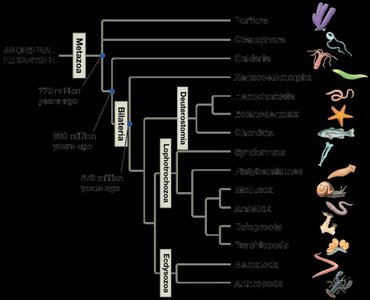
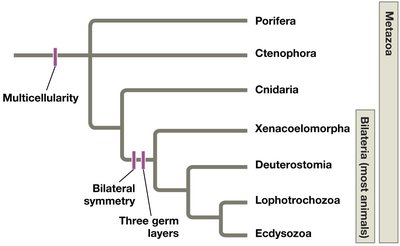
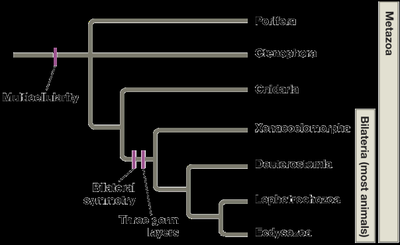
Animal phylogeny is inferred from multiple data sources, including whole genomes, morphological traits, ribosomal RNA genes, Hox genes, and protein-coding genes. Most animal phyla belong to the clade Bilateria, which is divided into three major groups: Deuterostomia, Ecdysozoa, and Lophotrochozoa.
All animals share a common ancestor.
Sponges are the sister group to all other animals.
Eumetazoa: Clade of animals with true tissues.
Bilateria: Most animal phyla; bilateral symmetry and three germ layers.
Three major clades: Deuterostomia, Ecdysozoa, Lophotrochozoa.
Invertebrate Diversity
Life Without a Backbone
Invertebrates are animals that lack a backbone and represent more than 95% of known animal species. They occupy nearly every habitat on Earth and display remarkable morphological diversity.
Major groups: Metazoa, Eumetazoa, Bilateria, Lophotrochozoa, Ecdysozoa.
Examples: Sponges, jellyfish, flatworms, mollusks, annelids, arthropods.
Phylum Porifera: Sponges
Characteristics and Synapomorphies
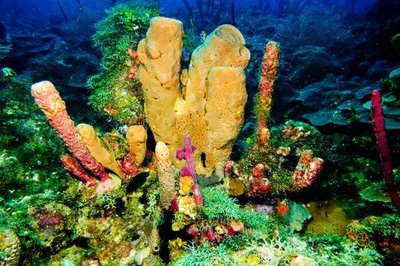
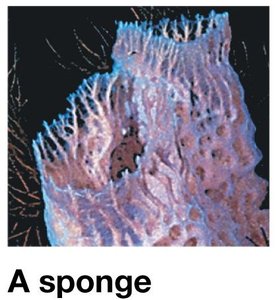
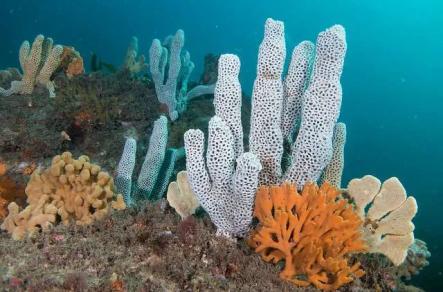
Sponges are the most ancestral animal phylum. They are sessile, aquatic, and lack true tissues. Their major synapomorphy is the presence of choanocytes, flagellated collar cells that generate water currents and ingest food.
No true tissues: Sponges are separated from all other animals by this trait.
Filter feeders: Capture food particles from water drawn through pores.
Sequential hermaphroditism: Function as one sex and then the other.
Phylum Cnidaria and Ctenophora
Cnidarians: Jellyfish, Anemones, Coral Polyps
Cnidarians are diploblastic animals with radial symmetry. Their basic body plan is a blind sac with a single mouth/anus opening and a central digestive compartment called the gastrovascular cavity.
Two major body plans: Polyp (sessile) and medusa (planktonic).
Carnivorous: Use tentacles armed with cnidocytes to capture prey.
Nematocysts: Specialized organelles that eject a stinging thread.
Ctenophores: Comb Jellies
Ctenophores are radially symmetric animals with eight "combs" of cilia for locomotion. They are often luminescent and can appear radially or bilaterally symmetric.
Bilaterians and Major Clades
Bilaterian Characteristics
Bilaterian animals have bilateral symmetry, three germ layers, and most possess a coelom and a complete digestive tract with two openings. The group includes Lophotrochozoa, Ecdysozoa, and Deuterostomia.
Lophotrochozoa
Lophotrochozoans are identified by molecular data and named for their lophophore (fan-like feeding apparatus) or trochophore larval stage. Includes flatworms, rotifers, brachiopods, mollusks, and annelids.
Ecdysozoa
Ecdysozoans are characterized by a tough external cuticle that is shed through ecdysis. Includes nematodes and arthropods.
Deuterostomia
Deuterostomes include hemichordates, echinoderms, and chordates. They may be invertebrates or vertebrates.
Summary Table: Animal Body Plans and Major Clades
Trait | Porifera | Cnidaria | Ctenophora | Bilateria |
|---|---|---|---|---|
Symmetry | None | Radial | Radial/Bilateral | Bilateral |
Germ Layers | None | Two (diploblastic) | Two (diploblastic) | Three (triploblastic) |
Body Cavity | None | None | None | Coelomate, blastocoelomate, or acoelomate |
Major Clades | Porifera | Cnidaria | Ctenophora | Lophotrochozoa, Ecdysozoa, Deuterostomia |
Additional info: Table summarizes key differences among major animal groups based on symmetry, germ layers, and body cavity.
