 Indietro
Animal Diversity, Evolution, and Major Lineages: Study Notes
Guida di studio - Note intelligenti
 Appunti personalizzati basati sui tuoi materiali, ampliati con definizioni chiave, esempi e contesto.
Animal Diversity and Evolution
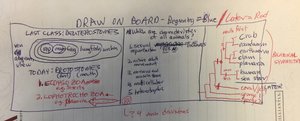
Overview of Animal Lineages
Animals are classified into major lineages based on evolutionary relationships, developmental patterns, and body symmetry. Understanding these divisions is fundamental to studying animal diversity and evolution.
Deuterostomes: Includes echinoderms (sea stars, sea urchins, sand dollars) and chordates (vertebrates, tunicates).
Protostomes: Includes arthropods, nematodes, mollusks, flatworms, segmented worms, and rotifers.
Radiata: Includes cnidarians (jellies, corals, sea anemones) and comb jellies (ctenophores).
Asymmetrical: Includes sponges (Porifera).
Symmetry Types:
Bilateral symmetry: Found in most protostomes and deuterostomes; correlates with cephalization and forward movement.
Radial symmetry: Found in cnidarians and ctenophores.
Asymmetry: Found in sponges.
Major Developmental Differences: Protostomes vs. Deuterostomes
Embryonic Development
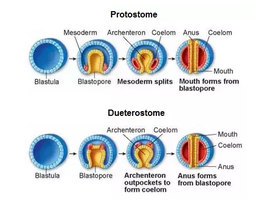
Animals are divided into protostomes and deuterostomes based on how their embryonic development proceeds, particularly the fate of the blastopore.
Protostomes: The blastopore becomes the mouth. Mesoderm splits to form the coelom.
Deuterostomes: The blastopore becomes the anus. Coelom forms from archenteron outpockets.
Key Terms:
Blastula: Early stage of embryonic development.
Coelom: Body cavity lined by mesoderm.
Archenteron: Primitive gut formed during gastrulation.
Chordata: Shared Derived Characteristics
Chordate Features
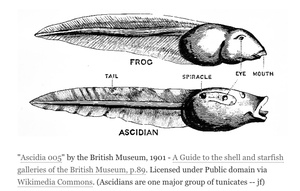
Chordates are united by four shared derived characteristics, which are present at some stage in their life cycle:
Notochord: Flexible rod providing support.
Dorsal hollow nerve cord: Develops into the central nervous system.
Pharyngeal slits: Openings in the pharynx.
Post-anal tail: Extension of the body past the anal opening.
Examples include vertebrates (e.g., frogs) and tunicates (sea squirts).
Phylogenetic Trees and Animal Relationships
Understanding Animal Phylogeny
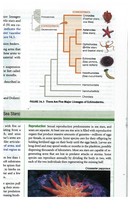
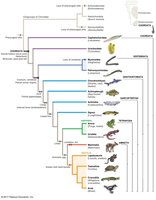
Phylogenetic trees illustrate evolutionary relationships among animal groups. Deuterostomes and protostomes are major branches, with further subdivisions based on morphological and genetic data.
Echinoderms: Sea stars, sea urchins, sand dollars.
Chordates: Vertebrates, tunicates.
Protostomes: Arthropods, nematodes, mollusks, annelids, flatworms, rotifers.
Major Protostome Clades
Ecdysozoa and Lophotrochozoa
Protostomes are divided into two main clades:
Ecdysozoa: Includes arthropods and nematodes. Characterized by molting (ecdysis) to grow.
Lophotrochozoa: Includes mollusks, annelids (segmented worms), flatworms, and rotifers. Characterized by either a lophophore feeding structure or trochophore larval stage.
Examples:
Arthropods: Insects, arachnids, crustaceans, myriapods.
Nematodes: Roundworms, including C. elegans.
Mollusks: Snails, clams, octopus.
Annelids: Earthworms, leeches.
Arthropod Diversity and Animal Diversity
Relative Diversity of Animal Groups
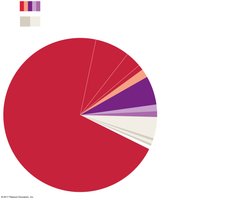
Arthropods, especially insects, represent the largest proportion of animal diversity. Chordates are much less diverse in comparison.
Arthropoda: ~75% of animal species.
Chordata: Much fewer species, but includes all vertebrates.
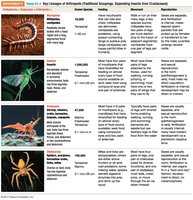
Major Groups of Arthropods:
Group | Examples | Key Features |
|---|---|---|
Insects | Butterflies, beetles, flies | Three-part body, six legs, wings |
Arachnids | Spiders, scorpions | Eight legs, no antennae |
Crustaceans | Crabs, lobsters | Variable legs, two pairs of antennae |
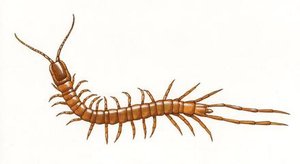
Myriapods | Centipedes, millipedes | Many body segments, many legs |
Bilateral Symmetry and Cephalization
Correlations in Bilaterians
Bilateral symmetry is associated with forward movement and the development of a head region (cephalization), which houses sensory organs and the brain.
Forward motion: Allows efficient movement and predation.
Cephalization: Concentration of sensory and neural structures at the anterior end.
Key Traits of Cnidaria and Sponges
Cnidarian Features
Cnidarians are united by the presence of specialized stinging cells called cnidocytes. Examples include jellyfish, corals, and sea anemones.
Cnidocytes: Cells used for defense and prey capture.
Radial symmetry: Body plan allows interaction with environment from all sides.
Sponges (Porifera): Lack true tissues and symmetry, but are multicellular and heterotrophic.
Misconceptions About Animal Lineages
"Lower" Animals and Sister Groups
Organisms like sponges and cnidarians are sometimes incorrectly considered "lower animals." This is misleading because all extant animal lineages are equally evolved and adapted to their environments.
Comb jellies (Ctenophora): Recent evidence suggests they may be the sister group to all other animals, challenging previous views.
Sponges: Previously thought to be the most basal animal lineage.
Summary Table: Major Animal Groups and Their Characteristics
Group | Symmetry | Key Traits | Examples |
|---|---|---|---|
Deuterostomes | Bilateral (Chordata), Radial (Echinodermata) | Blastopore forms anus | Humans, sea stars |
Protostomes | Bilateral | Blastopore forms mouth | Earthworm, beetle |
Radiata | Radial | Cnidocytes, simple tissues | Coral, jellyfish |
Asymmetrical | None | No true tissues | Sponges |
Quiz Example: Echinoderm Identification
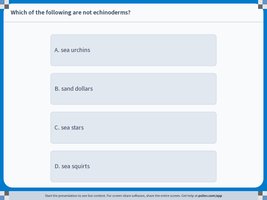
Which of the following are not echinoderms?
A. sea urchins
B. sand dollars
C. sea stars
D. sea squirts (Correct answer: sea squirts are chordates, not echinoderms)
Conclusion
Animal diversity is structured by evolutionary relationships, developmental patterns, and body symmetry. Understanding these concepts is essential for studying biology at the college level.
