 Indietro
Animal Diversity I: Major Invertebrate Phyla
Guida di studio - Note intelligenti
 Appunti personalizzati basati sui tuoi materiali, ampliati con definizioni chiave, esempi e contesto.
Animal Diversity I
Introduction to Major Invertebrate Phyla
This section provides an overview of several key invertebrate phyla, focusing on their structural features, classification, and ecological roles. Understanding these groups is fundamental to the study of animal diversity in General Biology.
Phylum Porifera: Sponges
General Characteristics
Sponges are simple, mostly marine animals that lack true tissues and organs. They are important for filtering water and providing habitat in aquatic ecosystems.
No true tissues: Sponges are multicellular but do not have organized tissues.
Calcium carbonate skeletons: Many sponges have rough skeletons made of calcium carbonate or silica.
Filter feeders: Sponges filter food and oxygen from water using specialized cells.
Several cell types: Including choanocytes and amoebocytes.
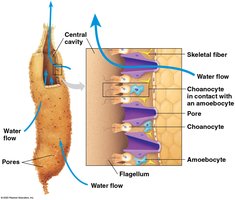
Cell Types in Sponges
Sponges rely on two main cell types for their feeding and internal transport.
Choanocytes: Stationary cells with a flagellum and a collar of cilia. The flagella create water currents, and the cilia trap food particles.
Amoebocytes: Motile cells that ingest and digest food particles, distributing nutrients throughout the sponge.
Examples of Sponges
Purple tube sponge: A common marine sponge with tubular structure.
Azure vase sponge: Vase-shaped, often brightly colored.
Natural sponges: Used commercially for cleaning and bathing.
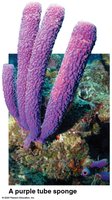
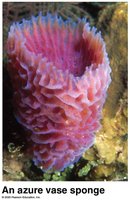
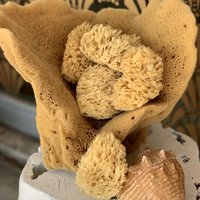
Phylum Cnidaria
General Characteristics
Cnidarians are mostly marine animals, including jellyfish, hydras, corals, and sea anemones. They are characterized by radial symmetry and specialized stinging cells.
Cnidocytes (nematocysts): Specialized stinging cells used for defense and prey capture.
Two tissue layers: Epidermis and gastrodermis, separated by a jelly-like mesoglea.
Blind digestive system: Gastrovascular cavity with a single opening.
Radial symmetry: Body parts arranged around a central axis.
Neural net: Simple nervous system without a brain.
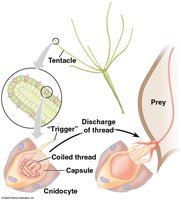
Body Forms: Polyps and Medusas
Cnidarians exhibit two main body forms: polyps (sessile) and medusas (motile).
Polyps: Cylindrical, usually attached to a substrate.
Medusas: Bell-shaped, free-swimming.
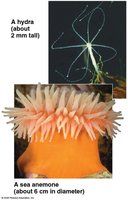
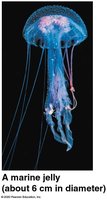
Colonial Cnidarians and Coral Reefs
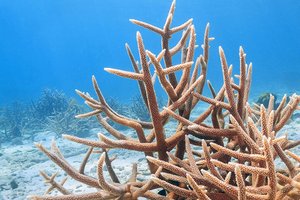
Some cnidarians, such as corals, form colonies of polyps that build extensive reef structures.
Corals: Colonial polyps that secrete calcium carbonate skeletons, forming reefs.
Phylum Platyhelminthes: Flatworms
General Characteristics
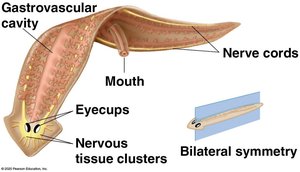
Flatworms are simple bilaterally symmetrical animals found in marine, freshwater, terrestrial, and parasitic environments.
Three tissue layers: Ectoderm, mesoderm, and endoderm.
No body cavity (acoelomate): Lack a true coelom.
No circulatory system: Rely on diffusion for transport.
Digestive tract: Blind or absent, especially in parasitic forms.
Bilateral symmetry: Distinct head and tail regions.
Types of Flatworms
Freeliving: Example: Planaria, known for regeneration.
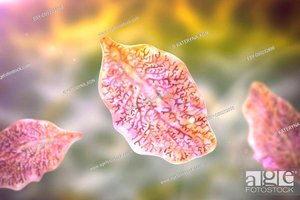
Flukes: Example: Liver fluke, parasitic with complex life cycles.
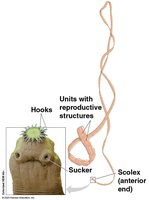
Tapeworms: Parasitic, segmented bodies, absorb nutrients from host.
Phylum Annelida: Segmented Worms
General Characteristics
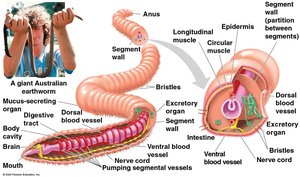
Annelids are segmented worms with a true coelom, bilateral symmetry, and a closed circulatory system.
Segmentation: Body divided into repeated segments, each with its own coelom.
Complete digestive system: Mouth to anus.
Closed circulatory system: Blood contained within vessels.
Types of Annelids
Polychaetes: Mostly marine, segments have appendages for movement, feeding, and gas exchange.
Oligochaetes: Mostly freshwater and terrestrial, includes earthworms, few bristles, no appendages.
Leeches: External parasites, segments only visible externally.
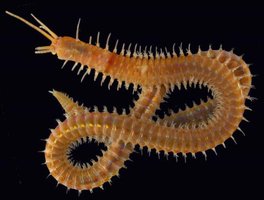
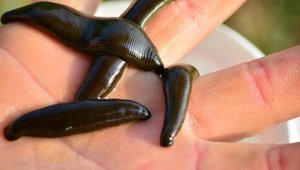
Phylum Mollusca
General Characteristics
Molluscs are soft-bodied animals, many with shells, and are highly diverse in form and function.
Visceral mass: Contains internal organs.
Mantle: Fold of tissue that secretes the shell.
Radula: Scraping mouthpart used for feeding.
Bilateral symmetry: Some with torsion (twisting of body).
Complete digestive tract: Mouth to anus.
Open circulatory system: Blood not always contained within vessels.
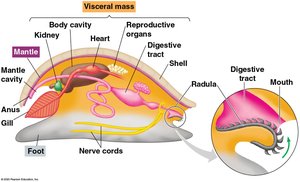
Types of Molluscs
Gastropods: Snails, slugs, sea slugs; many with twisted shells, some have lost shells.
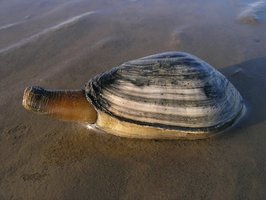
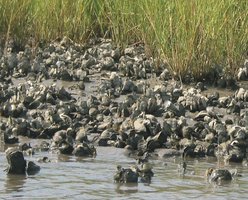
Bivalves: Two shells (valves), mostly sedentary, includes clams, oysters, and mussels.
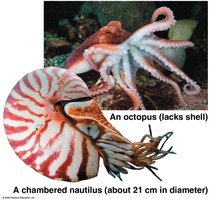
Cephalopods: Often lack external shell, have tentacles, predatory, highly developed eyes; includes octopus and nautilus.
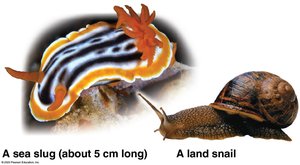
Classification of Major Animal Phyla
Phylogenetic Relationships
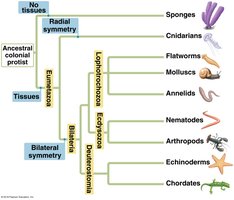
The evolutionary relationships among animal phyla are depicted in a phylogenetic tree, showing the development of tissues, symmetry, and body cavities.
No tissues: Sponges are the only phylum without true tissues.
Radial symmetry: Cnidarians exhibit radial symmetry.
Bilateral symmetry: Most other phyla, including flatworms, annelids, molluscs, and others, exhibit bilateral symmetry.
Phylum | Tissues | Symmetry | Body Cavity |
|---|---|---|---|
Porifera | No | None | None |
Cnidaria | Yes | Radial | None |
Platyhelminthes | Yes | Bilateral | Acoelomate |
Annelida | Yes | Bilateral | Coelomate |
Mollusca | Yes | Bilateral | Coelomate |
Summary
This guide covers the structural and functional diversity of major invertebrate phyla, including Porifera, Cnidaria, Platyhelminthes, Annelida, and Mollusca. Understanding these groups is essential for grasping the evolutionary and ecological complexity of the animal kingdom.
