 Indietro
Animal Diversity II: Chordates, Vertebrates, and the Evolution of Major Animal Groups
Guida di studio - Note intelligenti
 Appunti personalizzati basati sui tuoi materiali, ampliati con definizioni chiave, esempi e contesto.
Animal Diversity II: Chordates and Vertebrates
Major Changes in Vertebrate Evolution
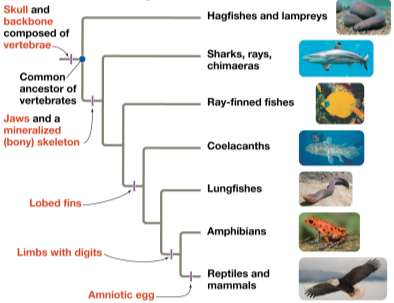
Vertebrates have undergone significant evolutionary changes, resulting in the diversity of modern animals. Key innovations include the development of vertebrae, jaws, mineralized skeletons, lobed fins, limbs with digits, and the amniotic egg. These adaptations allowed vertebrates to exploit new ecological niches and transition from aquatic to terrestrial environments.
Vertebrae: Segmented backbone providing structural support and protection for the nerve cord.
Jaws: Enabled more efficient predation and feeding strategies.
Mineralized Skeleton: Provided greater support and protection.
Lobed Fins and Limbs with Digits: Allowed movement onto land.
Amniotic Egg: Enabled reproduction away from water.
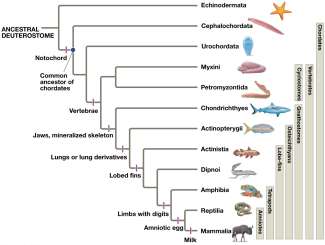
Phylum Chordata and Subphylum Vertebrata
Chordates are bilaterian animals that include all vertebrates and two groups of invertebrates: urochordates and cephalochordates. One lineage of vertebrates, the lobe-finned fishes, colonized land about 365 million years ago, giving rise to modern amphibians, reptiles (including birds), and mammals.
Chordate Synapomorphies: All chordates share four key traits, at least during embryonic development:
Notochord
Dorsal hollow nerve cord
Pharyngeal gill slits
Post-anal tail
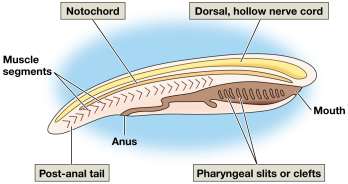
Chordate Synapomorphies
Notochord: A flexible rod providing skeletal support, which becomes the vertebral column in vertebrates.
Dorsal Hollow Nerve Cord: Develops into the central nervous system (brain and spinal cord).
Pharyngeal Slits: Grooves in the pharynx that function in filter-feeding, gas exchange, or develop into parts of the ear, head, and neck in tetrapods.
Muscular, Post-Anal Tail: Tail posterior to the anus, containing skeletal elements and muscles, often reduced in adults.
Chordate Taxonomy and Major Groups
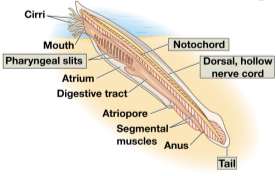
Subphylum Cephalochordata: Lancelets
Lancelets are marine suspension feeders that retain all chordate characteristics as adults. They are named for their blade-like shape and serve as a model for the ancestral chordate body plan.
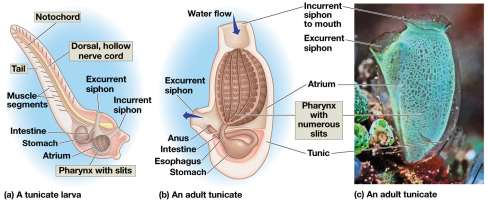
Subphylum Urochordata: Tunicates
Tunicates, or sea squirts, resemble chordates only during their larval stage. Adults are sessile marine filter feeders with a tunic (supportive exterior casing). The notochord is present only in the larva.
Subphylum Vertebrata
Vertebrates include fish, amphibians, reptiles, birds, and mammals. They are characterized by a cranium (braincase/skull) and vertebrae (interlocking bones around the spinal cord). The vertebral column and skull form the axial skeleton, anchoring the appendicular skeleton (limbs and girdles).
Key Innovations: Complex skeletal and nervous systems, increased mobility, efficient food capture, and predator evasion.
Fish Diversity and Adaptations
General Fish Anatomy
Most fish have gills for respiration, though some use skin or lungs. They are typically covered in scales, which vary by type. Fish exhibit diverse feeding strategies and reproductive modes (oviparous, viviparous, or intermediate forms).
Fish Buoyancy
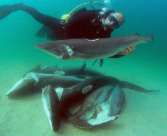
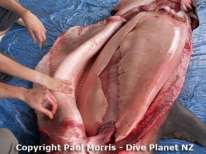
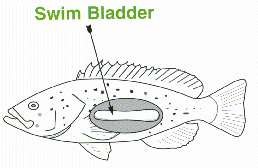
Buoyancy regulation is crucial for fish. Cartilaginous fishes use large, oil-filled livers, while bony fishes use air-filled swim bladders to maintain buoyancy.
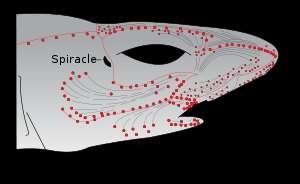
Lateral Line System
The lateral line is a sensory system in fish that detects water movements and vibrations, aiding in navigation and prey detection.
Fish Taxonomy
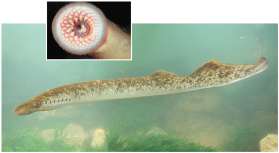
Superclass Agnatha (Jawless Fishes): Includes hagfish (Class Myxini) and lampreys (Class Petromyzontida). These have cartilage skeletons, lack jaws, and have round, suction-feeding mouths.
Class Chondrichthyes (Cartilaginous Fishes): Sharks, skates, rays, and chimaeras. They have cartilaginous skeletons, jaws, and paired fins.
Class Actinopterygii (Ray-Finned Fishes): The largest group of fishes, with fins supported by long, flexible rays.
Class Sarcopterygii (Lobe-Finned Fishes): Fins are muscular and lobed, leading to the evolution of tetrapods.
Hagfish and Lampreys (Agnathans)
Hagfish are the oldest extant vertebrates, with a notochord and reduced vertebrae. They secrete slime for defense and feed by scavenging. Lampreys have a toothed, funnel-like mouth and are often parasitic.

Gnathostomes: Jawed Vertebrates
Gnathostomes are vertebrates with jaws, including chondrichthyans (cartilaginous fishes), ray-finned fishes, and lobe-finned fishes. Jaws evolved from skeletal rods supporting pharyngeal slits.
Cartilaginous Fishes (Chondrichthyans)
Chondrichthyans include sharks, skates, rays, and chimaeras. They have cartilaginous skeletons, streamlined bodies, and acute senses. Reproduction varies: oviparous (egg-laying), ovoviviparous (eggs hatch inside), and viviparous (live birth).
Ray-Finned and Lobe-Finned Fishes
Ray-Finned Fishes (Actinopterygii)
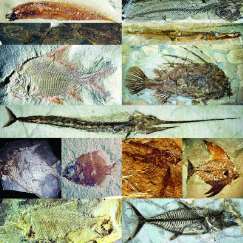
Ray-finned fishes have fins supported by bony rays, are highly diverse, and are mostly oviparous. They face threats from overfishing and habitat modification.
Lobe-Finned Fishes (Sarcopterygii)
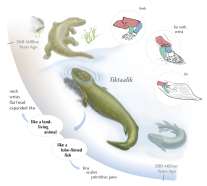
Lobe-finned fishes have muscular fins and include coelacanths, lungfishes, and tetrapods. They are important for understanding the transition to land.
Transition to Land: Tetrapods
Movement onto Land
The transition from water to land required adaptations such as lungs for breathing air, limbs for movement, and changes in body support and reproduction. Tiktaalik is a key fossil showing both fish and tetrapod traits.
Tetrapod Evolution and Limbs
Tetrapods are vertebrates with four limbs. The limb structure is conserved: one bone (humerus), two bones (radius and ulna), many bones (carpals), and digits (phalanges).
Amphibians
Class Amphibia includes salamanders, frogs, and caecilians. Amphibians are dependent on water for reproduction and have permeable skin for respiration. They are vulnerable to environmental changes and pollution.
Amniotes: Adaptations for Terrestrial Life
Amniotes are tetrapods with a land-adapted egg (amniotic egg), which protects the embryo and allows reproduction away from water. This group includes reptiles, birds, and mammals.
Reptiles, Birds, and Mammals
Reptiles and Birds
Reptiles are ectothermic and have scales for waterproofing. Birds are endothermic, have feathers, and are highly adapted for flight. Most reptiles lay shelled eggs on land, and some exhibit temperature-dependent sex determination.
Mammals
Mammals are amniotes with hair and mammary glands. They are endothermic, have efficient respiratory and circulatory systems, and exhibit extensive parental care. The three main lineages are monotremes (egg-laying), marsupials (pouched), and eutherians (placental mammals).
Order Primates
Primates are characterized by hands and feet adapted for grasping, flat nails, large brains, and complex social behavior. This order includes lemurs, monkeys, apes, and humans.
Summary Table: Major Chordate Groups
Group | Key Features | Examples |
|---|---|---|
Cephalochordata | All chordate traits as adults | Lancelets |
Urochordata | Chordate traits in larvae | Tunicates |
Myxini | Jawless, slime-producing | Hagfish |
Petromyzontida | Jawless, toothed mouth | Lampreys |
Chondrichthyes | Cartilaginous skeleton, jaws | Sharks, rays |
Actinopterygii | Ray-finned, bony skeleton | Most fishes |
Sarcopterygii | Lobed fins, includes tetrapods | Coelacanths, lungfishes |
Amphibia | Moist skin, aquatic larvae | Frogs, salamanders |
Reptilia | Scales, shelled eggs | Lizards, snakes, turtles |
Mammalia | Hair, mammary glands | Humans, whales, bats |
Key Equations and Concepts
Buoyancy in Fish:
Phylogenetic Relationships: Cladograms show evolutionary relationships based on shared derived traits.
Additional info: This guide covers the major evolutionary transitions in vertebrates, emphasizing the anatomical and physiological innovations that enabled the colonization of diverse habitats, including land.
