 Indietro
Animal Form and Function: Structure, Regulation, and Adaptation
Guida di studio - Note intelligenti
 Appunti personalizzati basati sui tuoi materiali, ampliati con definizioni chiave, esempi e contesto.
Animal Form and Function
Introduction to Form, Function, and Behavior
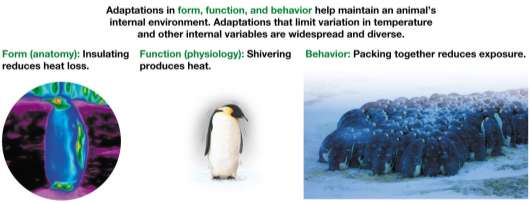
Animal form (anatomy), function (physiology), and behavior are interconnected and have evolved to help organisms survive and thrive in diverse and changing environments. Adaptations in these areas allow animals to regulate their internal state, maintain homeostasis, and respond to environmental challenges.
Form (Anatomy): Refers to the structural traits of an animal’s phenotype.
Function (Physiology): Describes how animals use their phenotype to perform specific tasks.
Behavior: Encompasses actions that help animals cope with environmental stressors.
Body plans are determined by the genome, shaped by millions of years of evolution.
Form-Function Relationships in Animals
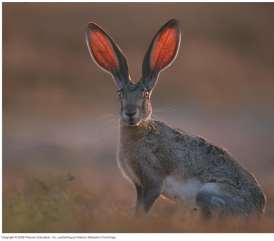
Animal form and function are tightly linked, with certain anatomical features serving multiple physiological or behavioral roles. For example, the large ears of a jackrabbit aid in both hearing and thermoregulation by facilitating heat loss or minimizing heat gain depending on environmental conditions.
Example: Jackrabbit ears help with hearing and temperature regulation.
Evolution of Animal Size and Shape
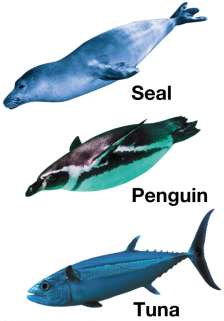
Physical laws governing strength, diffusion, movement, and heat exchange limit the range of possible animal forms. Natural selection favors body plans that are most effective in a given environment, leading to convergent evolution—where unrelated species evolve similar forms due to similar environmental pressures.
Convergent Evolution: Similar body forms in unrelated species (e.g., seal, penguin, tuna) due to similar aquatic environments.
Exchange with the Environment
Surface Area to Volume Ratio
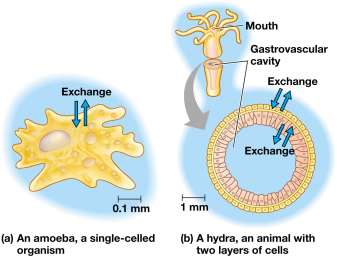
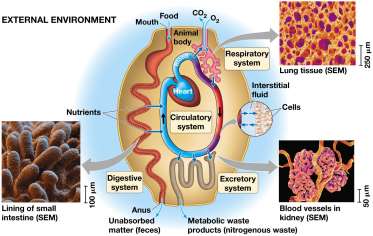
Cells must exchange nutrients and wastes with their environment. The rate of exchange is proportional to the cell’s surface area, while the amount of material exchanged is proportional to cell volume. As organisms increase in size, their surface area-to-volume ratio decreases, limiting the efficiency of exchange.
Surface Area Formula:
Volume Formula:
Implication: Larger organisms require adaptations to facilitate exchange, such as specialized tissues or organ systems.
Multicellularity and Internal Transport
To overcome surface area limitations, larger organisms are multicellular and possess organ systems for bulk transport of nutrients, gases, and wastes. Interstitial fluid surrounds cells, facilitating local exchange with transport systems.
Constraints of Animal Size and Shape
Structural and Functional Constraints
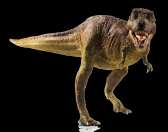
As animal size increases, support structures (skeletons) and muscles must also increase in size and strength. There are physical limits to how large and mobile an animal can be, as demonstrated by the impossibility of a 6,000 kg chicken due to scaling laws.
Scaling Laws: Larger animals require disproportionately thicker skeletons and more muscle mass for support and movement.
Hierarchical Organization of Body Plans
Levels of Organization
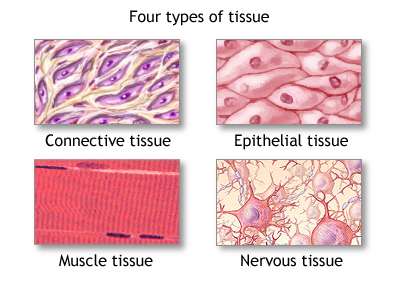
Animal bodies are organized hierarchically: cells form tissues, tissues form organs, organs form organ systems, and organ systems make up the organism. There are four major tissue types: epithelial, connective, muscle, and nervous tissue.
Epithelial Tissue
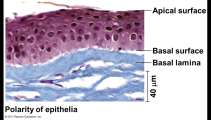
Epithelial tissue covers the outside of the body and lines organs and cavities. It serves as a barrier to injury, pathogens, and fluid loss, and is involved in secretion and absorption. Epithelial cells have polarity, with an apical surface facing the lumen or outside and a basal surface attached to the basal lamina.
Connective Tissue
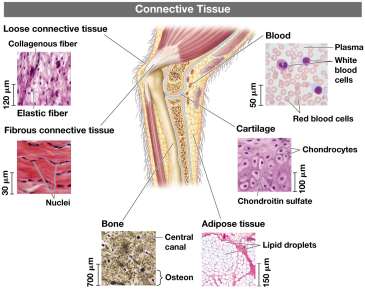
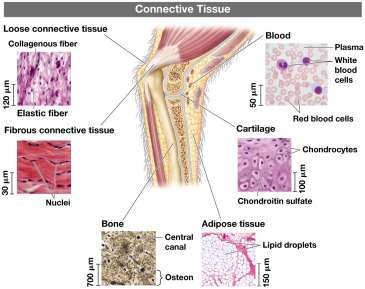
Connective tissue binds and supports other tissues, with cells scattered in an extracellular matrix of protein fibers. Types include loose and fibrous connective tissue, cartilage, bone, adipose tissue, and blood.
Collagenous fibers: Provide strength and flexibility.
Reticular fibers: Connect connective tissue to other tissues.
Elastic fibers: Allow tissues to stretch and recoil.
Muscle Tissue
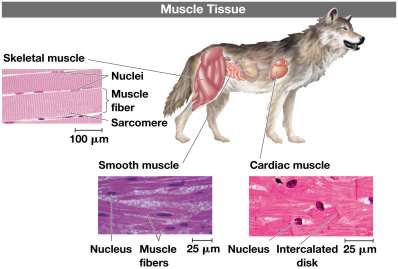
Muscle tissue is responsible for body movement and is classified into three types: skeletal (voluntary, striated), cardiac (involuntary, striated, branched), and smooth (involuntary, non-striated).
Nervous Tissue
Nervous tissue consists of neurons (which transmit information) and glial cells (which support, nourish, and insulate neurons). Nervous tissue is specialized for the receipt, processing, and transmission of information.
Coordination and Control
Endocrine and Nervous Systems
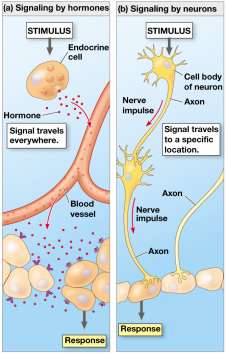
Animals coordinate and control responses to stimuli using two major systems:
Endocrine system: Releases hormones into the bloodstream for gradual, widespread effects.
Nervous system: Transmits nerve impulses for rapid, targeted responses.
Regulating and Conforming
Regulators vs. Conformers
Animals may regulate internal conditions (regulators) or allow them to match the environment (conformers). Some animals regulate certain variables while conforming to others.
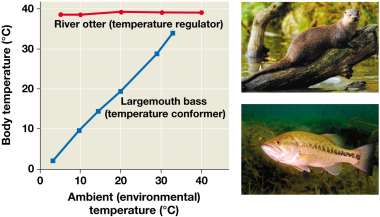
Homeostasis
Maintaining a Stable Internal Environment
Homeostasis is the maintenance of a relatively constant internal environment, including temperature, pH, blood sugar, and hormone levels. It is achieved through negative feedback loops, where a response counteracts a deviation from a set point.
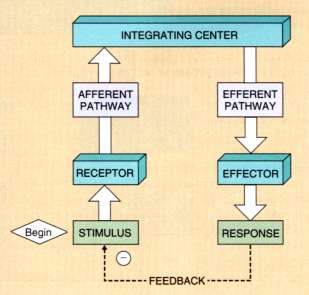
Negative vs. Positive Feedback
Negative feedback reduces the effect of a stimulus, maintaining homeostasis. Positive feedback amplifies a stimulus and is less common in homeostatic regulation.
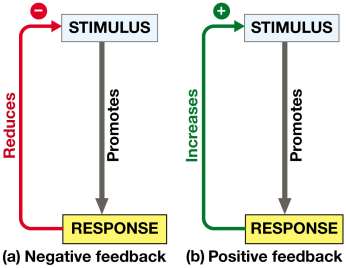
Alterations to Homeostasis
Set points and normal ranges can change with age or show cyclic variation (e.g., circadian rhythms, menstrual cycles). Acclimatization is a temporary adjustment to a new environment, distinct from adaptation, which is a genetic change over generations.
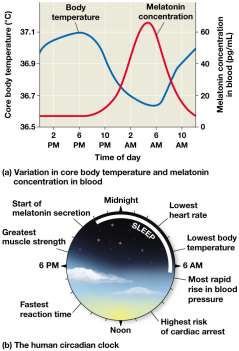
Thermoregulation
Endotherms vs. Ectotherms
Thermoregulation is the process by which animals maintain an internal temperature within a tolerable range. Endotherms generate heat metabolically and can maintain stable body temperatures despite environmental fluctuations, but require more energy. Ectotherms rely on external heat sources and tolerate greater variation in body temperature.
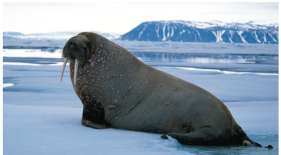
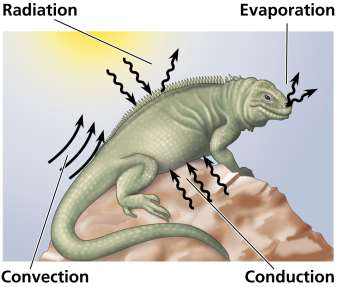
Mechanisms of Heat Exchange
Animals exchange heat with their environment through radiation, conduction, convection, and evaporation.
Thermoregulatory Adaptations
Animals use various adaptations to regulate heat:
Insulation: Fur, feathers, blubber reduce heat loss.
Circulatory adaptations: Countercurrent exchange minimizes heat loss in extremities.
Evaporative cooling: Sweating, panting, or bathing dissipate heat.
Behavioral responses: Seeking shade, basking, or huddling to regulate temperature.
Adjusting metabolic heat production: Shivering or non-shivering thermogenesis increases heat output.
Torpor and Energy Conservation
Torpor and Hibernation
Torpor is a physiological state of decreased activity and metabolism, allowing animals to conserve energy during unfavorable conditions. Hibernation is a long-term form of torpor adapted to winter cold and food scarcity.
Summary Table: Major Tissue Types
Tissue Type | Main Function | Location/Example |
|---|---|---|
Epithelial | Protection, secretion, absorption | Skin, lining of organs |
Connective | Support, binding, transport | Tendons, ligaments, blood, bone |
Muscle | Movement | Skeletal muscles, heart, digestive tract |
Nervous | Signal transmission | Brain, spinal cord, nerves |
Additional info: This guide covers the foundational concepts of animal form and function, including the structural and physiological adaptations that enable animals to survive in diverse environments, the hierarchical organization of tissues, and the mechanisms of homeostasis and thermoregulation.
