 Indietro
Antigens and Major Histocompatibility Complex: Principles of Immune Recognition
Guida di studio - Note intelligenti
 Appunti personalizzati basati sui tuoi materiali, ampliati con definizioni chiave, esempi e contesto.
Antigens and Immunogenicity
Definition and Properties of Antigens
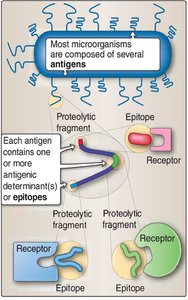
Antigens are substances (organisms, molecules, or parts of molecules) that can be recognized by the immune response. They may be proteins, carbohydrates, or synthetic compounds not normally present in the body, thus classified as 'nonself'. Antigens are recognized and bound by B-cell and T-cell receptors.
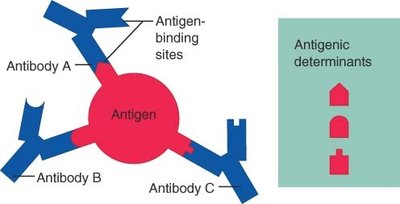
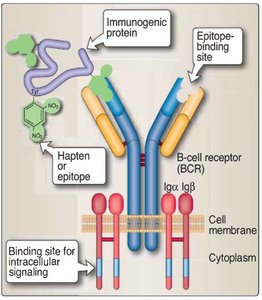
Antigenic Determinants (Epitopes): Discrete regions of molecules recognized by antigen receptors. Each antigen may have multiple epitopes, and different lymphocytes may recognize different epitopes on the same antigen.
B-cell Receptors: Recognize free-soluble or surface-bound epitopes.
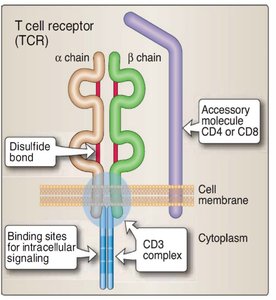
T-cell Receptors: Bind only to epitopes presented by specialized host cell surface (MHC) molecules.
Types of Antigens
Antigens can be classified based on their ability to induce an immune response:
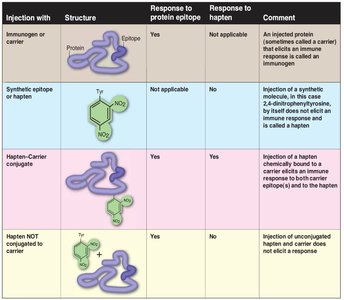
Immunogens: Contain epitopes that induce an immune response.
Haptens: Small nonimmunogenic molecules that can bind to immune receptors but cannot induce a specific immune response unless attached to a carrier.
Tolerogens: Induce immune unresponsiveness, leading to tolerance to self molecules and cells.
Factors Governing Immunogenicity
The immunogenicity of an antigen depends on several factors:
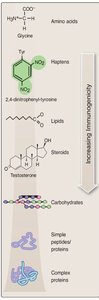
Size: Proteins greater than 10 kDa are usually more immunogenic.
Complexity: Complex proteins with diverse epitopes are more likely to induce an immune response.
Conformation and Accessibility: Epitopes must be accessible to the immune system.
Chemical Properties: Immunogens must be enzymatically cleavable by phagocytes.
Receptors for Antigens
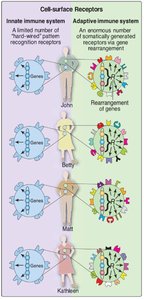
Innate Immune System: Preformed Receptors
The innate immune system uses a genetically stable set of receptors to recognize and bind structures produced by microbes or host cells in response to stress. These include:
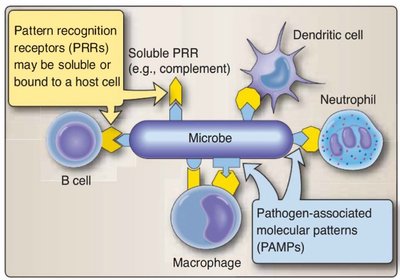
Pattern Recognition Receptors (PRRs): Recognize pathogen-associated molecular patterns (PAMPs) and trigger inflammation.
Toll-like Receptors: Mediate cytokine production and promote immune cell trafficking.
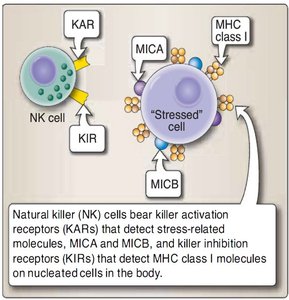
Killer Activation Receptors: Present on Natural Killer (NK) cells, recognize stress-related molecules (MICA and MICB).
Killer Inhibition Receptors: Used by NK cells to monitor MHC class I molecules on cell surfaces.
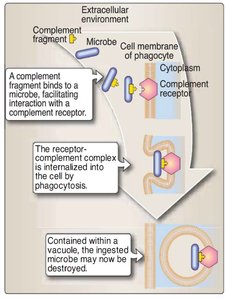
Complement Receptors: Displayed on phagocytic cells and B cells, recognize microbes and immune complexes.
Fc Receptors: Bind to antibody-epitope complexes, leading to phagocytosis.
Adaptive Immune System: Somatically Generated Receptors
The adaptive immune system relies on receptors produced by T and B lymphocytes, which are generated through somatic gene rearrangement and mutation, resulting in a unique set of receptors for each individual.
B-cell Receptors (BCRs): Cell-surface bound monomeric immunoglobulin associated with lgα and lgβ. Binding to an epitope initiates intracellular signaling and B-cell activation. Activated B cells may differentiate into plasma cells that secrete immunoglobulin with identical specificity.
T-cell Receptors (TCRs): Heterodimers (αβ or γδ chains), membrane-bound, recognize antigen combined with MHC molecules.
Antigen Presenting Cells (APCs)
Role in T-cell Activation
Interaction with APCs is essential for T-cell activation. Priming occurs when naive T cells encounter antigen on the surface of an APC. Main APCs include dendritic cells, macrophages, and B cells. 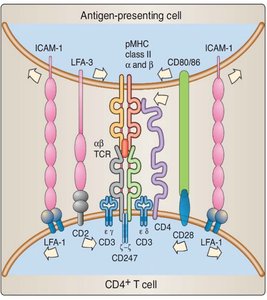
Major Histocompatibility Complex (MHC)
Structure and Function
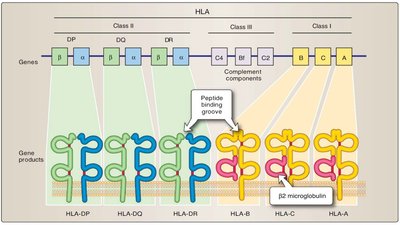
The MHC, also known as the human leukocyte antigen (HLA) complex, is a segment of chromosome 6 containing genes critical to immune function. MHC molecules are classified into three classes:
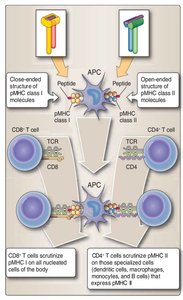
MHC Class I: Found on all nucleated cells, present peptides to CD8+ cytotoxic T-cells.
MHC Class II: Expressed on dendritic cells, macrophages, and B cells, present peptides to CD4+ T-helper cells.
MHC Class III: Includes complement components and other immune-related proteins.
MHC Class I Molecules
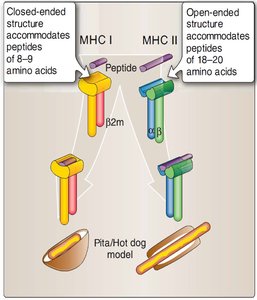
MHC class I molecules are codominantly expressed, associated with β2 microglobulin, and found on all nucleated cells. They fold to form a cleft between the α1 and α2 domains that binds an 8–9 amino-acid peptide. Their primary function is to present peptides to CD8+ cytotoxic T-cells. 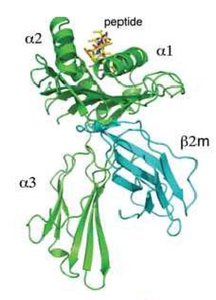
MHC Class II Molecules
MHC class II molecules are expressed only on dendritic cells, macrophages, and B cells. They are noncovalent heterodimers (α and β chains) forming a binding groove that accommodates peptides of 18–20 amino acids. Their function is to present peptides to CD4+ T-helper cells. 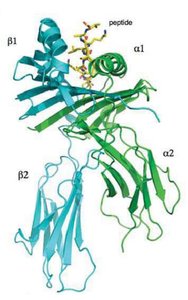
Summary Table
Antigens | MHC |
|---|---|
Epitopes Types of antigens Receptors | MHC class I molecules MHC class II molecules |
Key Concepts
Antigens are recognized by immune receptors and may be immunogenic, tolerogenic, or haptens.
Receptors in the innate immune system are preformed, while those in the adaptive immune system are somatically generated.
MHC molecules are essential for antigen presentation and activation of T cells.
