 Indietro
AP Biology Unit 1: Chemistry of Life – Structured Study Notes
Guida di studio - Note intelligenti
 Appunti personalizzati basati sui tuoi materiali, ampliati con definizioni chiave, esempi e contesto.
Unit 1: Chemistry of Life
Structure of Water & Hydrogen Bonding
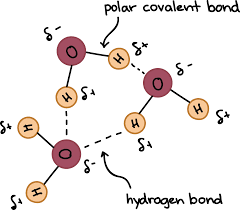
The unique properties of water arise from its molecular structure and the interactions between water molecules. Water molecules are composed of two hydrogen atoms covalently bonded to one oxygen atom, forming a polar molecule. The polarity of water leads to hydrogen bonding, which is critical for many biological processes.
Polar Covalent Bonds: The bond between oxygen and hydrogen within a water molecule is polar, with oxygen being more electronegative, resulting in partial charges (δ− on oxygen, δ+ on hydrogen).
Hydrogen Bonds: These are weak attractions between the δ+ hydrogen of one water molecule and the δ− oxygen of another, giving water its cohesive and adhesive properties.
Example: Water's polarity allows it to dissolve many substances, making it an excellent solvent in biological systems.
Properties of Water
Water exhibits several important properties due to hydrogen bonding, which are essential for life.
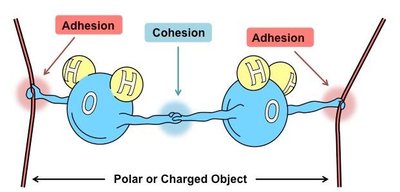
Cohesion: Water molecules are attracted to each other, resulting in surface tension.
Adhesion: Water molecules are attracted to other polar substances, aiding processes like capillary action.
High Specific Heat: Water can absorb or release large amounts of energy with minimal temperature change, helping maintain homeostasis.
High Heat of Vaporization: Water requires significant energy to evaporate, enabling evaporative cooling in organisms.
Macromolecules
Monomers & Polymers
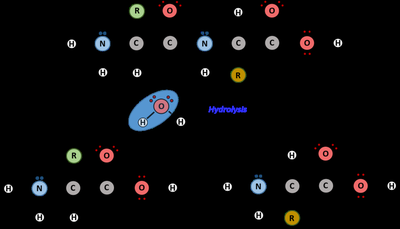
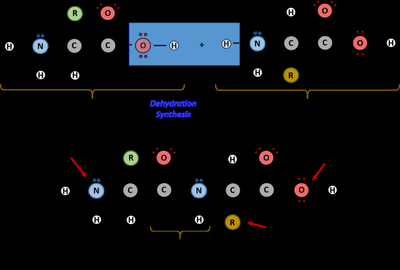
Biological macromolecules are formed from smaller units called monomers. The joining and breaking of these monomers involve specific chemical reactions.
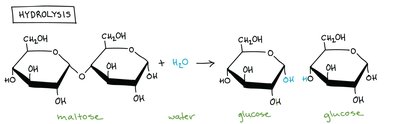
Hydrolysis: Water is added to break a bond between monomers.
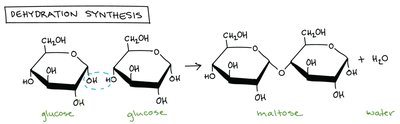
Dehydration Synthesis: Water is removed to form a bond between monomers.
Examples: Monosaccharide (monomer) forms polysaccharide (polymer); amino acid forms polypeptide/protein.
Carbohydrates
Structure and Function
Carbohydrates are organic molecules composed of carbon, hydrogen, and oxygen, typically in a 1:2:1 ratio. They serve as energy sources and structural components in cells.
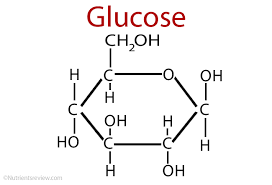
Monomer: Monosaccharides (simple sugars) such as glucose, fructose, and galactose.
Disaccharides: Formed by glycosidic linkage between two monosaccharides (e.g., sucrose, lactose, maltose).
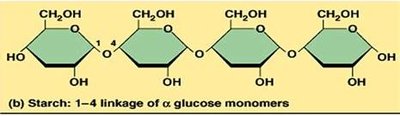
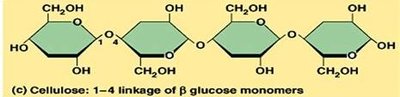
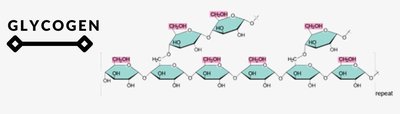
Polymer: Polysaccharides (complex sugars) such as starch, glycogen, cellulose, and chitin.
Structural Polysaccharides: Cellulose (plant cell walls), chitin (fungi cell walls, arthropod exoskeletons).
Storage Polysaccharides: Starch (plants, linear), glycogen (animals, highly branched).

Lipids
Types and Functions
Lipids are hydrophobic molecules that include fats, phospholipids, and steroids. They are essential for energy storage, membrane structure, and signaling.
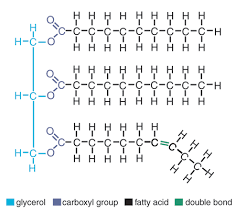
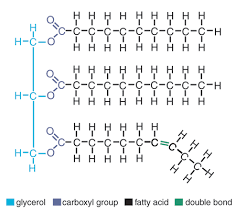
Fats: Composed of glycerol and three fatty acids; function in energy storage, insulation, and cell support.
Saturated Fatty Acids: All single bonds; solid at room temperature.
Unsaturated Fatty Acids: At least one double bond; liquid at room temperature.
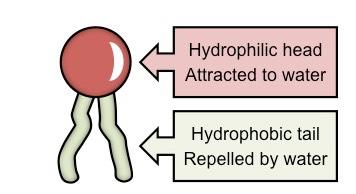
Phospholipids: Form lipid bilayers in cell membranes; have hydrophilic heads and hydrophobic tails.
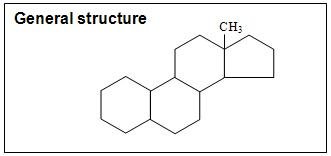
Steroids: Four fused rings; include cholesterol (membrane stability) and hormones.
Nucleic Acids
Structure and Function
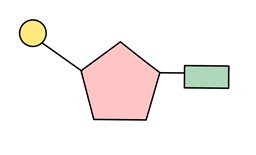
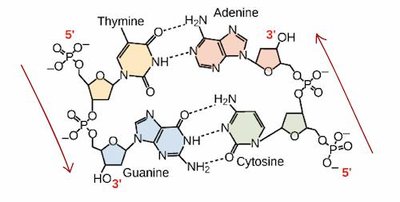
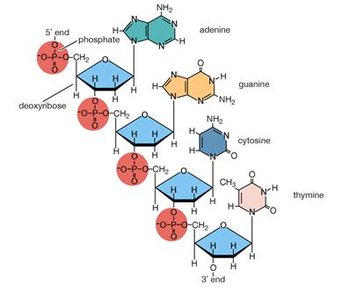
Nucleic acids, including DNA and RNA, store and transmit genetic information. They are polymers of nucleotides, each consisting of a phosphate group, a pentose sugar, and a nitrogenous base.
Elements: Carbon, hydrogen, oxygen, nitrogen, phosphorus.
Monomer: Nucleotide.
Directionality: DNA and RNA strands have antiparallel orientation; synthesis occurs 5’ → 3’, reading occurs 3’ → 5’.
Nitrogenous Bases: Purines (A, G; double ring), Pyrimidines (C, U, T; single ring).
Base Pairing: A & T (or A & U in RNA), C & G.
Bond: Phosphodiester linkage between phosphate and hydroxyl groups.
Proteins
Structure and Function
Proteins are polymers of amino acids and perform a wide range of functions in cells, including catalysis, structure, transport, and signaling. Their function is determined by their structure, which is organized into four levels.
Elements: Carbon, hydrogen, oxygen, nitrogen, sulfur.
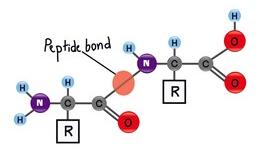
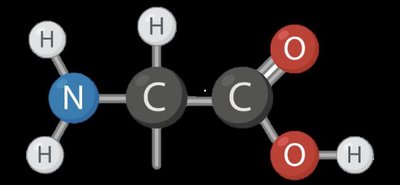
Monomer: Amino acid, each with a central carbon, amino group, carboxyl group, hydrogen, and R group.
Bond: Peptide bond between carboxyl and amino groups.
Levels of Structure:
Primary: Sequence of amino acids; peptide bonds.
Secondary: Alpha helix or beta sheet; hydrogen bonds in backbone.
Tertiary: 3D folding; interactions between R groups (hydrogen, ionic, hydrophobic, disulfide bridges).
Quaternary: Association of multiple polypeptides; any bond type between R groups of different chains.
Protein Folding: Hydrophilic and charged R groups are on the exterior, nonpolar R groups are buried in the interior.
Practice Problems
Role of Water in Hydrolysis of ATP
Water is essential in the hydrolysis of ATP, a process that releases energy for cellular activities.
Key Point: Water is added to ATP, breaking a phosphate bond and releasing energy.
Equation:

Double-Strand Breaks in DNA
Double-strand breaks in DNA occur along the backbone, often through hydrolysis or enzymatic action.
Key Point: Hydrolysis breaks covalent bonds between sugars and phosphates/nucleotides in DNA.

Glucose Structure and Bond Types
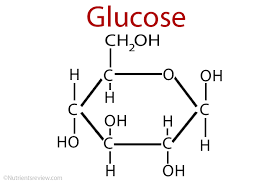
Glucose is a monosaccharide composed of carbon, hydrogen, and oxygen atoms, held together by covalent bonds.
Key Point: Atoms in glucose: C, H, O; bonds are covalent.

Protein Folding and R Group Location
The location of amino acids in a folded protein is determined by their R group properties. Nonpolar R groups are buried inside, while polar and charged R groups are exposed to water.
Key Point: Polar R groups form hydrogen bonds with water; nonpolar R groups are hidden in the protein interior.
Example: Hydrophobic effect drives nonpolar amino acids to the protein core.
