 Indietro
Archaeplastida: Algae and Non-Vascular Plants (Bryophytes)
Guida di studio - Note intelligenti
 Appunti personalizzati basati sui tuoi materiali, ampliati con definizioni chiave, esempi e contesto.
Archaeplastida: Algae and Non-Vascular Plants
Introduction to Archaeplastida
The Archaeplastida is a major group of eukaryotes that includes red algae, green algae, and land plants. This group is significant in the study of biology because it encompasses the ancestors of all land plants and highlights key evolutionary transitions from aquatic to terrestrial life.
Red Algae (Rhodophyta)
Characteristics and Adaptations
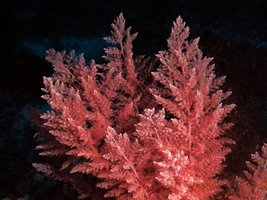
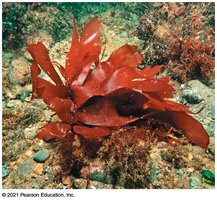
Accessory Pigment: Red algae contain phycoerythrin, which masks the green of chlorophyll and allows them to photosynthesize efficiently at different depths.
Habitat Variation: Shallow water species have less phycoerythrin and appear greenish-red, while deep water species are almost black due to higher pigment concentration.
Structure: Most red algae are multicellular, with the largest forms known as seaweeds.
Reproduction: Sexual reproduction often involves alternation of generations.
Green Algae
Overview and Evolutionary Significance
Chloroplasts: Green algae have chloroplasts structurally and chemically similar to those in land plants.
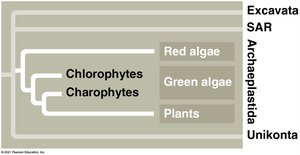
Phylogeny: Green algae form a paraphyletic group, including chlorophytes and charophytes. Charophytes are the closest relatives to land plants.
Chlorophytes
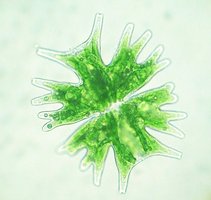
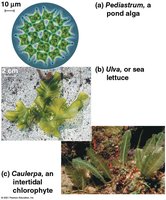
Chlorophytes are a diverse group of green algae found mostly in freshwater, but also in marine and terrestrial environments. They exhibit a range of forms from unicellular to multicellular and can live freely or symbiotically.
Adaptations: Some species tolerate intense visible and ultraviolet radiation.
Complexity: Chlorophytes show evolutionary trends toward complexity, including:
Formation of colonies
Development of true multicellular bodies by cell division and differentiation
Repeated nuclear division without cytoplasmic division
Life Cycles: Many have complex life cycles with both sexual and asexual stages, and nearly all produce biflagellated gametes. Some exhibit alternation of generations.
Charophytes and the Evolution of Land Plants
Charophytes are the group of green algae most closely related to land plants. They share several key traits with plants, including:
Cellulose-synthesizing membrane proteins arranged in rings
Similar structure of flagellated sperm
Sequence similarity in nuclear, chloroplast, and mitochondrial DNA
Transition to Land: Key Adaptations
Traits Shared with Other Algae
Multicellularity, eukaryotic structure, and photosynthetic autotrophy
Cellulose in cell walls
Chloroplasts with chlorophyll a and b
Unique Plant Traits (Shared Only with Charophytes)
Cellulose-synthesizing complexes in rings
Flagellated sperm structure
Genetic similarities in organelle DNA
Adaptations for Terrestrial Life
Sporopollenin: A durable polymer that prevents zygotes from drying out, found in both charophytes and plant spore walls.
Accumulation of Traits: Traits that allowed survival during periodic drying enabled the ancestors of plants to colonize land permanently.
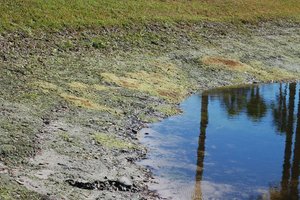
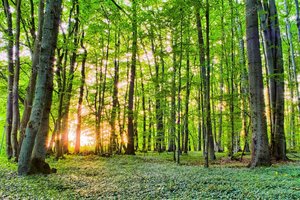
Benefits and Challenges of Terrestrial Environments
Benefits: Unfiltered sunlight, abundant CO2, and nutrient-rich soil.
Challenges: Scarcity of water and lack of structural support against gravity.
Key Plant Adaptations
Alternation of generations
Walled spores produced in sporangia
Apical meristems
Cuticle (waxy covering to reduce water loss)
Stomata (for gas exchange)
Alternation of Generations
Life Cycle Overview
Plants alternate between two multicellular stages: the haploid gametophyte and the diploid sporophyte. The diploid embryo is retained and protected within the tissue of the female gametophyte, and nutrients are transferred from parent to embryo through placental transfer cells. This dependency is why plants are called embryophytes.
Walled Spores and Sporangia
The sporophyte produces spores in multicellular organs called sporangia.
Spore walls contain sporopollenin, making them resistant to harsh environments.
Apical Meristems
Localized regions of cell division at the tips of roots and shoots.
Enable elongation for better resource acquisition.
Non-Vascular Plants (Bryophytes)
Overview
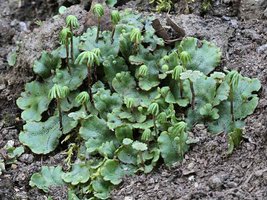
Bryophytes are non-vascular plants that lack an extensive internal transport system. They are not a monophyletic clade but are grouped together based on shared biological features.
Three phyla: Hepatophyta (liverworts), Bryophyta (mosses), and Anthocerophyta (hornworts).
Life cycles are dominated by the gametophyte stage.
Life Cycle and Structures
Gametophyte is the dominant stage in all three bryophyte phyla.
Rhizoids anchor bryophytes but do not function as true roots.
Ecological Importance of Mosses
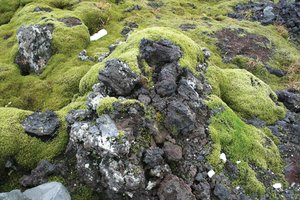
Mosses contribute to soil formation and increase the availability of soil nitrogen by harboring nitrogen-fixing cyanobacteria.
Peat moss is an important soil conditioner and historical fuel source, but overharvesting contributes to global warming by releasing stored CO2.
Summary Table: Major Groups of Non-Vascular Plants
Phylum | Common Name | Key Features |
|---|---|---|
Hepatophyta | Liverworts | Flat, lobed gametophytes; lack true stomata |
Bryophyta | Mosses | Leafy gametophytes; have stomata; important in soil formation |
Anthocerophyta | Hornworts | Horn-shaped sporophytes; single large chloroplast per cell |
Conclusion
The Archaeplastida, including red and green algae as well as non-vascular plants, illustrate the evolutionary steps leading to the colonization of land by plants. Key adaptations such as alternation of generations, walled spores, and apical meristems enabled plants to thrive in terrestrial environments, shaping the diversity of modern plant life.
