 Indietro
Archaeplastida: Red Algae, Green Algae, and Plant Evolution
Guida di studio - Note intelligenti
 Appunti personalizzati basati sui tuoi materiali, ampliati con definizioni chiave, esempi e contesto.
Archaeplastida: Overview and Evolutionary Relationships
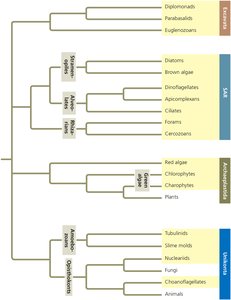
Major Supergroups of Eukaryotes
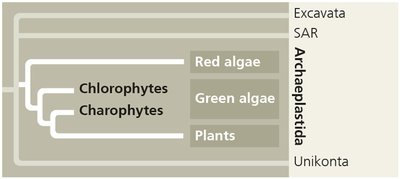
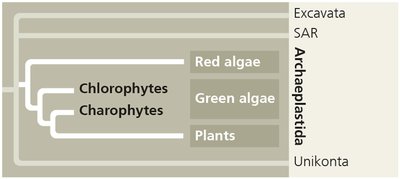
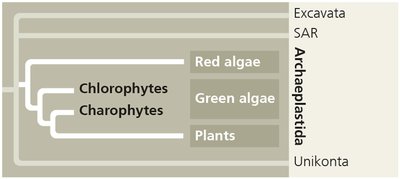
The domain Eukarya is divided into several supergroups, with Archaeplastida comprising red algae, green algae (chlorophytes and charophytes), and plants. These groups share a common evolutionary ancestor and are distinguished by their photosynthetic capabilities and cellular structures.
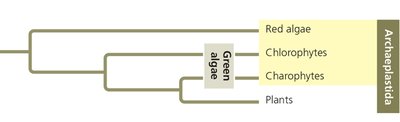
Archaeplastida includes red algae, chlorophytes, charophytes, and plants.
All members possess chloroplasts surrounded by two membranes, mostly cellulose cell walls, and store excess glucose as starch.
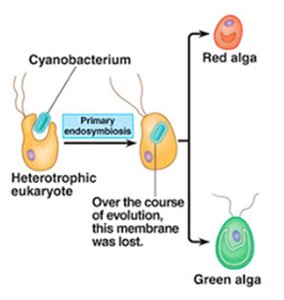
The ancestor was a heterotrophic protist that absorbed cyanobacteria, leading to primary endosymbiosis.
Endosymbiosis and Evolutionary History
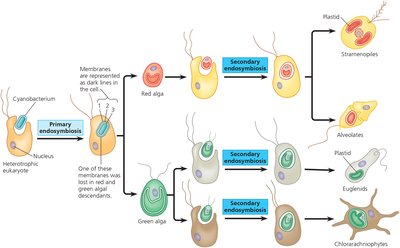
Endosymbiosis is a key evolutionary event in the origin of photosynthetic eukaryotes. Primary endosymbiosis involved a heterotrophic eukaryote engulfing a cyanobacterium, giving rise to red and green algae. Secondary endosymbiosis further diversified photosynthetic lineages.
Primary endosymbiosis: Cyanobacteria were engulfed by a heterotrophic eukaryote, resulting in red and green algae.
Secondary endosymbiosis: Red and green algae were subsequently engulfed by other eukaryotes, leading to new photosynthetic groups.
Alternation of Generations
Life Cycle Structure
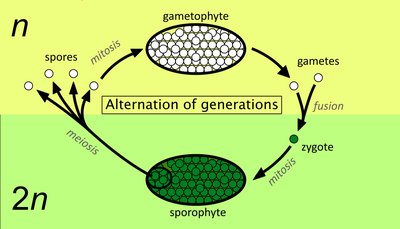
Alternation of generations is a reproductive cycle found in many Archaeplastida, especially plants and some green algae. It involves alternating multicellular haploid (gametophyte) and diploid (sporophyte) stages.
Gametophyte (n): Produces gametes via mitosis.
Sporophyte (2n): Produces spores via meiosis.
Fusion of gametes forms a zygote, which develops into the sporophyte.
Archaeplastida: Red Algae (Rhodophyta)
General Features and Anatomy
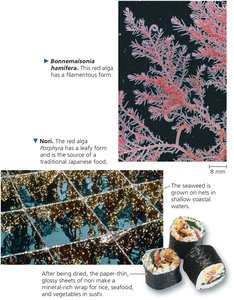
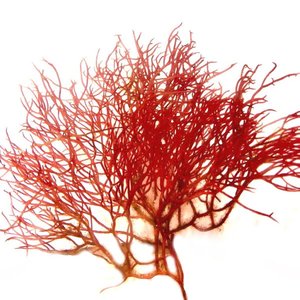
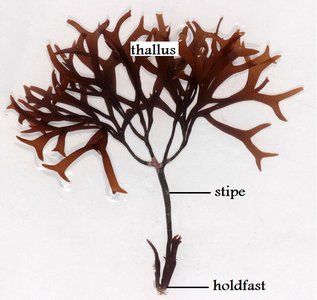
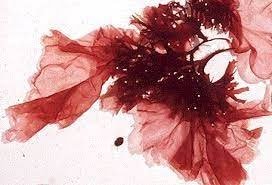
Red algae are multicellular, photosynthetic autotrophs characterized by the pigment phycoerythrin, which gives them their red color. They lack flagella and store excess glucose as floridean starch outside the chloroplast.
Cell walls contain cellulose, carrageenan (used as a food thickener), and agar (used as a microbiological medium).
Chloroplasts contain phycoerythrin, phycobilins, and chlorophyll a.
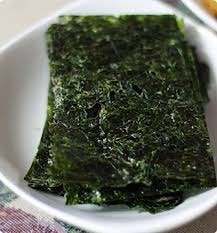
Human Interest
Red algae are used in food (e.g., sushi wraps, Gim/김), and their extracts are important in biotechnology and food industries.
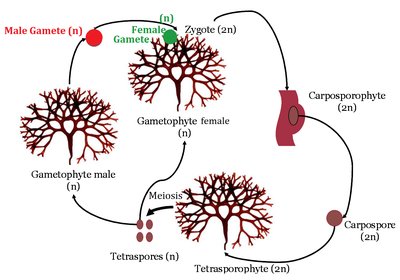
Life Cycle of Chondrus crispus
Chondrus crispus exhibits a complex life cycle with two types of spores: carpospore (2n) and tetraspore (n). The alternation of generations includes both gametophyte and sporophyte stages.
Carposporophyte (2n) produces carpospores (2n).
Tetrasporophyte (2n) produces tetraspores (n) via meiosis.
Gametophytes (n) produce gametes, which fuse to form a zygote (2n).
Archaeplastida: Green Algae (Viridiplantae)
Superclade Viridiplantae
Viridiplantae includes chlorophytes, charophytes, and plants. These groups share chlorophyll a, chlorophyll b, and carotenoids, with starch stored within the chloroplast and cell walls composed of cellulose.
Chlorophyta and Plantae exhibit alternation of generations; charophytes do not.
Chlorophyll b is absent in brown and red algae.
Green Algae: Diversity and Life Cycles
Green algae are a paraphyletic group, including unicellular, colonial, and multicellular forms. They have complex life cycles with both sexual and asexual stages.
Chlorophytes: Ulva (isomorphic alternation of generations), Derbesia (heteromorphic alternation).
Charophytes: Do not have alternation of generations.
Chlorophytes: Examples and Features
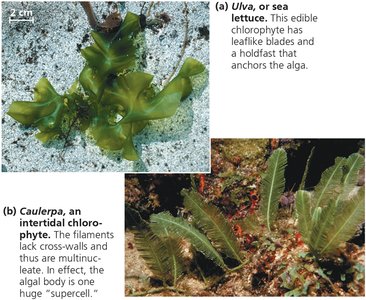
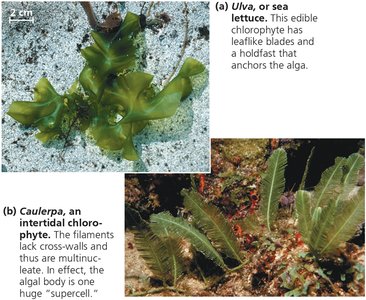
Chlorophytes are mostly freshwater green algae, including Volvox, Ulva, and Oedogonium. They exhibit both colonial and multicellular forms.
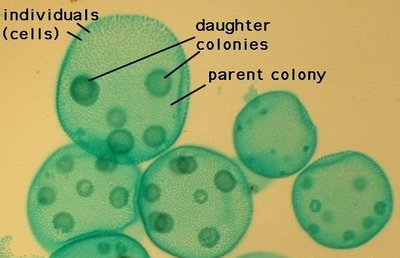
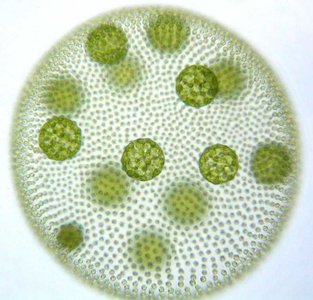
Volvox: Colonial green algae, reproduces asexually (daughter colonies) and sexually (eggs and sperm).
Oedogonium: Multicellular, filamentous, oogamous (large nonmotile egg, motile sperm).
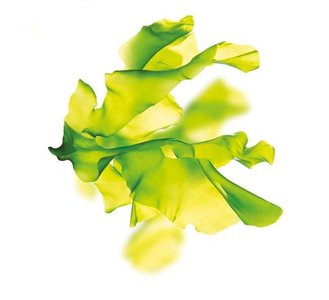
Ulva lactuca: Multicellular, thallus body form, isomorphic alternation of generations.
Archaeplastida: Charophytes
Charophytes and Plant Evolution
Charophytes are the sister group to plants. True plants are defined as multicellular and capable of living on land, while algae require moist environments.
Photopigments: Chlorophyll a, chlorophyll b, carotenoids.
Excess glucose stored as amylose starch within the chloroplast.
Cell walls composed of cellulose.
Chara (Stonewort) and Spirogyra
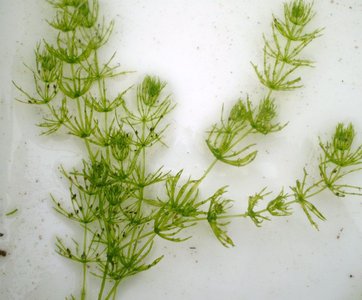
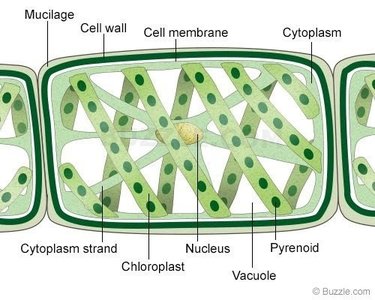
Chara is multicellular and heterogamous (distinct sperm and egg), with eggs in a multicellular oogonium and sperm in a multicellular antheridium. Spirogyra is multicellular, filamentous, and isogamous (gametes look identical).
Chara: Multicellular, heterogamous reproduction.
Spirogyra: Multicellular, filamentous, isogamous reproduction.
Important Distinctions in Archaeplastida
Key Concepts
Isogamy vs. Heterogamy: Isogamy involves identical gametes; heterogamy involves distinct sperm and egg.
Colonial vs. Multicellularity: Colonial organisms are composed of individual cells working together; multicellular organisms have specialized cells.
Alternation of Generations: Present in plants and some green algae, absent in charophytes.
Validity of Group Names: 'Algae' is not a valid taxonomic group.
Chloroplast Morphologies: Vary among different groups.
Storage Form of Glucose: Location and type differ among groups (e.g., floridean starch in red algae, amylose in green algae).
Group | Photopigments | Storage Form | Cell Wall | Life Cycle |
|---|---|---|---|---|
Red Algae | Phycoerythrin, Chlorophyll a | Floridean starch | Cellulose, carrageenan, agar | Alternation of generations |
Chlorophytes | Chlorophyll a, b, carotenoids | Amylose starch | Cellulose | Alternation of generations |
Charophytes | Chlorophyll a, b, carotenoids | Amylose starch | Cellulose | No alternation of generations |
Plants | Chlorophyll a, b, carotenoids | Starch | Cellulose | Alternation of generations |
