 Indietro
Asexual and Sexual Reproduction, Meiosis, and Genetic Variation 10
Guida di studio - Note intelligenti
 Appunti personalizzati basati sui tuoi materiali, ampliati con definizioni chiave, esempi e contesto.
Asexual and Sexual Reproduction
Overview of Reproduction
Reproduction is the biological process by which new individual organisms are produced. It can occur through asexual or sexual means, each with distinct mechanisms and evolutionary advantages.
Asexual reproduction: Involves a single parent and produces offspring genetically identical to the parent. No fusion of gametes occurs.
Sexual reproduction: Involves the fusion of two gametes (egg and sperm), resulting in offspring with genetic variation.
Asexual Reproduction
Definition: Production of new individuals without the fusion of gametes.
Benefits: Rapid population increase, no need to find a mate, less energy expenditure.
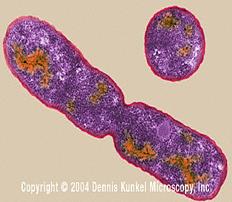
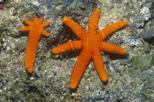
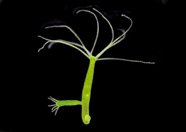
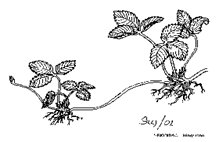
Examples: Binary fission in bacteria, fragmentation in starfish, budding in hydra, vegetative propagation in plants.
Sexual Reproduction
Definition: Production of new individuals through the union of two gametes to form a zygote.
Benefits: Results in genetic variation among offspring, which is essential for evolution and adaptation.
Examples: Most animals and plants reproduce sexually.
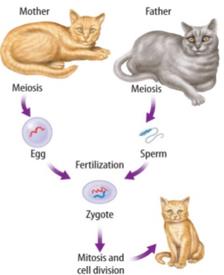
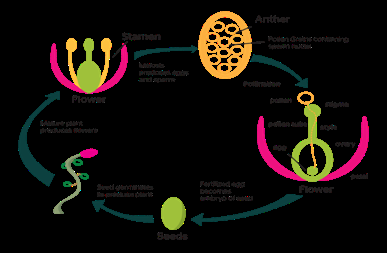
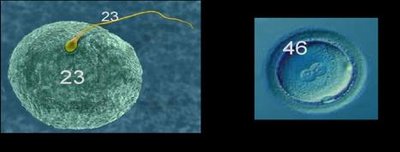
Fertilization and Meiosis
Chromosome Number and the Need for Meiosis
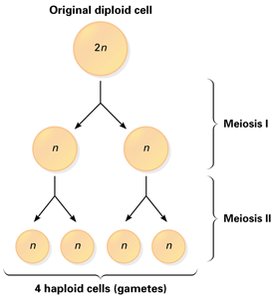
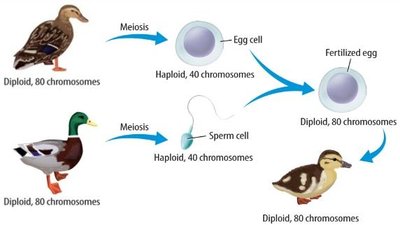
Sexual reproduction involves the fusion of two gametes, each carrying half the number of chromosomes of a typical body cell. Without a reduction in chromosome number, each generation would double its chromosome count. Meiosis prevents this by halving the chromosome number in gametes.
Haploid (n): A cell with one set of chromosomes.
Diploid (2n): A cell with two sets of chromosomes.
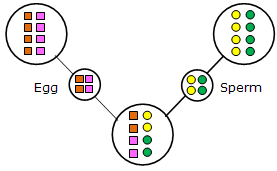

Meiosis: Process and Stages
Overview of Meiosis
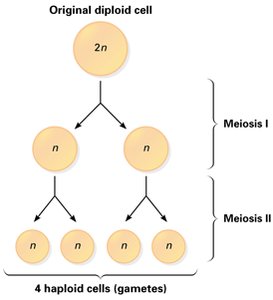
Meiosis is a specialized type of cell division that reduces the chromosome number by half, producing four genetically unique haploid cells from one diploid cell. It consists of two sequential divisions: Meiosis I and Meiosis II.
Meiosis I: Homologous chromosomes separate, reducing chromosome number from diploid to haploid.
Meiosis II: Sister chromatids separate, similar to mitosis.
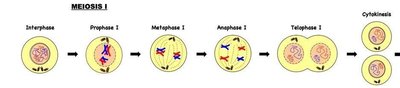
Stages of Meiosis
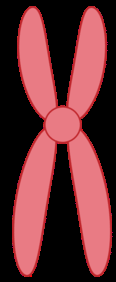
Interphase: Chromosomes duplicate (DNA replication occurs only once, before Meiosis I).
Meiosis I:
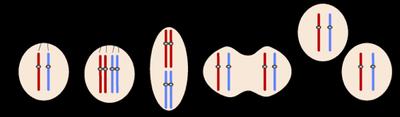
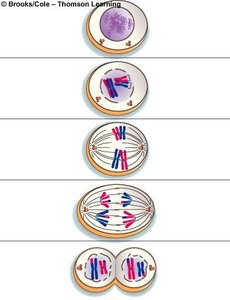
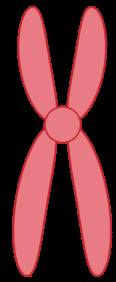
Prophase I: Homologous chromosomes pair up (synapsis) and crossing over occurs, forming tetrads.
Metaphase I: Tetrads align at the cell's equatorial plane.
Anaphase I: Homologous chromosomes are pulled to opposite poles.
Telophase I and Cytokinesis: Two haploid cells form, each with half the original chromosome number.
Meiosis II:
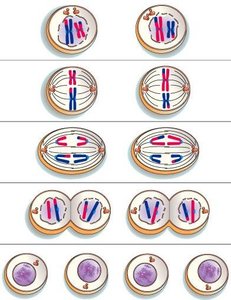
Prophase II: Chromosomes condense again; no DNA replication occurs.
Metaphase II: Chromosomes align at the equatorial plane.
Anaphase II: Sister chromatids separate and move to opposite poles.
Telophase II and Cytokinesis: Four genetically unique haploid cells are produced.
Genetic Variation in Meiosis
Sources of Genetic Variation
Meiosis introduces genetic diversity through two main mechanisms:
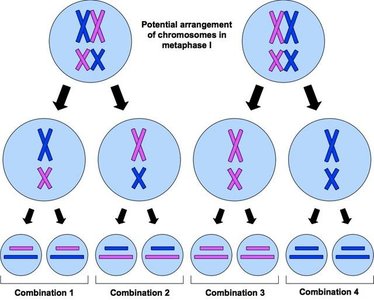
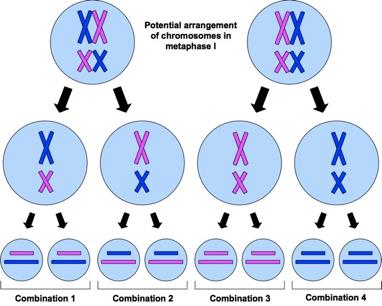
Independent Assortment: During Metaphase I, homologous chromosome pairs align randomly, leading to different combinations of maternal and paternal chromosomes in gametes.
Crossing Over: During Prophase I, homologous chromosomes exchange genetic material, creating new allele combinations.

Mathematical Basis of Variation
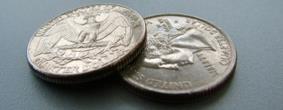
The number of possible chromosome combinations due to independent assortment is , where is the haploid number of chromosomes.
For humans (): possible combinations, not including variation from crossing over.
Comparison: Meiosis vs. Mitosis
Key Differences
Feature | Mitosis | Meiosis |
|---|---|---|
Number of divisions | 1 | 2 |
Number of daughter cells | 2 | 4 |
Chromosome number in daughter cells | Diploid (2n) | Haploid (n) |
Genetic identity | Identical to parent | Genetically unique |
Role | Growth, repair, asexual reproduction | Sexual reproduction (gamete formation) |
Summary
Cell division is essential for growth, repair, and reproduction.
Asexual reproduction produces genetically identical offspring, while sexual reproduction increases genetic diversity.
Meiosis ensures the maintenance of chromosome number across generations and introduces genetic variation through independent assortment and crossing over.
Meiosis and mitosis are distinct processes with different outcomes and biological roles.
