 Indietro
Assaying for Amylase Activity: Enzyme Function, Substrate Specificity, and Laboratory Detection
Guida di studio - Note intelligenti
 Appunti personalizzati basati sui tuoi materiali, ampliati con definizioni chiave, esempi e contesto.
Enzymes and Polysaccharide Metabolism
Introduction to Enzymes
Enzymes are indispensable protein molecules that act as biological catalysts, accelerating chemical reactions within cells. Their activity is essential for processes such as growth, development, and energy acquisition.
Enzyme Function: Enzymes lower the activation energy () required for reactions, enabling them to proceed rapidly under physiological conditions.
Substrate Specificity: Each enzyme is specific to its substrate due to the unique shape of its active site.
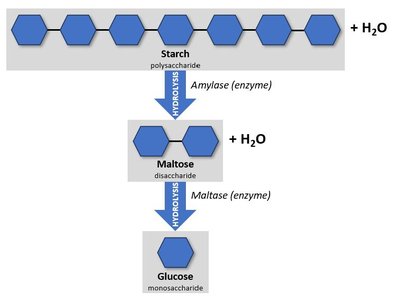
Example: Amylase catalyzes the breakdown of starch into maltose, which is further broken down into glucose by maltase.
Mechanism of Enzyme Action
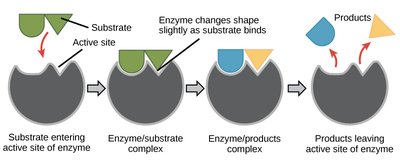
Enzymes operate by binding substrates at their active sites, forming an enzyme-substrate complex, and converting substrates into products.
Active Site: The region on the enzyme where substrate binding and catalysis occur.
Induced Fit: The enzyme changes shape slightly to accommodate the substrate, facilitating the reaction.
Product Release: After the reaction, products are released and the enzyme is free to catalyze another reaction.
Polysaccharide Catabolism
Carbohydrates such as starch are polymers of glucose. Cells must break down these polymers into monomers for energy and biosynthesis.
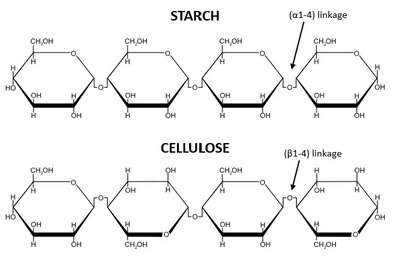
Starch: A polysaccharide composed of glucose monomers linked by α(1-4) glycosidic bonds.
Cellulose: Also a glucose polymer, but linked by β(1-4) bonds, making it resistant to amylase.
Enzyme Specificity: Amylase can digest starch but not cellulose due to differences in glycosidic linkage.
Laboratory Detection of Amylase Activity
Iodine Test for Starch
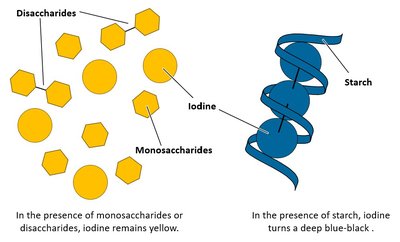
The iodine test is used to detect the presence of starch.
Principle: Iodine interacts with the helical structure of starch, producing a blue-black color.
Result Interpretation: If starch is degraded (e.g., by amylase), the color remains yellow, indicating the absence of intact starch.
DNS Assay for Reducing Sugars
The DNS (3,5-Dinitrosalicylic acid) assay detects reducing sugars produced by amylase activity.
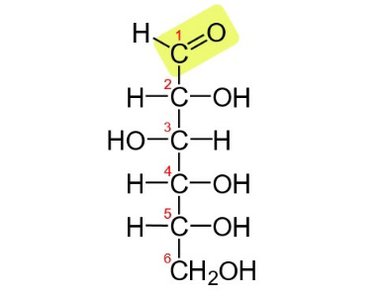
Principle: DNS reacts with the free carbonyl group of reducing sugars (such as maltose and glucose), turning the solution dark amber/brown.
Reducing Sugar Structure: Reducing sugars have a free carbonyl group, which is absent in polymeric starch.
Experimental Procedures
Qualitative Assay for Amylase Activity
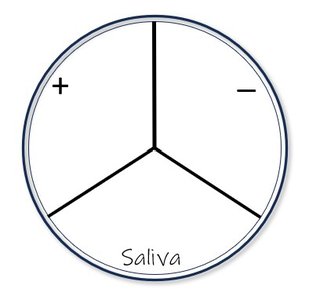
This assay uses a starch agar plate to visually detect starch degradation.
Controls: Positive control (commercial amylase), negative control (water), and experimental (saliva).
Procedure: Apply each sample to a section of the plate, incubate, and stain with iodine. Clear zones indicate starch breakdown.
Quantitative Assay for Amylase Activity
This assay measures the concentration of reducing sugars produced by amylase using a spectrophotometer and a standard curve.
Setup: Four tubes labeled W (water), SA (salivary amylase), M (maltose), and A (commercial amylase).
Measurement: After incubation and DNS addition, absorbance is measured at 540 nm. The standard curve is used to determine sugar concentration.
Equation: The relationship between absorbance and concentration is typically linear: (Beer-Lambert Law), where is absorbance, is molar absorptivity, is concentration, and is path length.
Specificity of Amylase
Testing Amylase Specificity
Amylase is tested for its ability to digest starch and cellulose.
Procedure: Incubate tubes containing starch or cellulose with either salivary or commercial amylase, add DNS, and observe color change.
Result: Amylase reacts with starch (producing reducing sugars and color change) but not with cellulose, confirming substrate specificity.
Summary and Discussion
Key Findings
Human salivary amylase and commercial amylase both effectively break down starch, but not cellulose.
Amylase specificity is determined by the type of glycosidic linkage in the substrate.
Laboratory assays (iodine and DNS) provide qualitative and quantitative measures of enzyme activity.
Applications
Amylase is used industrially to produce simple sugars from plant starch for food and biofuel.
Understanding enzyme specificity is crucial for biotechnology and metabolic engineering.
References
Daugherty, Ellyn. Biotechnology Laboratory Manual. Paradigm Publishing, Inc., 2007.
Kreuzer, Helen, and Adrianne Massey. Molecular Biology and Biotechnology. ASM Press, 2008.
Noltemeyer, M., and W. Saenger. J. Am. Chem. Soc., vol. 102, no. 8, Apr. 1980, pp. 2710–22.
